
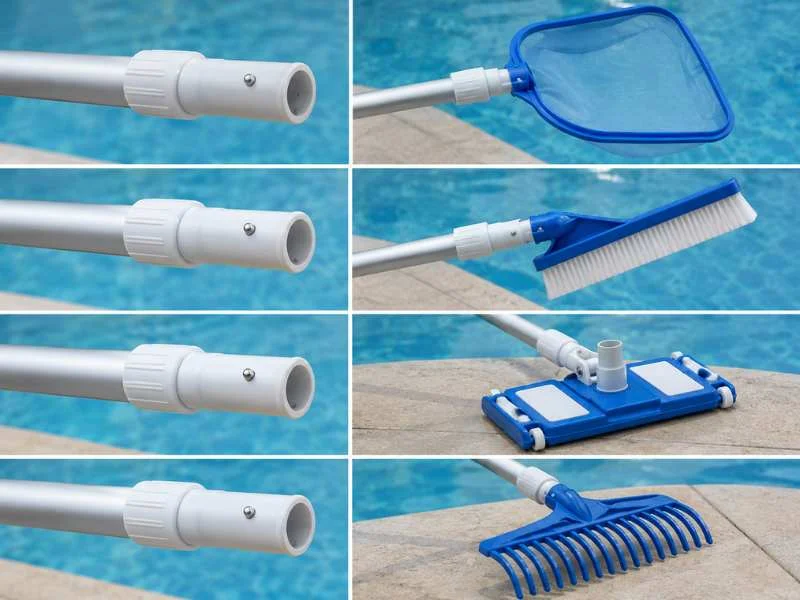
The best pool pole for most swimming pools is an 8–16 ft anodized aluminum telescopic pool pole with medium wall thickness, a stable twist, cam, or flip lock, and a standard attachment end around 1-1/4 inch. Above-ground pools usually need 4–12 ft, while large in-ground pools may need 12–20 ft. For B2B buyers, pool pole selection should also include tube tolerance, lock testing, packaging length, MOQ, lead time, and return-rate risk. The cheapest pool pole can become the most expensive SKU after returns.
When the discussion moves from research to sourcing, connect the points in this guide with aluminum pool pole manufacturing and custom pool extension poles. That makes the RFQ clearer, especially if the buyer also aligns terms with CDC healthy swimming guidance.
Most pool pole returns are not caused by wrong length.
They are caused by wrong load matching.
A pool pole can look right in a product photo. It can still fail when a buyer pushes a vacuum head across the deep end, pulls a heavy leaf rake, or scrubs pool walls with force.
Length sells the product. Lock stability keeps the customer.
This guide is written for buyers who need the pool pole to work in real use, not only look good in a product listing.
At Xingyong, I have worked with many aluminum telescopic pole projects where the problem was not one aluminum tube. The problem was the full system: tube diameter, wall thickness, anodized surface, plastic lock, button hole, section overlap, attachment end, carton length, and final assembly.
A good pool pole is not just a long handle. It is a working cleaning tool that must balance usable reach, stiffness, weight, corrosion resistance, lock strength, attachment fit, and retail cost.
What Is the Best Pool Pole for Most Swimming Pools?
For most swimming pools, choose an 8–16 ft anodized aluminum telescopic pool pole with medium wall thickness, a stable locking mechanism, and a standard attachment end around 1-1/4 inch.
This pool pole size works well for normal residential skimming, brushing, and vacuuming. It gives enough reach without making the pole too flexible or too hard to store.
| Pool Type | Better Pool Pole Choice |
|---|---|
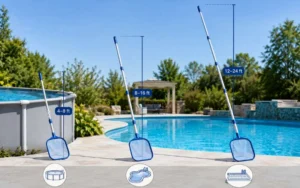
| Small above-ground pool | 4–8 ft aluminum pool pole |
| Standard above-ground pool | 6–12 ft telescopic pool pole |
| Residential in-ground pool | 8–16 ft aluminum telescopic pool pole |
| Large in-ground pool | 12–20 ft heavy duty pool pole |
| Commercial pool | 16–24 ft or custom pool pole |
The best pool pole is not always the longest pole. It is the pole that gives usable reach under real cleaning load.
What Is a Pool Pole? Pool Cleaning Pole Uses and Buying Basics
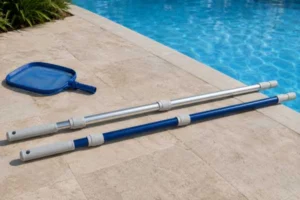
A pool pole is a long handle used with swimming pool cleaning tools. It helps the user clean the pool from the edge without entering the water.
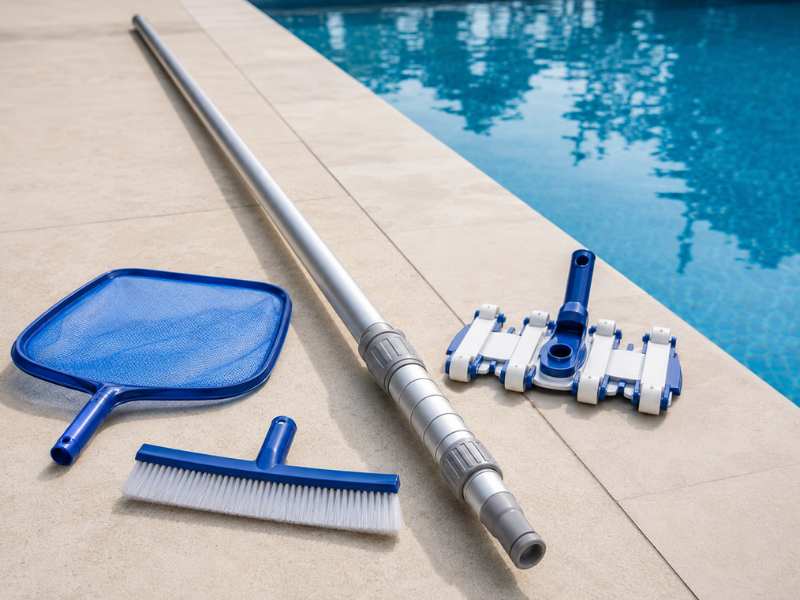
A pool cleaning pole can connect with:
- Pool skimmer nets
- Leaf rakes
- Pool brushes
- Vacuum heads
- Scrubbers
- Pool cover tools
- Pool cleaning kit accessories
Most buyers choose a telescopic pool pole because it extends for cleaning and collapses for storage.
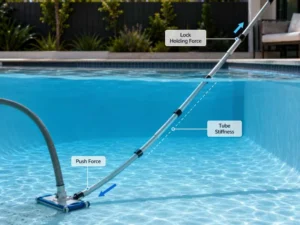
A pool pole must support real force. Skimming leaves creates light load. Brushing pool walls creates side load. Vacuuming creates push-pull force. Commercial pool cleaning creates repeated stress.
For B2B buyers, pool pole specification affects reviews, return rate, replacement cost, retail shelf position, private label reputation, container loading, seasonal delivery, and distributor profit.
Pool Pole Buying Guide for Distributors, OEM Brands, and Retail Buyers
Different buyers should not choose a pool pole in the same way.
A homeowner usually chooses by pool size, length, weight, and attachment fit. A distributor chooses by SKU margin, packaging length, complaint risk, and retail positioning. An OEM buyer chooses by tube specification, lock design, finish quality, inspection standard, MOQ, and repeat-order stability.
| Buyer Type | Main Concern | Better Buying Decision |
|---|---|---|
| Homeowner | Easy cleaning and storage | Choose by pool size, tool fit, and handling comfort |
| Pool service company | Daily use and durability | Choose stronger tube, better lock, and proven attachment fit |
| Distributor | Reviews, returns, and margin | Build good / better / heavy-duty SKU levels |
| OEM brand | Custom design and repeat orders | Control tube, lock, finish, logo, packaging, and inspection |
| Retail buyer | Shelf appeal and after-sale risk | Check carton length, barcode, packaging strength, and product claims |
For pool pole wholesale buyers, the question should not be “What is the lowest price?”
The better question is: What specification will reduce complaints, fit my channel, and protect my margin?
How to Choose Pool Pole Length for Your Swimming Pool
Pool pole length should match pool size, pool depth, cleaning task, and user position.
Do not buy length only. Buy usable reach.
For more length-selection logic, see our guide on how to choose extension pole length.
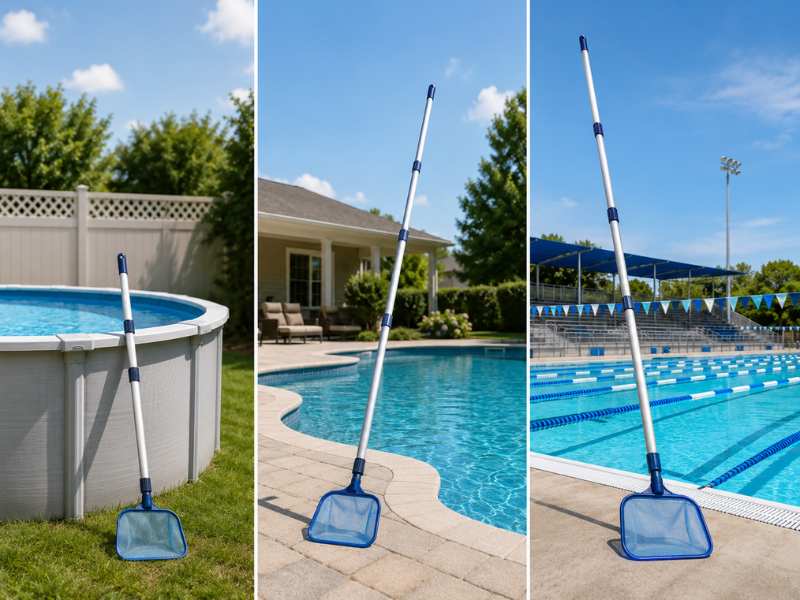
| Pool Type | Recommended Pool Pole Length | Common Use | B2B Buyer Note |
|---|---|---|---|
| Small above-ground pool | 4–8 ft | Light skimming and small brush work | Low-cost retail SKU |
| Standard above-ground pool | 6–12 ft | Skimming, brushing, simple vacuuming | Good entry-level product |
| Residential in-ground pool | 8–16 ft | Wall brushing, vacuuming, leaf removal | Mainstream pool pole SKU |
| Large in-ground pool | 12–20 ft | Deep-end cleaning and wider reach | Needs stronger tube and lock |
| Commercial pool | 16–24 ft or custom | Frequent cleaning and heavier tools | Requires tested heavy-duty structure |
What Size Pool Pole Do I Need for Above-Ground Pools?
Most above-ground pools need a 4–8 ft or 6–12 ft pool pole. These lengths work well for skimming, light brushing, and simple cleaning.
A very long pool pole can feel awkward for small above-ground pools. It also increases carton length and shipping cost without giving real user value.
What Size Pool Pole Do I Need for In-Ground Pools?
Most in-ground pools need an 8–16 ft pool pole. This length works for skimming, brushing, and vacuuming in normal residential pools.
For larger in-ground pools, buyers may need a 12–20 ft telescopic pool pole. A long pool pole with a thin wall and weak lock will feel soft under load.
When Should Buyers Choose a Heavy Duty Long Pool Pole?
Choose a heavy duty long pool pole when the user needs to clean deep ends, wide in-ground pools, or commercial pools.
A heavy duty telescopic pool pole should have stronger wall thickness, better lock strength, stable section overlap, and tested attachment fit.
Heavy-duty does not always mean heavier. It means better stiffness-to-weight balance.
Aluminum vs Fiberglass vs Carbon Fiber Pool Pole Materials
Pool pole material affects weight, stiffness, cost, corrosion resistance, surface finish, and customization.
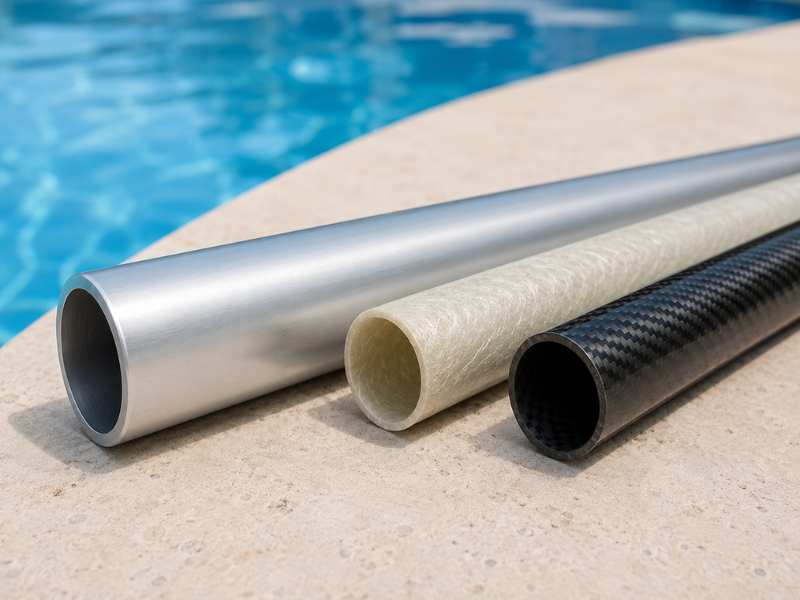
| Pool Pole Material | Main Advantage | Main Limitation | Best Use |
|---|---|---|---|
| Aluminum pool pole | Lightweight, cost-effective, easy to anodize, easy to customize | Can bend if wall thickness is too thin | Residential and commercial pool tools |
| Fiberglass pool pole | Good stiffness feel and non-conductive property | Higher cost and different surface feel | Some professional pool service uses |
| Carbon fiber pool pole | Very light and stiff | Too expensive for most mass retail products | Premium niche products |
The Aluminum Association explains that aluminum alloy properties vary based on alloying elements and processing methods. This matters because a pool pole is not judged by material name alone.
It is judged by final structure.
Why Aluminum Pool Poles Work for Most Buyers
Aluminum pool poles are widely used because they are light, easy to extrude, easy to finish, and suitable for telescopic structures.
For B2B buyers, aluminum also supports more customization:
- Tube diameter
- Wall thickness
- Section count
- Extended length
- Collapsed length
- Anodized color
- Lock type
- Logo printing
- Retail packaging
At Xingyong, aluminum is often the most practical material for custom pool pole projects because it balances performance, appearance, cost, and MOQ flexibility.
6063 vs 6061 Aluminum Pool Pole: Which Alloy Should Buyers Choose?
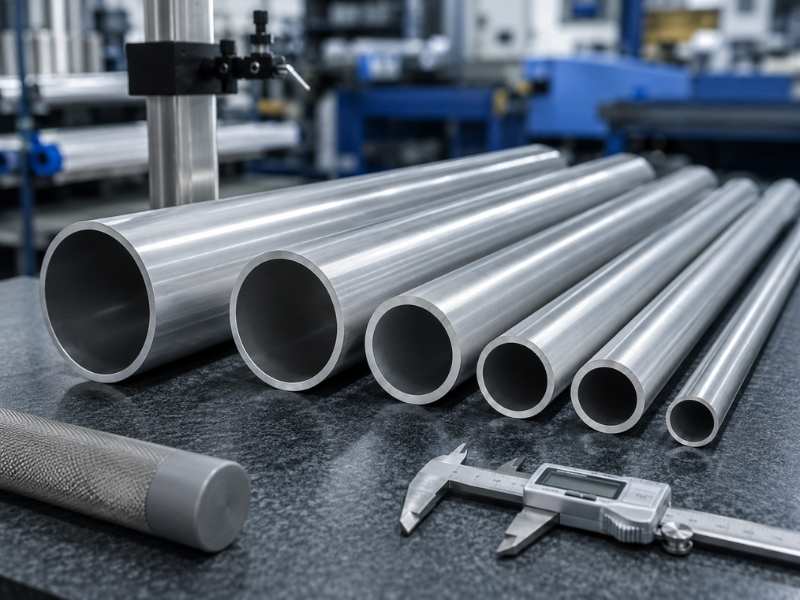
For pool poles, the strongest alloy is not always the best commercial choice. Buyers must balance strength, anodized appearance, extrusion stability, cost, and MOQ.
| Aluminum Alloy | Best For | Buyer Logic |
|---|---|---|
| 6063 aluminum | Standard pool poles and retail poles | Good extrusion behavior and anodized appearance |
| 6061 aluminum | Heavy-duty custom pool poles | Higher strength potential, but may increase cost |
| 6005 aluminum | Structural custom telescopic poles | Good balance for special projects |
| 7075 aluminum | High-strength niche designs | High cost, rarely needed for normal pool poles |
| 6003 aluminum | Custom aluminum tube projects | Used when design and supply conditions fit |
A well-designed 6063 aluminum pool pole can perform better than a poorly designed 6061 pole with weak wall thickness and a bad lock.
Why Anodized Aluminum Pool Poles Matter in Pool Environments
Swimming pool poles face water, chlorine, humidity, sunlight, and outdoor storage.
The CDC explains that pool water normally requires chemical treatment such as chlorine and pH control. This means pool tools often work around treated water.
Anodized aluminum is useful because anodizing creates a protective oxide layer on aluminum. The Aluminum Anodizers Council describes anodizing as an electrochemical process that improves surface durability and corrosion resistance.
| Surface Finish | Appearance | Durability | Best Use |
|---|---|---|---|
| Mill finish | Plain aluminum look | Lower protection | Low-cost industrial use |
| Anodized finish | Clean metallic color | Good corrosion resistance | Standard pool poles |
| Sandblasted anodized finish | Matte surface | Good appearance and hand feel | OEM and retail pool poles |
| Powder coated finish | Solid color surface | Good if coating quality is stable | Branded color programs |
At Xingyong, I pay close attention to lock fit after anodizing. The anodized layer changes the surface feel and can affect how the lock grips the tube.
Finish is not only appearance. It affects assembly.
Pool Pole Wall Thickness, Tube Diameter, and Bending Resistance
A heavy duty pool pole is not strong because the product title says “heavy duty.”
Strength comes from tube design.
The main factors include aluminum alloy, outside diameter, inside diameter, wall thickness, tube roundness, tube straightness, section overlap, lock type, extended length, and cleaning load.
Many retail pool poles use common connection sizes around 1-1/4 inch for pool tools. You can see similar market specifications in major retail listings from The Home Depot and Lowe’s pool pole category.
But attachment size is not enough.
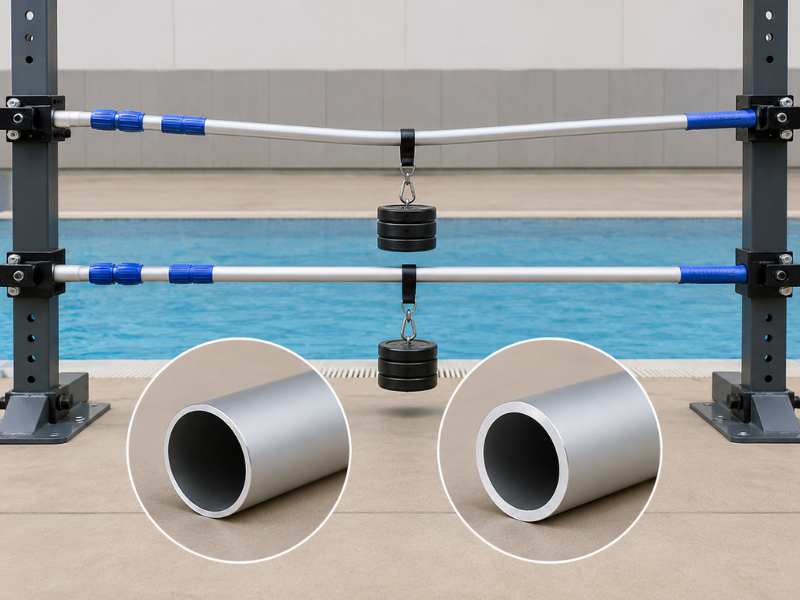
A pool pole may fit the brush and still bend under load.
Why Thin Pool Poles Bend When Fully Extended
Thin pool poles bend because the tube wall cannot resist enough side load when the pole is extended.
This often happens during wall brushing, vacuuming, deep-end cleaning, pulling heavy leaf rakes, and commercial pool maintenance.
A light wall pool pole can work for skimming leaves. It should not be sold as a heavy duty pool pole for vacuuming.
How Wall Thickness Affects Heavy Duty Pool Pole Performance
Wall thickness affects stiffness, weight, cost, and user comfort.
| Wall Thickness Level | Buyer Benefit | Risk | Best Use |
|---|---|---|---|
| Light wall | Lower cost and lighter weight | More flex under load | Light skimming pool poles |
| Medium wall | Balanced stiffness and handling | Needs good lock matching | Standard residential pool poles |
| Heavy wall | Better stiffness and durability | Higher cost and heavier feel | Heavy duty pool poles |
Thicker is not always better. A pole that is too heavy can cause user fatigue. A pole that is too light can bend and create complaints.
At Xingyong, we check outside diameter, inside diameter, wall thickness, roundness, and straightness because telescopic pool poles must slide smoothly without obvious shaking.
The buyer sees the finished pole. The user feels the tolerance.
Telescopic Pool Pole Section Count, Overlap Length, and Stability
Section count affects both storage and stiffness.
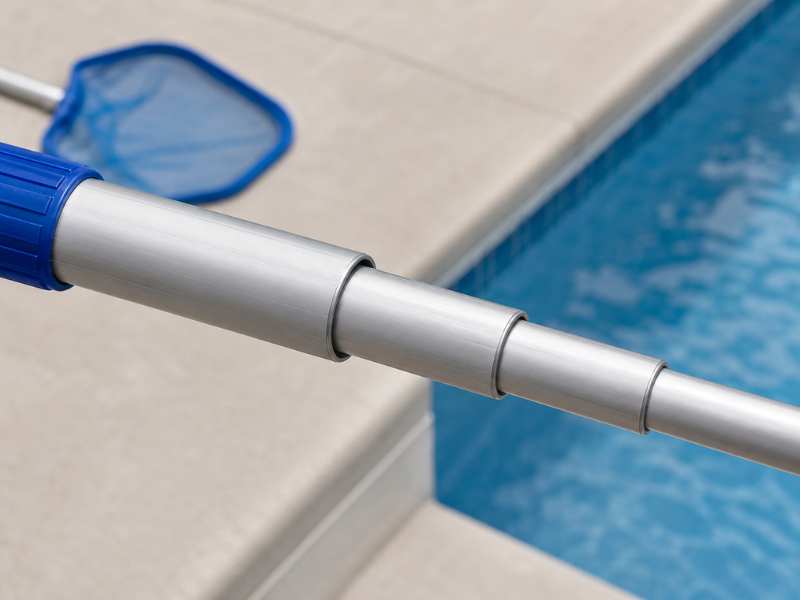
More sections can reduce collapsed length. That helps packaging and home storage. But every extra section creates another joint. More joints mean more places where looseness can occur.
| Structure | Advantage | Limitation | Best Use |
|---|---|---|---|
| 2-section pool pole | Better stiffness and simple structure | Longer collapsed length | Standard and heavy-duty pool poles |
| 3-section pool pole | Shorter storage length | More joints to control | Retail packaging and home use |
| Modular pool pole | Compact carton | Joint strength must be tested | Pool cleaning kits and custom programs |
Section overlap is important. If the overlap is too short, the pole may feel loose when fully extended.
Packaging wants shorter length. Performance wants fewer weak points.
A good telescopic pool pole balances both.
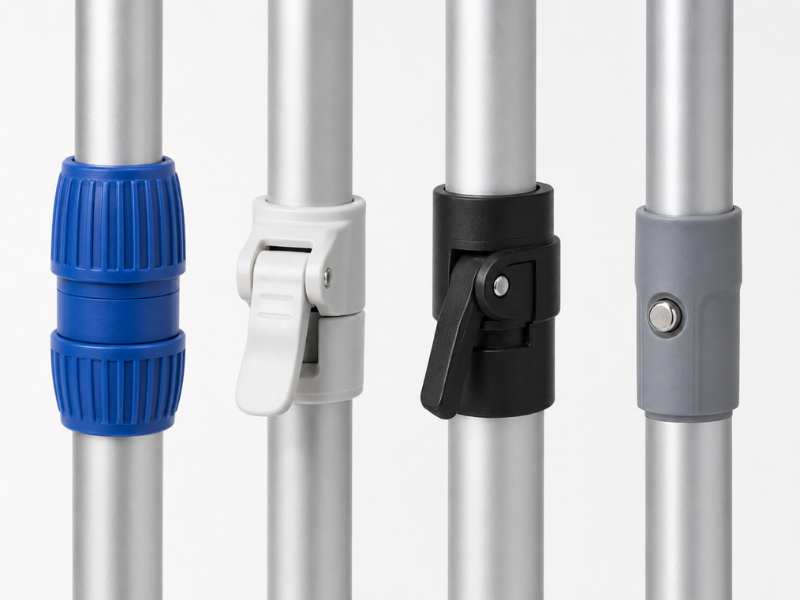
Pool Pole Locking Mechanisms: Twist Lock, Flip Lock, Cam Lock, and Push Button
The locking mechanism decides whether a telescopic pool pole feels reliable.
A lock is not an accessory. It is the safety valve of the telescopic system.
You can also read our detailed guide on telescoping pole locking mechanisms.
| Pool Pole Lock Type | How It Works | Advantage | Risk |
|---|---|---|---|
| Twist lock pool pole | User rotates the pole section to tighten | Simple and common | Can slip if tolerance is poor |
| Flip lock pool pole | Lever clamps the tube quickly | Fast adjustment | Needs stable clamp force |
| Cam lock pool pole | External cam grips the tube | Easy to operate | Plastic cam must be strong |
| Push button pool pole | Button clicks into preset holes | Clear length position | Holes can loosen under stress |
| Compression lock pool pole | Internal pressure holds the section | Clean appearance | Needs accurate tube fit |
Pool Pole Lock Selection Matrix
| Use Case | Recommended Lock Type | Buyer Logic |
|---|---|---|
| Entry-level retail pool pole | Twist lock or push button lock | Simple operation and lower cost |
| Standard residential pool pole | Twist lock, cam lock, or flip lock | Balanced operation and stability |
| Pool pole for vacuuming | Cam lock, flip lock, or reinforced twist lock | Better resistance under push-pull force |
| Heavy duty pool pole | Strong cam lock, reinforced flip lock, or custom lock | Needs wet slip testing and repeated use testing |
| OEM premium pool pole | Custom lock matched to tube tolerance | Best for private label differentiation |
A lock failure usually becomes a product return, not a small complaint. Users rarely replace only the lock. They return the whole pool pole.
That is why lock cost should be judged against replacement cost, not only component cost.
Why Telescopic Pool Poles Slip Under Load
Telescopic pool poles slip when the lock cannot hold the tube under cleaning force.
Common reasons include weak lock structure, poor tube tolerance, smooth wet surface, wrong lock-to-tube fit, thin tube deformation, worn button holes, and repeated over-tightening.
Cheap pool poles do not fail in the showroom. They fail when the buyer pushes a vacuum head across the deep end.
At Xingyong, we treat the lock and aluminum tube as one system. The plastic lock, tube diameter, anodized surface, wall thickness, and assembly tolerance must work together.
Are Pool Poles Universal? Standard Pool Pole Attachment Size Explained
Not all pool poles are universal.
Many retail pool poles and pool cleaning tools use an attachment end around 1-1/4 inch, but buyers should always confirm button-hole position, connector depth, and tool fit before production.
A universal pool pole should fit common pool skimmer nets, pool brushes, vacuum heads, and leaf rakes. But attachment fit depends on end size, button hole position, connector strength, and real tool design.
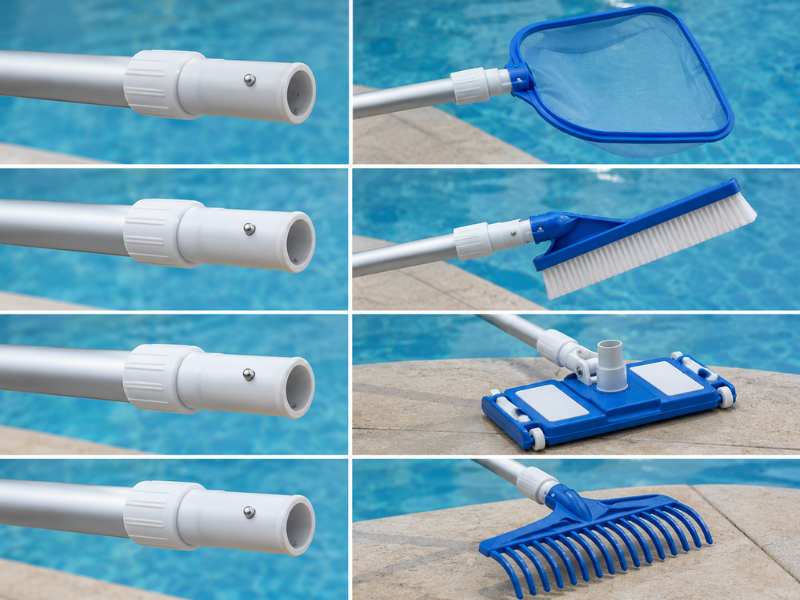
| Attachment | Load Level | Compatibility Risk |
|---|---|---|
| Skimmer net | Low | End size mismatch |
| Leaf rake | Medium | Pulling force and button strength |
| Pool brush | High | Side load and pole bending |
| Vacuum head | High | Lock slip and connector stress |
| Pool cover tool | Medium to high | End connector strength |
| Scrubber | High | Tube stiffness and lock grip |
For B2B buyers, the pool pole should be tested with real attachments before production, not only as a standalone tube.
Compatibility is not a small detail. It directly affects reviews and return rate.
Best Pool Pole for Skimming, Brushing, Vacuuming, and Commercial Cleaning
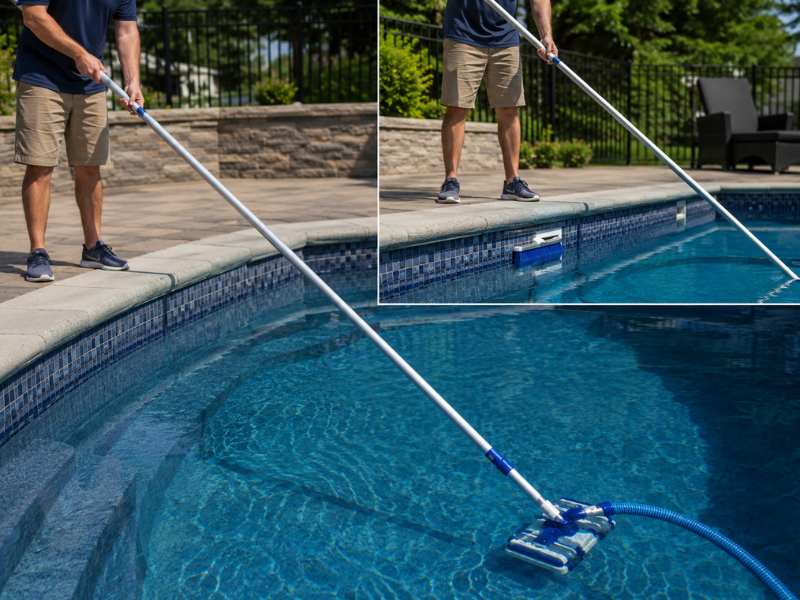
The best pool pole depends on the cleaning task.
A pool skimmer pole does not need the same strength as a pool vacuum pole. A commercial pool pole should not use the same specification as a light home pool pole.
| Buyer Need | Recommended Length | Material | Lock Type | Specification Focus |
|---|---|---|---|---|
| Light skimming | 4–8 ft or 6–12 ft | Aluminum | Basic twist or button lock | Low cost and easy handling |
| Residential cleaning | 8–16 ft | Anodized aluminum | Stable twist, cam, or flip lock | Balanced stiffness and storage |
| Vacuuming | 8–16 ft or 12–20 ft | Medium/heavy wall aluminum | Strong cam, flip, or reinforced twist lock | Lock strength and tube stiffness |
| Deep-end cleaning | 12–20 ft | Heavy duty aluminum | Tested anti-slip lock | Usable reach and bending resistance |
| Commercial cleaning | 16–24 ft or custom | Heavy duty aluminum | Strong tested lock | Long service life and lower failure risk |
| OEM retail kit | Custom | Aluminum | Based on price tier | Packaging, logo, MOQ, compatibility |
For skimmer nets and leaf rakes, a light or medium aluminum telescopic pool pole usually works well.
For pool brushes and vacuum heads, choose a stronger pool pole. Brushing creates side load. Vacuuming creates pushing and pulling force. These tasks expose weak locks quickly.
For commercial pool maintenance, focus on heavy duty tube design, fewer weak joints, strong lock structure, durable anodized finish, and tested attachment fit.
Pool Pole Wholesale Buying Guide for Distributors and OEM Brands
Pool pole wholesale buyers should not choose only by FOB price.
For importers, the real cost is not only FOB price. It is landed cost plus damage rate, replacement cost, warehouse handling, and seasonal inventory risk.
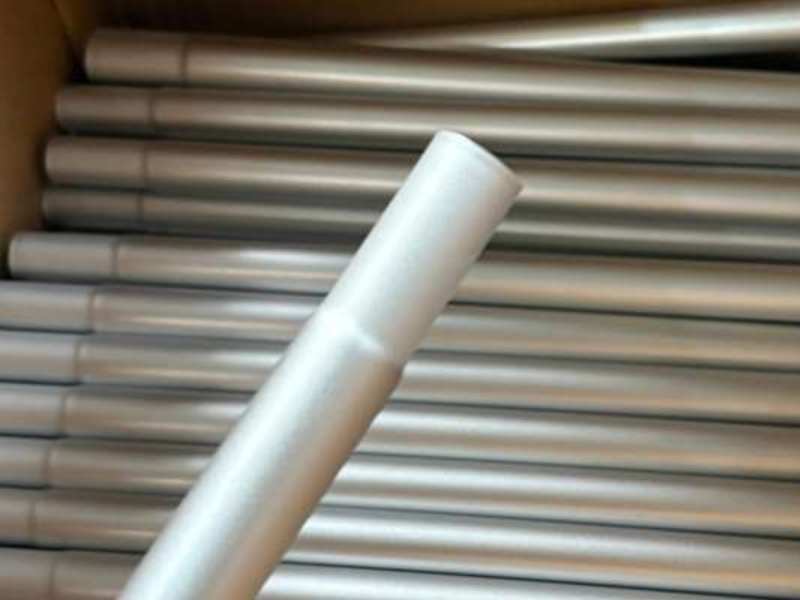
| Specification Choice | Short-Term Effect | Long-Term Margin Impact |
|---|---|---|
| Thin wall tube | Lower unit price | Higher bending complaints |
| Weak lock | Lower component cost | More returns after vacuuming |
| Overlong carton | Better marketing claim | Higher shipping and damage cost |
| Poor anodizing | Lower finishing cost | Faster appearance complaints |
| Non-standard attachment fit | Easier sourcing | More customer frustration |
| No SKU tiering | Simple inventory | Weak price positioning |
A $0.30 lock saving can disappear after one replacement shipment.
For distributors, the best pool pole is not always the lowest-cost pole. It is the SKU with the best balance of sell-through, customer satisfaction, and repeat order value.
| SKU Level | Product Positioning | Profit Role |
|---|---|---|
| Good | Light skimming pool pole | Entry price and traffic |
| Better | Standard residential telescopic pool pole | Main volume SKU |
| Heavy-duty | Stronger pole for brushing and vacuuming | Higher margin and fewer serious-user complaints |
The economy SKU attracts price-sensitive buyers. The standard SKU creates volume. The heavy-duty pool pole protects reputation and improves profit per unit.
What to Ask a Pool Pole Manufacturer Before Bulk Ordering
A reliable pool pole manufacturer should answer technical questions clearly.
Before bulk ordering, ask about aluminum alloy, tube diameter, wall thickness, section count, extended length, collapsed length, lock type, attachment size, surface finish, color tolerance, logo method, carton size, MOQ, lead time, inspection standard, and export packaging.
Quality management also matters. ISO 9001 covers quality management systems, while ISO 14001 covers environmental management systems.
These standards do not replace product testing, but they show whether a supplier has structured management.
For B2B orders, lead time is especially important. Pool products often sell in seasonal windows. A late shipment can miss the sales season.
Custom Pool Pole Options: Length, Lock, Finish, Logo, and Packaging
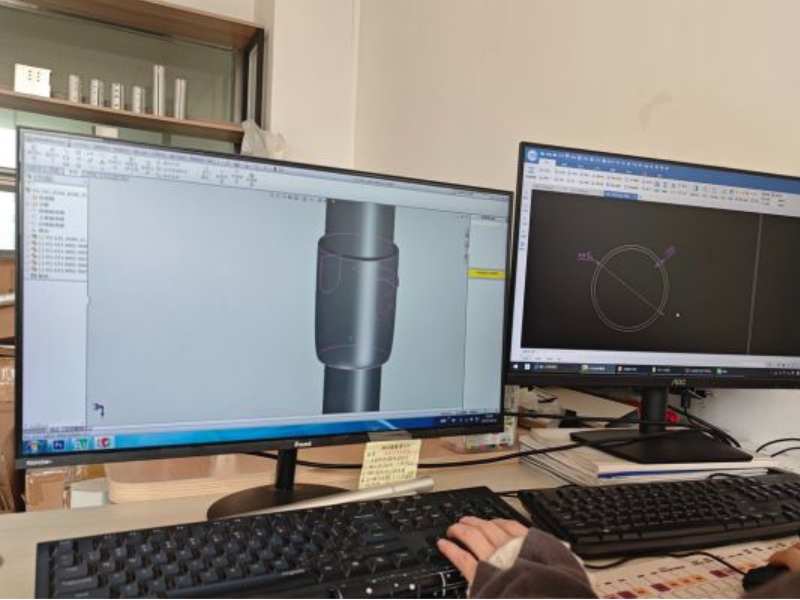
Custom pool pole projects should start with the target use.
Do not start with price.
A custom pool pole manufacturer should help define target market, cleaning task, length range, tube diameter, wall thickness, lock type, surface finish, attachment end, logo method, retail packaging, carton strength, and sample testing.
| Custom Item | Common Options |
|---|---|
| Product name | Aluminum pool pole, telescopic pool pole, pool extension pole |
| Material | 6061, 6005, 6063, 7075, 6003 aluminum alloy |
| Structure | 2-section, 3-section, telescopic, modular |
| Length | 4–8 ft, 6–12 ft, 8–16 ft, 12–24 ft, custom |
| Tube diameter | Custom OD and ID |
| Wall thickness | Light, medium, heavy-duty custom wall |
| Surface finish | Anodized, sandblasted anodized, powder coated |
| Locking system | Twist lock, flip lock, cam lock, push button lock |
| Compatible tools | Pool brush, skimmer net, leaf rake, vacuum head |
| Branding | Logo printing, label, color box, private label |
| Packaging | Bulk carton, retail carton, e-commerce packaging |
| Quality checks | Size, lock fit, surface, assembly, carton inspection |
At Xingyong, we are stronger in pool pole projects where the aluminum tube, plastic lock, surface finish, and final assembly must work as one system.
This is where a tube-only supplier often fails. The tube may be acceptable, but the finished telescopic pool pole may still slip, shake, or fail attachment testing.
Pool Pole MOQ, Lead Time, and Export Packaging Checklist
MOQ and lead time depend on customization level.
A standard aluminum pool pole may have a lower MOQ if existing tube sizes, locks, and packaging are available. A custom OEM pool pole with new diameter, color, lock, logo, and carton design may need a higher MOQ.
| Factor | Effect on MOQ / Lead Time |
|---|---|
| Existing tube size | Faster production and lower development risk |
| Custom tube diameter | May need tooling and longer preparation |
| Custom anodized color | Needs color approval and batch control |
| Custom plastic lock | May need mold development |
| Private label logo | Needs artwork and sample approval |
| Retail packaging | Needs design, printing, and carton testing |
| Peak pool season | May extend lead time |
For export packaging, check carton length, carton wall strength, inner protection, barcode placement, label accuracy, master carton weight, pallet loading, container loading plan, and drop-test requirement if needed.
The International Trade Administration provides export resources for companies involved in international trade. For pool pole buyers, export readiness matters because packaging, documentation, and delivery timing all affect the final landed cost.
A weak carton can destroy a good pool pole before the customer ever uses it.
Pool Pole Sample Testing and Pre-Shipment Inspection Checklist
A sample is not only for checking appearance.
A sample should test how the pool pole behaves under real use. For larger retail orders, buyers can define AQL inspection levels with their inspection partner, then combine appearance checks, functional checks, and packaging checks before shipment.
For B2B orders, I also check carton marks, barcode position, color consistency, lock operation, attachment fit, and final assembly before shipment.
| Test Item | What to Check | Why It Matters |
|---|---|---|
| Wet lock slip test | Lock the wet pole and apply push-pull force | Checks lock stability |
| Full-extension bending test | Extend the pole fully and apply side load | Checks usable reach |
| Attachment pull test | Connect skimmer, brush, rake, and vacuum head | Checks universal fit |
| Lock cycle test | Open and close the lock repeatedly | Checks long-term reliability |
| Surface appearance check | Inspect anodized color, scratches, and stains | Protects retail appearance |
| Logo adhesion test | Check printed logo after handling | Protects private label quality |
| Carton drop test | Simulate shipping impact | Reduces transport damage |
| Carton marking check | Check barcode, label, item number, and marks | Reduces warehouse errors |
| Final assembly check | Inspect sliding, shaking, locking, and end cap fit | Confirms full product quality |
The ASTM International standards platform is often used as a reference point for material and test standards across industries. For pool pole sourcing, buyers do not need to overcomplicate every order, but they should define clear functional checks before production.
Custom Pool Pole Manufacturer for OEM and Private Label Buyers
A custom pool pole manufacturer should not only make a tube. The supplier should understand how the whole product works.
At Xingyong, we support aluminum alloy telescopic pole projects from tube extrusion to final packaging.
Our service can include:
- Aluminum tube extrusion
- Tube diameter customization
- Wall thickness control
- Anodizing and sandblasting
- Cutting, drilling, punching, milling, bending, polishing, flaring, and reducing
- Plastic lock and connector matching
- Pool pole assembly
- Logo branding
- Retail packaging
- Quality inspection
- Export support
Xingyong was founded in 2010. Our production system includes 14 aluminum extrusion machines from 350T to 2000T, 2 large automatic anodizing lines, sandblasting equipment, CNC and finishing machines, and an inspection center.
These machines matter because pool pole quality depends on repeated tube size, stable anodized surface, accurate cutting, clean hole position, and lock fit after assembly.
Our inspection equipment supports checks for alloy, profile section, color difference, tensile testing, hardness, and film thickness.
We also have ISO 9001:2015, ISO 14001:2015, ISO 45001:2018, ISO 50001:2018, and social audit experience.
For buyers who need an aluminum pool extension pole, custom lock matching, or a complete private label pool pole program, the key is not only production capacity.
The key is system control.
Pool Pole RFQ Checklist: What Buyers Should Send Before Asking for a Quote
A clear RFQ helps the supplier quote faster and reduces misunderstanding.
Do not only ask, “How much is your pool pole?”
Send the specification.
| RFQ Item | What to Send | Why It Matters |
|---|---|---|
| Target market | Retail, distributor, pool service, OEM kit | Defines product level |
| Pool type | Above-ground, in-ground, commercial | Defines length and strength |
| Extended length | 8–16 ft, 12–20 ft, custom | Defines reach |
| Collapsed length | Maximum carton length if required | Defines packaging |
| Tube diameter | OD / ID or required fit | Defines stiffness and compatibility |
| Wall thickness | Light, medium, heavy-duty, or target value | Defines strength |
| Lock type | Twist, flip, cam, push button | Defines operation |
| Attachment requirement | Skimmer, brush, vacuum head, leaf rake | Defines end connector |
| Surface finish | Anodized, sandblasted, powder coated | Defines appearance and durability |
| Color | Standard or custom color | Defines anodizing control |
| Logo method | Printing, label, laser marking | Defines branding |
| Packaging | Bulk carton, retail box, e-commerce carton | Defines shipping and sales channel |
| Quantity | Trial order and annual forecast | Defines MOQ and price |
| Testing requirement | Lock test, bending test, carton test | Defines quality plan |
A strong RFQ saves both sides time. It also shows that the buyer understands the product.
Common Pool Pole Buying Mistakes
Bad pool pole purchases usually come from the same mistakes.
- Choosing only by maximum length
- Ignoring lock strength
- Buying the lowest wall thickness
- Not testing real attachments
- Selling one SKU for every customer
- Ignoring carton length
- Buying from a supplier that controls only one part
A supplier that only makes tubes may not understand lock fit. A supplier that only assembles plastic parts may not control tube tolerance.
The full pool pole system matters.
FAQ About Choosing the Right Pool Pole
What size pool pole do I need?
Most residential pools need an 8–16 ft telescopic pool pole because it balances reach, stiffness, storage, and cost.
Smaller above-ground pools can use shorter poles, while large in-ground pools may need a 12–20 ft pool pole.
What length pool pole is best for an inground pool?
An 8–16 ft pool pole is best for most inground pools because it covers normal brushing, skimming, and vacuuming.
For larger inground pools or deep-end cleaning, a 12–20 ft heavy duty pool pole may work better.
Is an aluminum pool pole better than fiberglass?
An aluminum pool pole is usually better for cost, weight, anodized finish, and OEM customization.
Fiberglass can work for some professional users, but aluminum is easier to scale for distributors and private label programs.
What is the strongest type of pool pole?
The strongest pool pole usually has thicker aluminum walls, stable locks, good section overlap, and tested attachment fit.
Material alone does not decide strength because tube design and locking mechanism also affect real cleaning performance.
Are pool poles universal?
Not all pool poles are universal, but many are designed to fit standard skimmers, brushes, rakes, and vacuum heads.
Bulk buyers should test real attachments before production to reduce fit problems and customer returns.
What is the standard pool pole attachment size?
Many pool poles use a standard attachment end around 1-1/4 inch for common pool cleaning tools.
Buyers should still confirm button hole position, connector strength, and compatibility with their actual pool tools.
Why does my telescopic pool pole keep slipping?
A telescopic pool pole slips when the lock cannot hold the tube under wet or loaded conditions.
Common causes include weak lock design, poor tube tolerance, smooth surface finish, and repeated over-tightening.
What pool pole is best for vacuuming?
The best pool pole for vacuuming has medium or heavy wall aluminum, a stable lock, and strong attachment fit.
Vacuuming creates push-pull force, so weak locks and thin tubes often fail faster under real use.
What affects pool pole price for bulk orders?
Pool pole price depends on length, wall thickness, alloy, lock type, finish, packaging, logo, and order quantity.
B2B buyers should compare total landed cost and return risk, not only the lowest FOB price.
What is the MOQ for custom pool poles?
Custom pool pole MOQ depends on tube size, lock design, surface finish, logo, packaging, and tooling needs.
Standard parts usually allow easier trial orders, while fully custom projects may require higher MOQ.
Can I buy custom pool poles in bulk?
Yes, custom pool poles can be bulk ordered with custom length, tube size, wall thickness, lock, finish, logo, and packaging.
OEM buyers should confirm MOQ, lead time, sample testing, carton requirements, and inspection standards before mass production.
What should I send for a pool pole RFQ?
Send length, tube diameter, wall thickness, lock type, attachment requirement, surface finish, packaging, logo, and order quantity.
A complete pool pole RFQ helps the manufacturer quote faster and reduces specification mistakes before sampling.
Send a Pool Pole RFQ Built Around Real Use, Not Guesswork
The right pool pole is not the longest pole or the cheapest pole.
It is the pole that matches pool size, cleaning load, material choice, wall thickness, locking mechanism, attachment fit, packaging limit, and margin target.
For pool owners, that means easier cleaning.
For distributors and OEM buyers, it means fewer returns, cleaner reviews, better SKU structure, and stronger repeat orders.
Send your pool pole RFQ with length range, tube diameter, wall thickness, lock type, attachment size, finish color, logo method, carton limit, annual volume, and testing requirements.
You can also send an existing sample, drawing, packaging requirement, or target retail channel so we can review the pool pole structure before quoting.
At Xingyong, we can help you turn those details into a stable aluminum pool pole SKU built for real swimming pool use, not just a product photo.
Choose Your Pool Pole by Spec
Once you know the length, material, and lock you need, go straight to the right pages:
By length
By material and alloy
By lock type
Ready to spec a custom program? See our OEM & custom service or browse the full pool pole range.
Related Guides & Resources
Keep Reading
Telescopic Pole · Pool Pole · Extension Pole · How To Use A Snow Rake On Your Roof Safely · Source Telescopic Poles OEM · Square Tubing Vs Round Tubing · Telescopic Pole Vs Extension Pole Wholesale Manufacturing · Telescopic Vs Fixed Extension Pole · Top Flight Telescoping Flagpole OEM · What Are Aluminum Telescopic Poles Used For · What Is An Extension Pole
Related products: Explore related products and review matching solutions.

 English
  Español
  Français
  Deutsch
  Português