
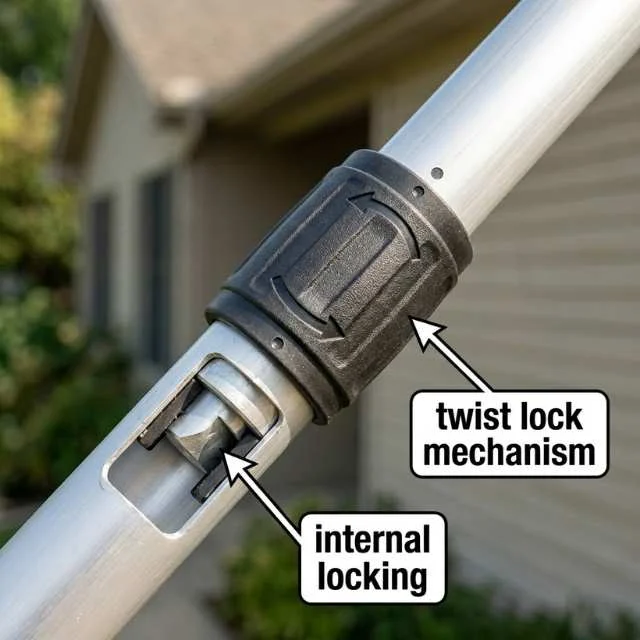
A telescoping pole lock is the mechanism that clamps two tube sections together so the pole holds its set length under load. When you’re sourcing or specifying a telescoping pole, the locking mechanism is one of the most critical — and most overlooked — engineering decisions. The wrong lock means field failures, warranty returns, or disappointed end users. This guide covers every major telescoping pole locking mechanism so you can specify the right one the first time.
A practical way to use this guide is to mark the key specification, compare it with aluminum pool pole manufacturing, and confirm whether telescopic pole manufacturing is the better production route; Aluminum Association material resources helps keep the assumptions grounded.
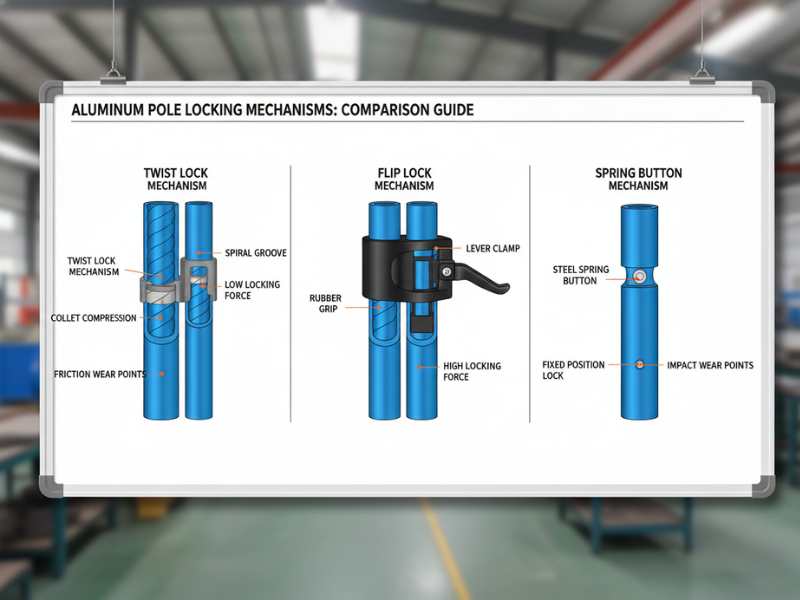
What Is a Telescoping Pole Lock?
A telescoping pole lock is the mechanism that holds each nested tube section at a fixed extended length under load. Without a reliable lock, the pole collapses under axial compression or vibration. For B2B buyers, lock selection affects durability ratings, user safety certifications, and total cost of ownership.
4 Types of Telescoping Pole Locking Mechanisms
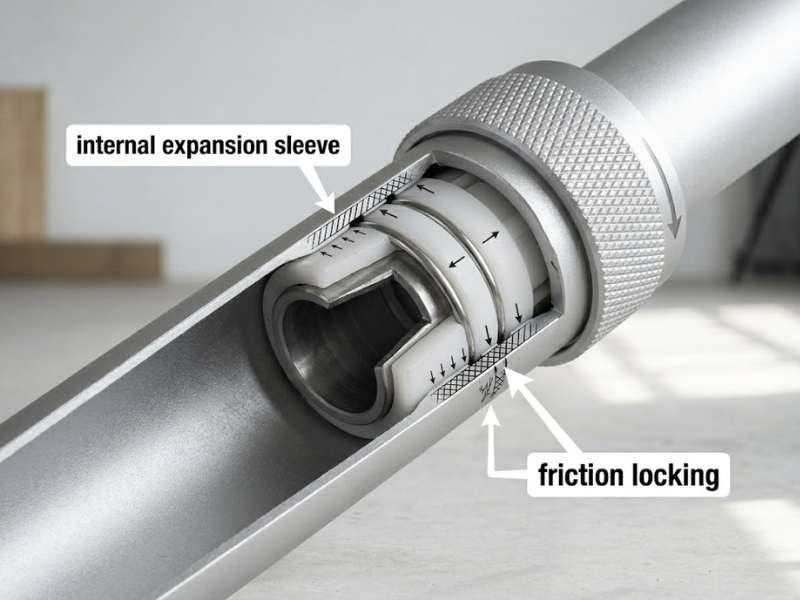
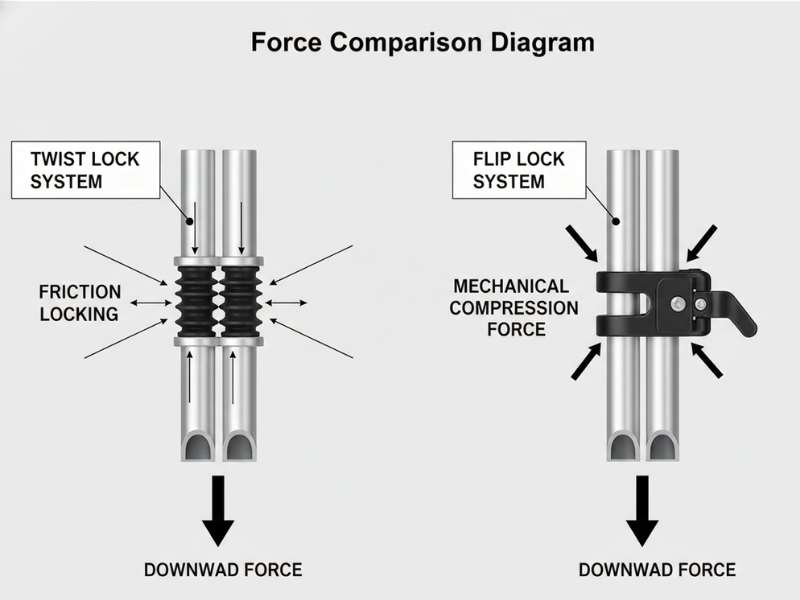
1. Twist Lock (Internal Friction Lock)
The twist lock — also called a screw lock or collar lock — works by rotating the outer collar, which tightens an internal nylon or rubber ring around the inner tube. This creates friction that resists collapse.
- How it works: Rotate outer collar 1/4 turn clockwise to lock; counterclockwise to release
- Best for: Pool poles, window cleaning poles, painting extension poles, solar panel cleaning
- Load capacity: Moderate (typically 3-8 kg at full extension)
- Pros: Clean look, no external protrusions, fast one-hand operation
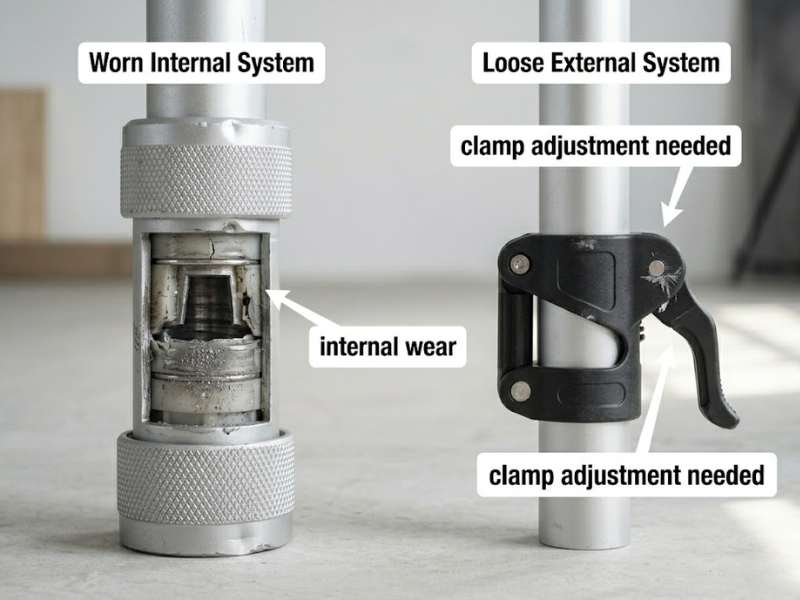
- Cons: Nylon insert wears over time; overtightening can crack collar; not ideal for high-vibration use
Our twist lock telescopic poles use reinforced nylon inserts and are available in 6061/6063 aluminum with anodized finish for corrosion resistance.
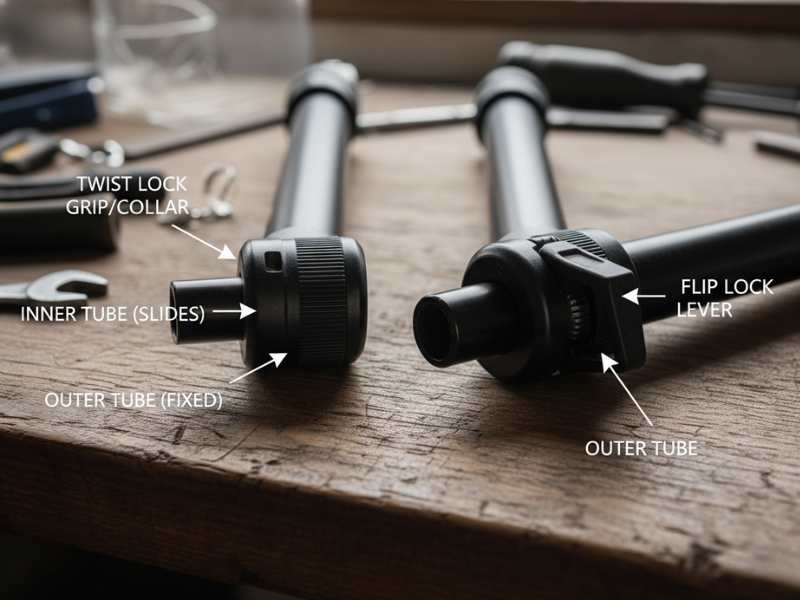
2. Flip Lock (External Cam Lock)
The flip lock uses an external lever that clamps down onto the inner tube via a cam mechanism. It is the most visible locking type and is extremely popular in professional and industrial applications.
- How it works: Flip lever open to slide tube; flip closed to lock instantly
- Best for: Camera tripods, monopods, survey equipment, heavy-duty industrial poles
- Load capacity: High (up to 15+ kg depending on design)
- Pros: Extremely fast lock/unlock; positive tactile confirmation; very high holding force
- Cons: External lever can snag; slightly more expensive; lever can loosen under extreme vibration
See our flip lock telescopic poles for heavy-duty outdoor and industrial applications where fast adjustment is required.
3. Button / Push Lock (Spring-Pin Lock)
The push-button lock uses a spring-loaded pin that pops into pre-drilled holes in the inner tube at set intervals. It is the simplest and most durable mechanism.
- How it works: Compress button/pin to slide tube; release at desired hole position to lock
- Best for: Fixed-length applications, tent poles, flag poles, banner poles
- Load capacity: High, but only at predetermined hole positions
- Pros: Extremely durable; no wear surfaces; instant lock; child-safe
- Cons: No stepless adjustment; holes are stress concentration points
4. Pin Lock (External Set Screw)
The pin lock uses a threaded set screw that passes through the outer tube to press against the inner tube. It is preferred for permanent or semi-permanent installations.
- How it works: Tighten set screw with Allen key until it bites the inner tube
- Best for: Marine, construction, architectural applications
- Load capacity: Very high
- Pros: Maximum holding force; tamper-resistant; handles vibration and shock loads well
- Cons: Requires tool to adjust; slow to change lengths
Twist Lock vs Flip Lock: Which Is Better?
Twist lock is best for consumer and light professional applications where appearance matters. Flip lock is better for professional and industrial use where holding force and field reliability are critical. If end users need a clean-looking pole that is fast to extend, specify twist lock. If load capacity matters more than appearance, specify flip lock.
How to Choose the Right Locking Mechanism for Your Application
- Pool and cleaning poles: Twist lock (clean, corrosion-resistant, user-friendly)
- Camera and photo equipment: Flip lock (fast, high hold, positive feedback)
- Tent and camping poles: Push-button lock (lightweight, simple)
- Industrial and marine: Pin lock or flip lock (maximum holding force, vibration resistance)
- Window cleaning: Flip lock or twist lock (user preference varies by region)
- Flag and banner poles: Push-button (fixed positions, no movement needed)
Common Locking Mechanism Failure Modes and How We Address Them
- Twist lock slippage under load: Caused by worn nylon insert. Our solution: oversized nylon collar with 3mm wall thickness, rated for 50,000+ cycles
- Flip lock lever loosening: Caused by vibration fatigue. Our solution: stainless steel cam rivet with Loctite thread-lock applied at factory
- Push-button pin breaking: Caused by off-axis load. Our solution: hardened steel pin (HRC 50+) with chamfered entry holes
- Corrosion seizing: Caused by salt or chlorine exposure. Our solution: Type II or Type III hard anodizing available on all pole interiors
OEM Telescoping Poles with Custom Lock Mechanisms
We supply telescoping poles with all four locking mechanism types to OEM brands, distributors, and private-label customers worldwide. Standard MOQ is 500-1,000 pcs. Custom branding, packaging, and certifications (CE, RoHS, ISO 9001) are available.
- Custom colors: anodized black, silver, gold, red, blue, or custom RAL
- Tube alloy: 6061-T6 or 6063-T5 aluminum
- Section count: 2 to 8 sections
- Extended length: 1.5m to 18m (5 ft to 60 ft)
- Sample lead time: 3-5 business days
Need a Custom Telescoping Pole Lock for Your Product Line?
If you are developing a new telescoping pole product, send your target length, tube diameter, load requirement, application, and preferred locking mechanism.
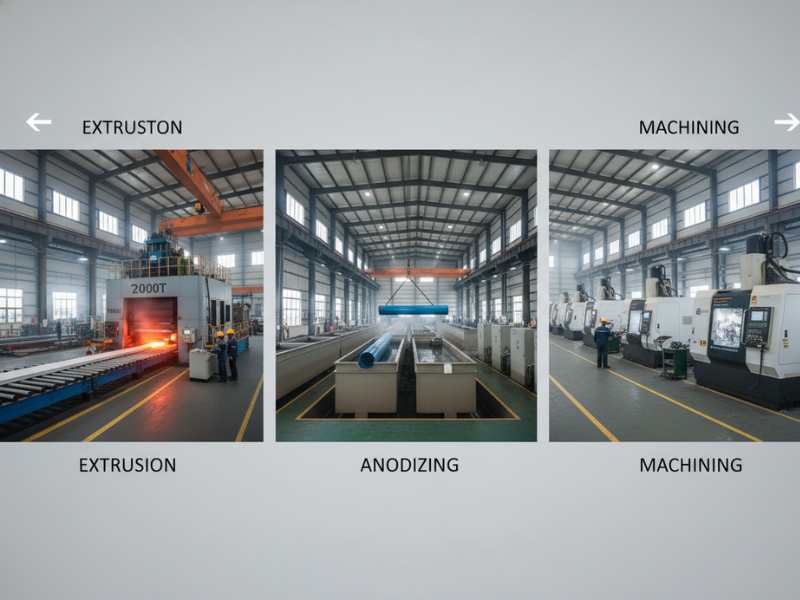
Xingyong can provide OEM aluminum telescoping poles with twist lock, flip lock, push button lock, and pin lock structures, including aluminum extrusion, anodizing, CNC drilling, lock assembly, private-label packaging, and sample development.
Contact Xingyong to get a technical drawing, sample plan, and OEM quotation for your custom telescoping pole locking mechanism.
The Same Lock Principle in Industrial Assemblies
Twist locking scales beyond hand poles: the same ring-and-thread clamp holds one tube inside another anywhere two tubes must sit at a set length — tripods, masts, adjustable legs, conveyor guards and rail systems. The engineering questions are identical: collet grip area, wall thickness at the clamp, and how the lock behaves under vibration instead of hand load.
Xingyong supplies these as aluminum tube assemblies with the twist-lock collets molded in-house — OEM buyers specify tube OD, wall and grip torque, and the lock is matched to the tube rather than bought off the shelf. This page is the home for how locking mechanisms work. The manufacturing side of that structure — tube pair tolerance, ring machining, thread and torque — has its own page at telescopic tube twist lock manufacturing.
Telescoping Pole Lock Types: Quick Comparison
| Lock type | How it works | Strength | Speed | Best for |
|---|---|---|---|---|
| Flip / cam lock | External lever clamps tube | High | Fast | Heavy-duty, frequent adjust |
| Twist lock | Internal expander grips | Medium | Medium | General use, low cost |
| Push-button | Spring pin in holes | Fixed steps | Fast | Set lengths |
| Threaded | Screw-together sections | High (static) | Slow | Long reach, professional |
Match the Lock Type to Working Load, Duty Cycle and Environment
A locking telescoping pole performs reliably only when the lock, tube geometry and working load are specified together. Twist locks suit clean, lightweight products where a smooth exterior matters. Flip locks give the user visible clamping and easier field adjustment. Push-button locks provide repeatable preset positions, while pin or set-screw locks are better when a positive mechanical stop matters more than adjustment speed.
| Lock type | Best fit | Main engineering check | Typical warning sign |
|---|---|---|---|
| Twist lock | Pool, cleaning and consumer extension poles | Insert friction, tube roundness and overlap | Slips when wet or contaminated |
| Flip lock | Frequently adjusted tools and outdoor equipment | Cam preload, clamp material and fastener retention | Lever closes without firm resistance |
| Push button | Repeatable length settings | Hole position, button engagement and edge wear | Button does not fully protrude |
| Pin or set screw | Industrial fixtures and infrequent adjustment | Bearing area, local tube deformation and retention | Tube dents around the contact point |
Five checks before approving a locking telescoping pole
- Define the maximum working length, side load and tool weight—not only the vertical hanging load.
- Confirm the minimum tube overlap at full extension; insufficient overlap magnifies bending and lock stress.
- Test locking force in dry, wet and dusty conditions representative of real use.
- Run repeated extension-and-lock cycles and inspect slip distance, wear and user effort.
- Record the tube tolerance, lock components and acceptance criteria on the approved sample.
For the structural side of the specification, use our telescopic pole load-capacity guide. Deciding between the three lock types for a program? Use the in-site lock-type selection aid. Specifying a telescopic tube locking mechanism for an assembly rather than a finished pole? That page covers the tube-side version of this decision, where vibration and wall thickness replace hand feel as the deciding factors.
Related Comparisons & Guides
- Twist lock vs flip lock
- Flip-lock build sheet — cam geometry, clamp force, cycle life
- Push-button build sheet — spring spec, hole positioning, pull-out load
- Twist-lock tube structure — ring, thread and torque
Related products: Explore related products and review matching solutions.


 English
  Español
  Français
  Deutsch
  Português