
Match the pole to the job, not the height: a 10 ft target needs a 4–6 ft pole, a 20 ft target a 12–16 ft pole. Choosing the wrong extension pole length creates more problems than it solves. Too short, and users cannot reach the target area. Too long, and the pole becomes unstable, heavy, and inefficient. Many distributors face high return rates simply because the length was misjudged.
For product planning, this guide should feed into aluminum extension pole programs rather than stay as a standalone reference. If the design is customized, use custom aluminum telescopic poles and send the specification for a factory RFQ, with Aluminum Association material resources as a neutral source for the background assumptions.
If you are sourcing extension poles for resale or OEM, the impact goes further—wrong length means higher logistics cost, poor user experience, and slower inventory turnover. This guide gives you a clear method to choose the right length based on real applications, engineering limits, and B2B purchasing logic.
How to Choose Extension Pole Length for Different Applications (Direct Answer)
The right extension pole length is typically 7–8 feet shorter than the target working height.
This accounts for:
- User height (~6 ft)
- Arm reach (~2 ft)
- Tool head (~0.5–1 ft)
Quick Selection Guide
- 10 ft height → 4–6 ft pole
- 15 ft height → 8–10 ft pole
- 20 ft height → 12–16 ft pole
- 25 ft height → 16–20 ft pole
In practice, 12–16 ft adjustable extension poles cover over 70% of commercial use cases, making them the most stable and fastest-moving SKU in distribution channels.
Extension Pole Length Chart by Application
Pool Cleaning Extension Pole Length
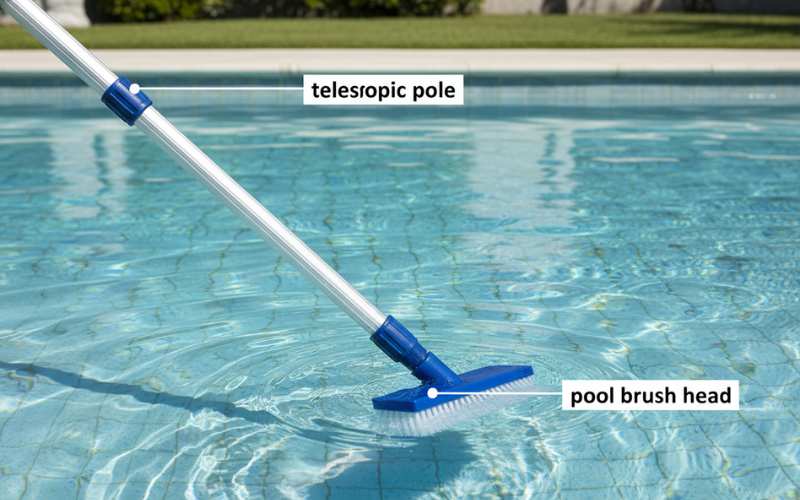
Pool cleaning focuses on control, not extreme reach.
- Typical range: 6–16 ft
- Best-selling: 8–12 ft
- Key requirement: corrosion resistance
Why shorter works better:
Water resistance increases drag. Longer poles reduce precision and tire the operator faster.
Window Cleaning Extension Pole Length
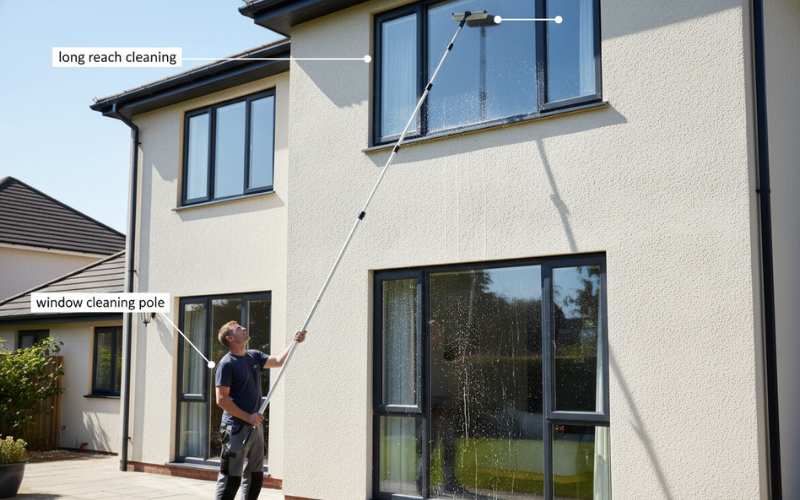
Window cleaning requires balance between reach and stability.
- Residential (1–2 floors): 8–16 ft
- Low-rise commercial: 16–24 ft
- Specialized: 20–30 ft
Operational insight:
Beyond 20 ft, rigidity becomes more important than reach.
Gutter Cleaning Extension Pole Length
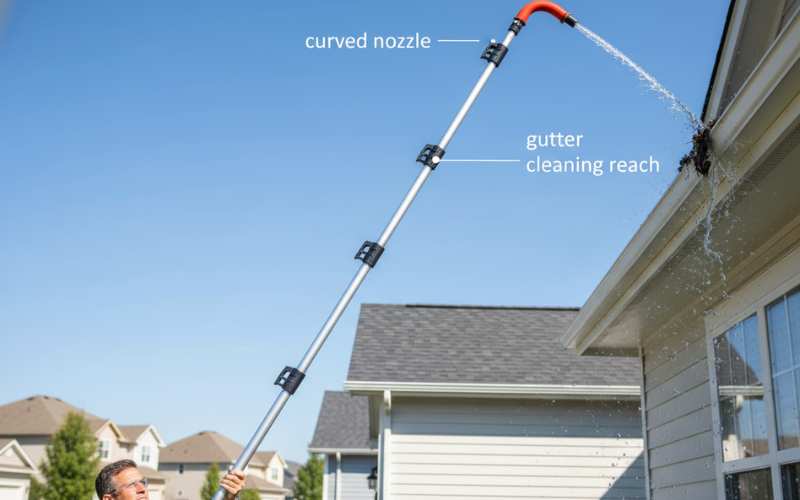
Gutter cleaning combines vertical reach and angled operation.
- Working height: 15–25 ft
- Recommended pole: 12–20 ft
Attachments like curved nozzles or brushes extend reach, reducing required pole length.
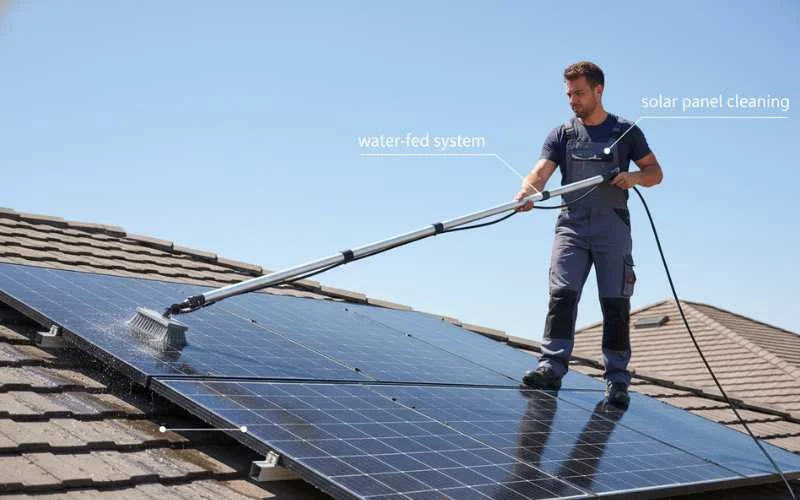
Solar Panel Cleaning Extension Pole Length
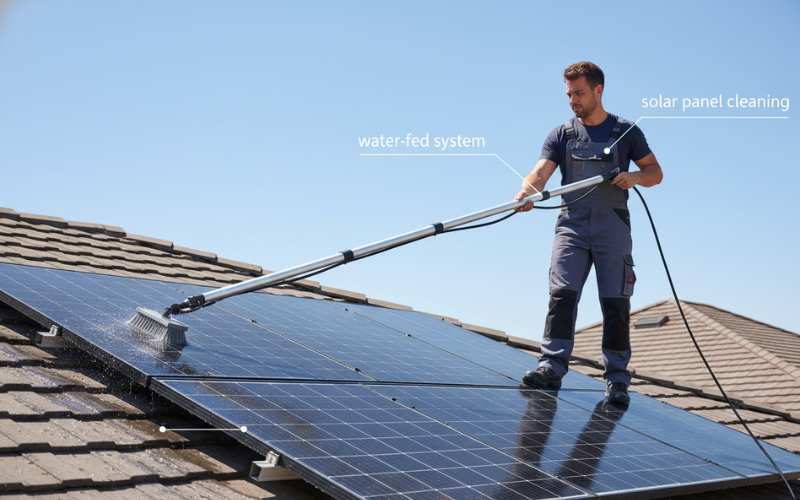
Solar cleaning often requires extended reach with continuous water flow.
- Ground systems: 12–20 ft
- Rooftop arrays: 20–40 ft
Key constraint:
Weight and stiffness must be optimized simultaneously to avoid bending under load.
Extension Pole Length vs Working Height (What Most Buyers Get Wrong)
Most users choose poles based on total height instead of effective reach.
Correct Calculation
| Target Height | Recommended Pole Length |
|---|---|
| 10 ft | 4–6 ft |
| 15 ft | 8–10 ft |
| 20 ft | 12–16 ft |
| 25 ft | 16–20 ft |
| 30 ft | 20–24 ft |
Common mistake:
Buying a 20 ft pole for a 20 ft job. This creates unnecessary weight and instability.
Why Longer Extension Poles Reduce Performance
Longer poles introduce structural and operational issues:
- Increased flex reduces accuracy
- More vibration during movement
- Higher fatigue rate for users
- Greater risk of locking failure
According to ergonomic studies from NIOSH, repetitive overhead work significantly increases fatigue and injury risk when tool weight and reach are not optimized.
Conclusion:
The correct pole is not the longest—it is the most stable at the required height.
Engineering Factors That Determine Extension Pole Length Performance
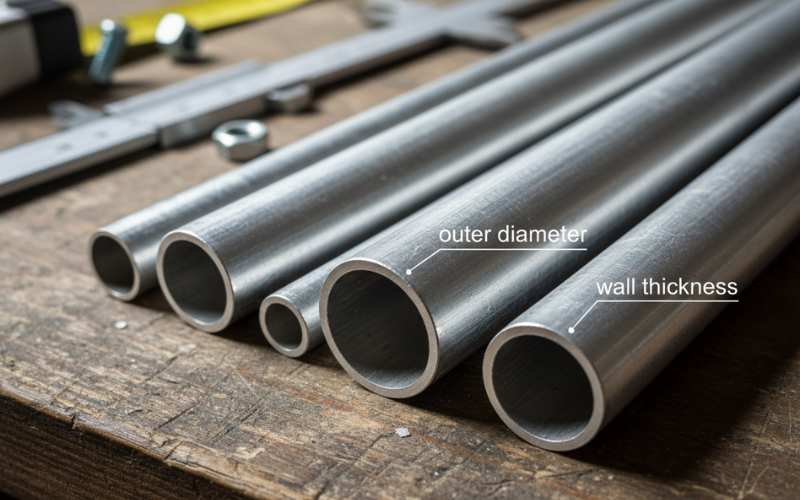
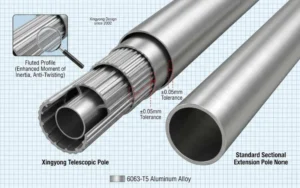
Tube Diameter and Wall Thickness
- Larger outer diameter improves stiffness
- Thicker walls reduce bending
However, more material increases weight and cost. The correct balance depends on target length.
Material Selection
| Material | Weight | Application |
|---|---|---|
| Aluminum | Medium | Most B2B markets |
| Fiberglass | Heavy | Electrical safety |
| Carbon Fiber | Light | Long reach premium |
Aluminum remains the dominant choice due to its balance of strength, cost, and corrosion resistance, as explained by the Aluminum Association.
Locking System vs Length
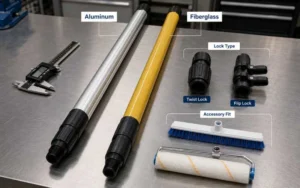
- Twist lock → cost-effective, compact
- Flip lock → faster adjustment, stronger hold
- Clamp lock → industrial-grade
For poles over 16 ft, stronger locking systems are required to maintain structural stability.
How Extension Pole Length Affects Cost, MOQ and Product Strategy
For distributors and OEM buyers, length is directly tied to cost structure.
Cost Impact
- Longer poles = more aluminum → higher unit cost
- More sections = higher assembly cost
- Larger diameter = increased material usage
MOQ Strategy
- Short poles → lower MOQ, faster turnover
- Mid-length (12–16 ft) → highest volume
- Long poles → lower volume, higher margin
Recommended SKU Mix
- 8–12 ft → entry-level retail
- 12–16 ft → core sales volume
- 16–24 ft → professional segment
This 3-tier structure balances volume, margin, and inventory risk.
Collapsed Length and Shipping Efficiency
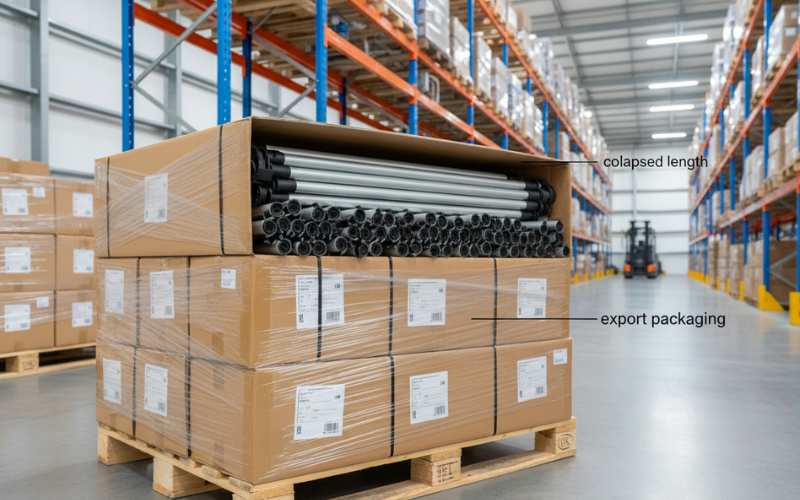
Shipping efficiency depends on collapsed length, not extended length.
Why it matters:
- Fits standard cartons (≈1.2 m)
- Maximizes container utilization
- Reduces freight cost per unit
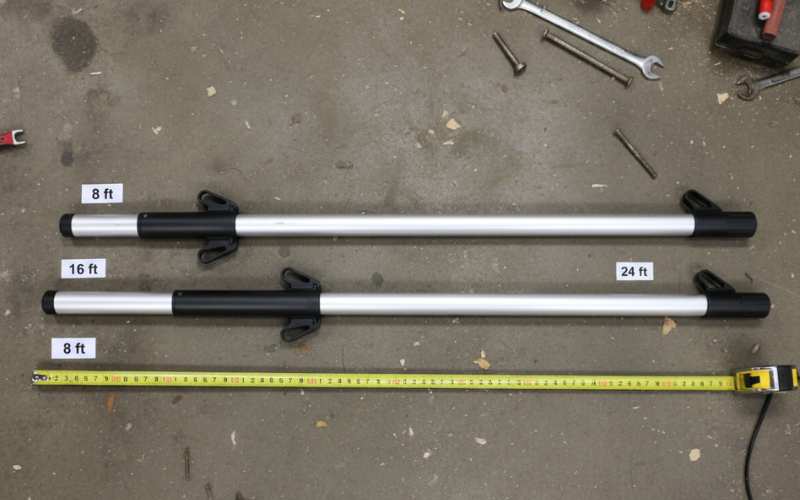
| Extended Length | Sections | Collapsed Length |
|---|---|---|
| 8 ft | 2–3 | ~4 ft |
| 16 ft | 4–5 | ~5–6 ft |
| 24 ft | 5–6 | ~6–7 ft |
According to the World Shipping Council, inefficient cargo sizing leads to significant unused container space.
Common Mistakes When Choosing Extension Pole Length
- Choosing maximum length without need
- Ignoring operator fatigue
- Overlooking shipping constraints
- Not aligning with application scenarios
In retail channels, incorrect length selection is one of the leading causes of product returns.
Frequently Asked Questions
What length extension pole do I need?
Choose a pole 7–8 ft shorter than your target height. This ensures usability and control.
Is a longer extension pole better?
No. Longer poles increase flex, fatigue, and safety risk. Correct sizing improves efficiency.
What is the most common extension pole length?
12–16 ft adjustable poles are the most widely used across cleaning and maintenance industries.
How does telescopic section design affect length?
More sections reduce collapsed length but may reduce stiffness. Fewer sections improve rigidity but increase shipping size.
What Actually Works in the Market
If you need a practical decision framework:
- Define your target application
- Calculate real working height
- Choose the shortest effective length
- Optimize for weight and rigidity
- Align with shipping and SKU strategy
Most successful product lines center around 12–16 ft aluminum extension poles, supported by shorter and longer variants.
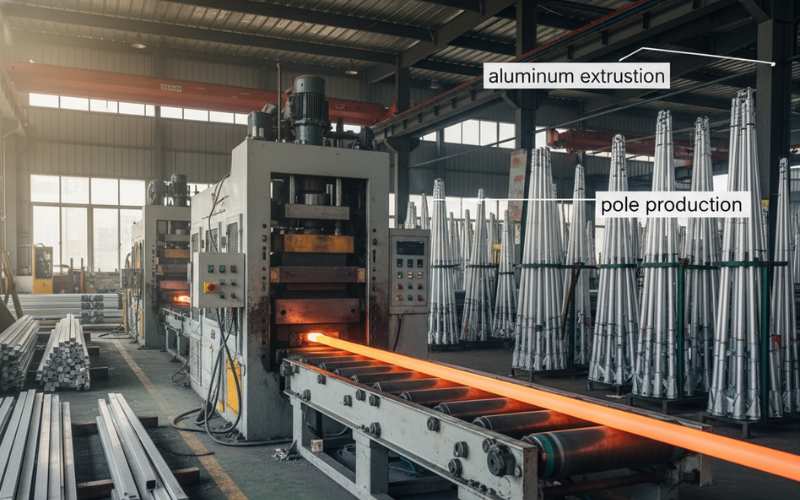
Plan Your Extension Pole Product Line with Confidence
If you are sourcing extension poles for OEM or distribution, length selection should align with your market strategy.
Tell us your target market and price range. We can help you define:
- Best-selling length combinations
- Tube diameter and wall thickness
- Locking system selection
- Packaging optimized for container loading
- MOQ and lead time planning
Explore aluminum extension pole solutions or contact our team to build a product line that fits your market demand.
Related products: Explore related products and review matching solutions.
Extension Pole Length Calculator: Reach, Angle and Safety Margin
To choose the right extension pole length, start with the distance from the operator’s hands to the work point—not the height of the wall, window or gutter. Add the operator’s comfortable hand height, account for the working angle, and keep a small adjustment margin. A longer pole is not automatically better because bending moment rises rapidly as the load moves farther from the user.
Practical estimate: required pole length ≈ straight-line distance from hand position to the task + attachment allowance + 5–10% adjustment margin. For angled work, measure the diagonal reach rather than adding vertical and horizontal distances.
| Input | What to measure | Why it matters |
|---|---|---|
| Working point | Height and horizontal offset | Defines the true diagonal reach |
| Operator position | Comfortable hand height and safe setback | Avoids overreaching or standing below debris |
| Attachment | Tool length, weight and connection | Changes effective reach and bending load |
| Adjustment margin | 5–10% for positioning, not excessive unused length | Allows control without unnecessary flex |
Example
If the straight-line hand-to-task distance is 3.6 m and the tool adds 0.25 m, a practical starting point is about 4.0–4.2 m. The final choice must still be tested with the actual attachment, because tube diameter, wall thickness, overlap and lock design determine whether that reach is usable.
After choosing the length, verify stiffness with the telescopic pole load-capacity method and compare telescopic versus fixed structures.


 English
  Español
  Français
  Deutsch
  Português