CNC Sawing & Cutting
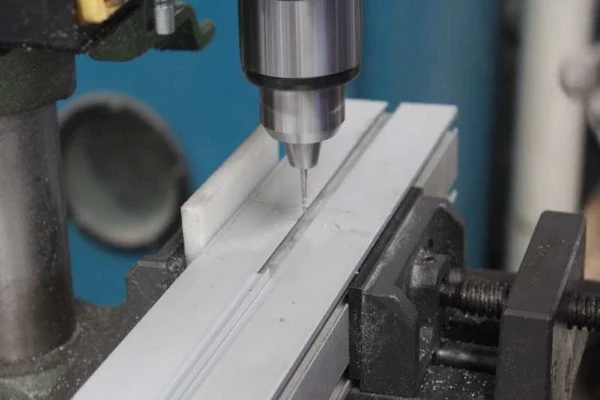
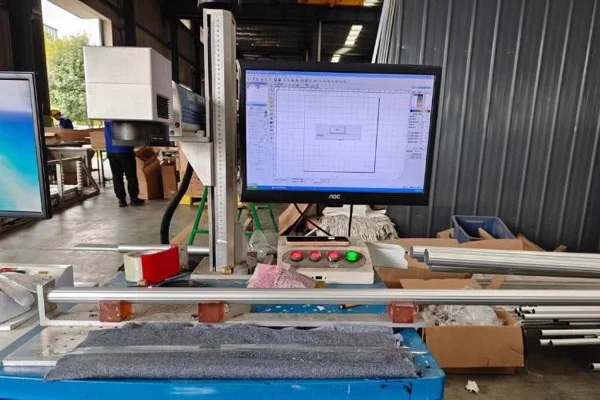
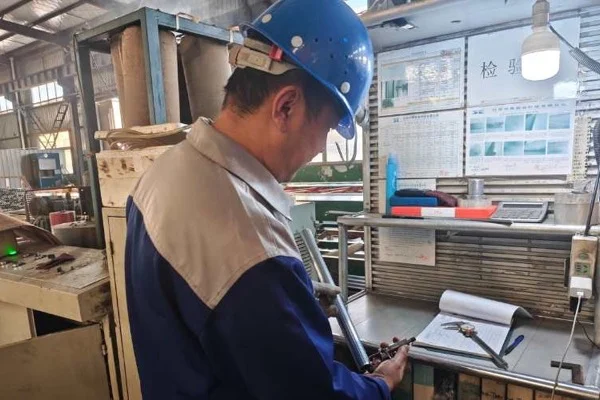
Servo-fed cutting and deburring prepare each telescopic section to the approved length and assembly clearance.

Manufacturing Capability
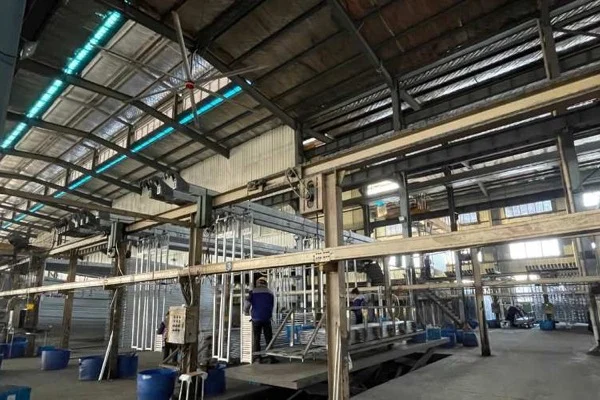
Xingyong performs cutting, drilling, slotting, tapping, milling, necking and flaring for aluminum telescopic pole programs in-house—so tube geometry, lock interfaces and assembly requirements stay under one manufacturing plan.
Product Overview
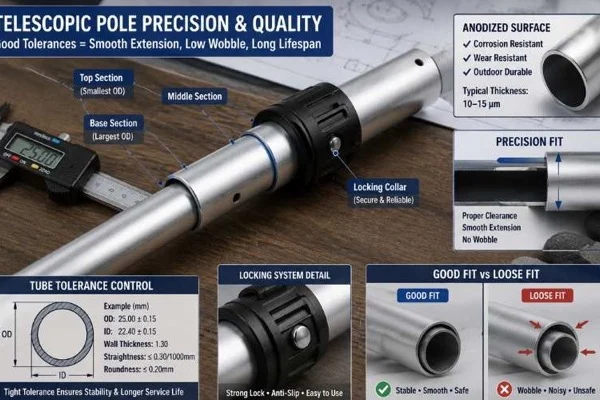
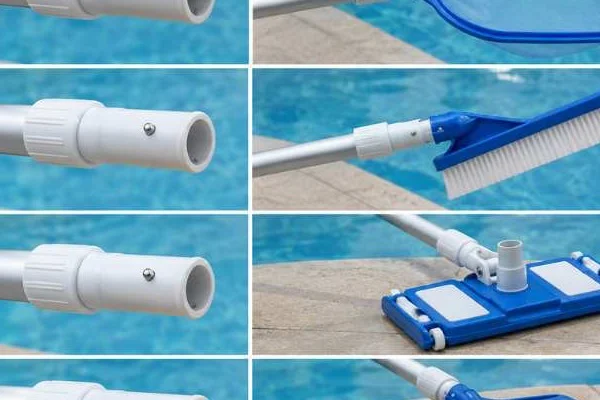
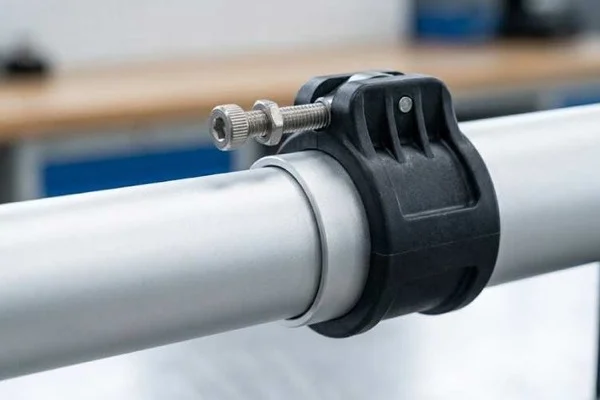
Machining is where an extruded aluminum tube becomes a working telescopic pole. The cut length, button holes, slots, threads and end geometry determine whether the sections slide smoothly, locks engage consistently and a tool head connects as specified.
Our CNC workflow is planned around the approved pole design, alloy, finish and assembly sequence. This helps OEM buyers control critical interfaces instead of treating each secondary process as a separate purchase.
Why Us
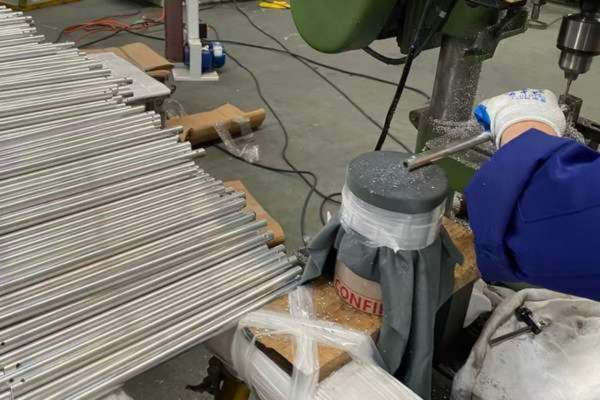
Xingyong machines tubes, brackets, end fittings and connectors for telescopic pole programs after reviewing the functional fit—not simply the drawing dimensions.
For a complete program, pair machining requirements with precision aluminum tube manufacturing and lock and connector matching.
CNC Operations
These are the operations we run on our own poles. If you need the same work done on extrusions you already buy elsewhere, that is a separate service — see aluminum extrusion machining. Die and tolerance conventions on both follow the practice published by the Aluminum Extruders Council.
Servo-fed cutting and deburring prepare each telescopic section to the approved length and assembly clearance.
Button, rivet and through-pin holes are positioned using matched fixtures to support consistent lock alignment.
Milling and slotting create lock windows, brackets, end fittings and custom connector features from approved CAD.
Threads for caps and accessories are checked against the agreed engagement and gauge requirement.
Tube ends are formed for controlled nesting and the intended telescopic section relationship.
Production fixtures support repeatable positioning when a pole program includes non-standard holes, slots or interfaces.
Quality Control
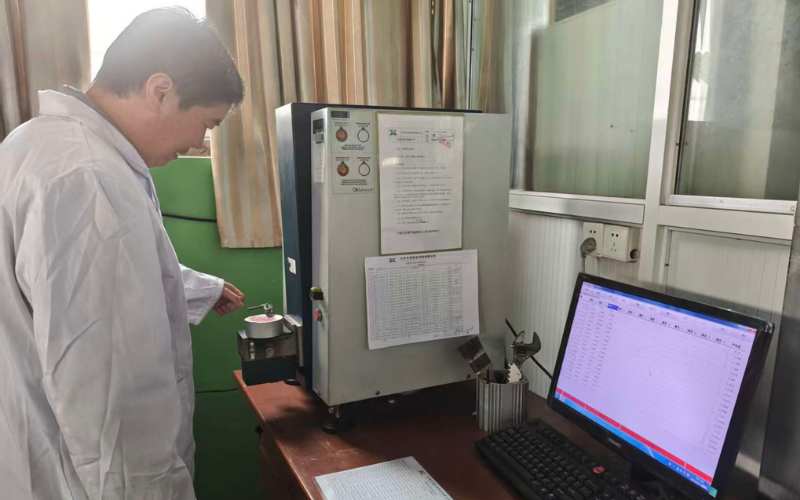
Each machining stage is checked against the approved drawing and production sample. The control plan focuses on cut length, hole location, slot geometry, thread engagement and the fit between telescopic sections.
Incoming alloy verification, dimensional inspection and functional assembly checks are coordinated with the wider quality assurance process. This provides a traceable route from aluminum tube to finished pole component.
Project Workflow
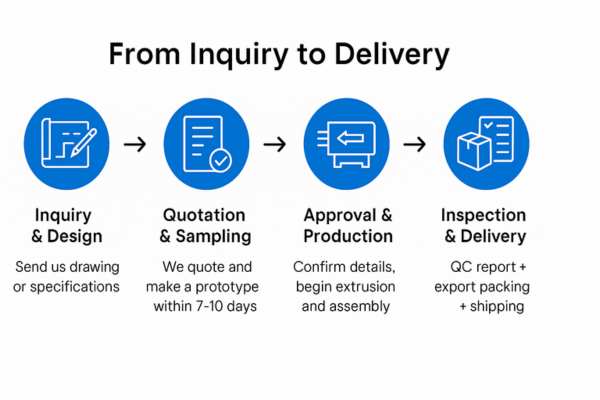
We review CAD, a drawing or a sample for machinability, fixturing and tolerance stack before quoting the work.
Approved material runs through the selected machining route with inspection points at critical interfaces.
Samples and production parts are checked for dimensional, surface and functional fit before packing or next-stage assembly.
Programs commonly use 6063 tube material and other specified aluminum alloys. We confirm the required material and finish during the DFM review.
Typical cut-length tolerance is ±0.2 mm. Final tolerance depends on the pole structure, material condition and the functional interface being controlled.
Yes. We machine brackets, fittings, connectors, short extrusions and other components that form part of an OEM pole system.
The sequence depends on the approved finish and feature requirements. We confirm the machining and surface-treatment route during project review.
STEP, IGES, DWG, DXF, PDF drawings and physical samples can all support a DFM review.
Related Products
Technical Support
Use these guides to align tube load, locking behavior and multi-section design before confirming the machining specification.
Send a CAD file, drawing or sample. We will review the machining route and provide a practical quote for your OEM pole program.
 English English
  Español
 Français
 Deutsch
 Português