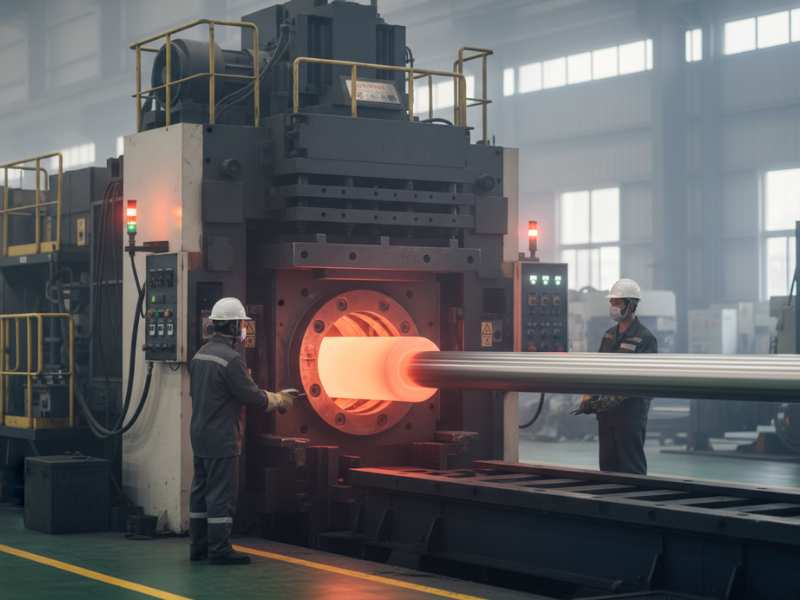
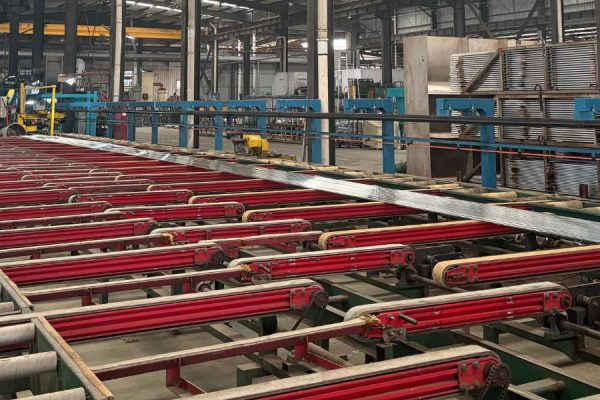
The aluminum extrusion process shapes heated aluminum by forcing it through a steel die. The aluminum exits the die with a fixed cross-section, forming long profiles that can be cut, machined, and finished.
Think of it like squeezing toothpaste from a tube. The nozzle (die) controls the shape. The pressure controls consistency and quality.
This method is ideal for products that need:
- Long, uniform profiles
- Controlled wall thickness
- High strength-to-weight ratio
Aluminum Extrusion Process: Step by Step
1. Billet Preparation and Heating
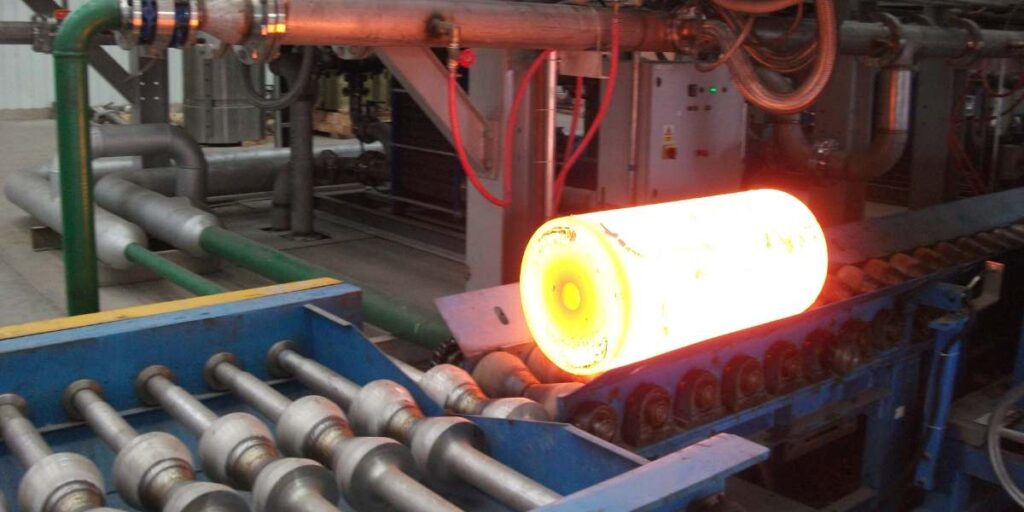
- Aluminum billets are cut to size
- Heated to 450–500°C
- Aluminum becomes soft but does not melt
This temperature range allows smooth metal flow without surface defects.
2. Extrusion Through the Die
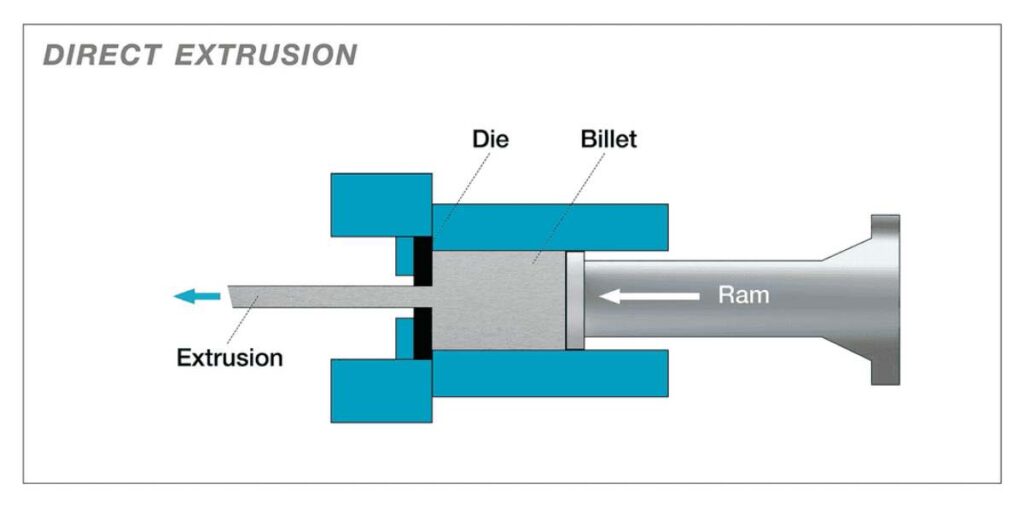
- The hot billet is placed into an extrusion press
- A hydraulic ram applies 350 to 2000+ tons of pressure
- Aluminum flows through a custom-designed die
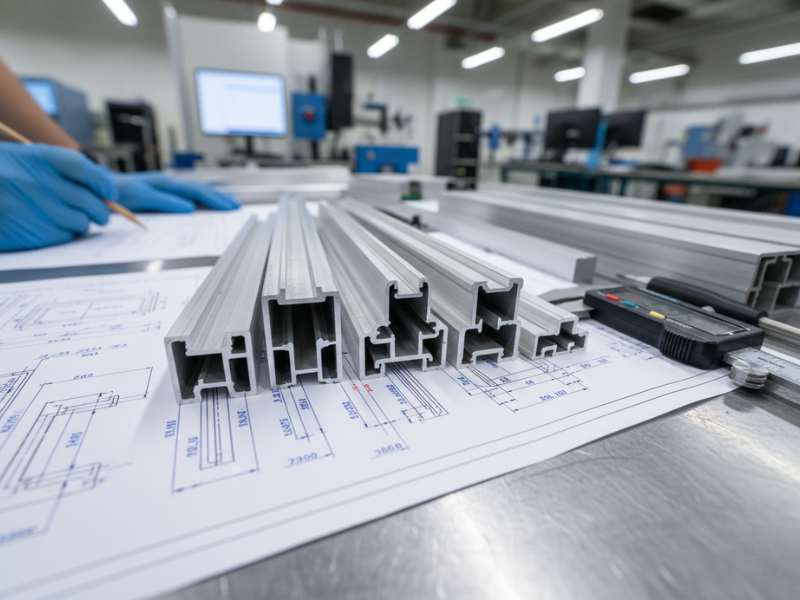
The die defines the final profile shape: round tubes, square tubes, multi-cavity sections, or complex custom designs.
3. Cooling and Quenching
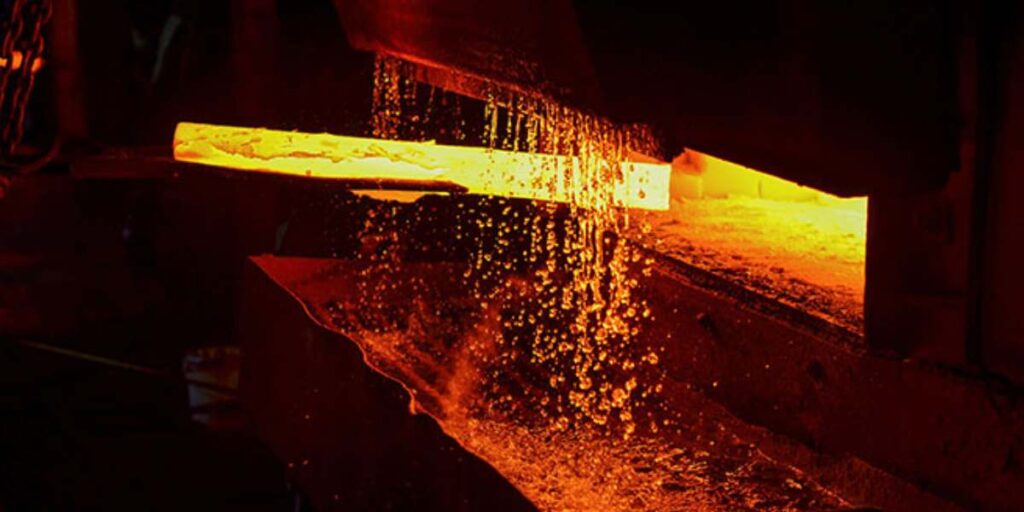
- The extruded profile exits the press continuously
- Cooled by air or water
- Cooling speed affects mechanical strength
Controlled cooling helps maintain straightness and dimensional stability.
4. Stretching and Cutting
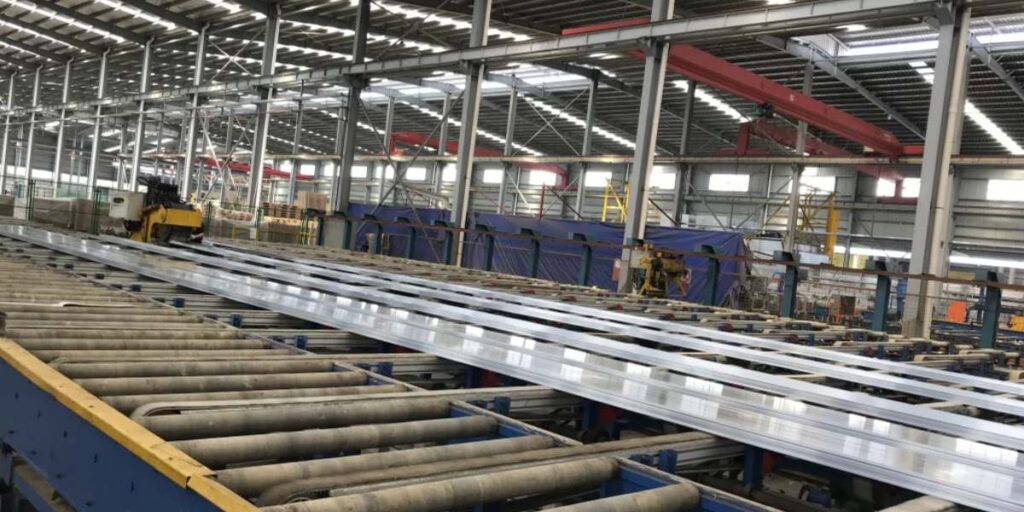
- Profiles are stretched to remove internal stress
- Cut into standard lengths (typically 6–12 meters)
This step improves straightness and machining accuracy.
5. Heat Treatment (Aging)
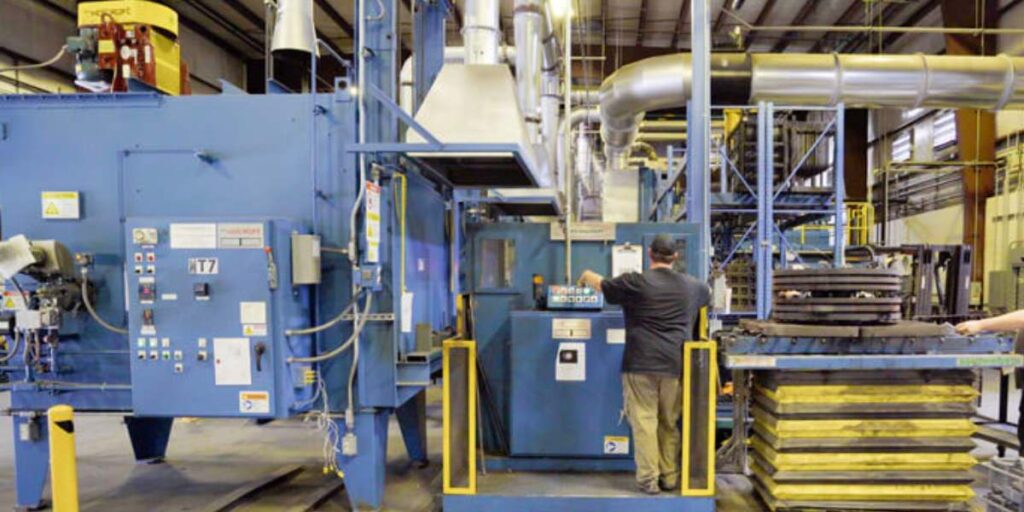
- Profiles are aged naturally or in ovens
- Common tempers: T5 and T6
- Strength and hardness increase significantly
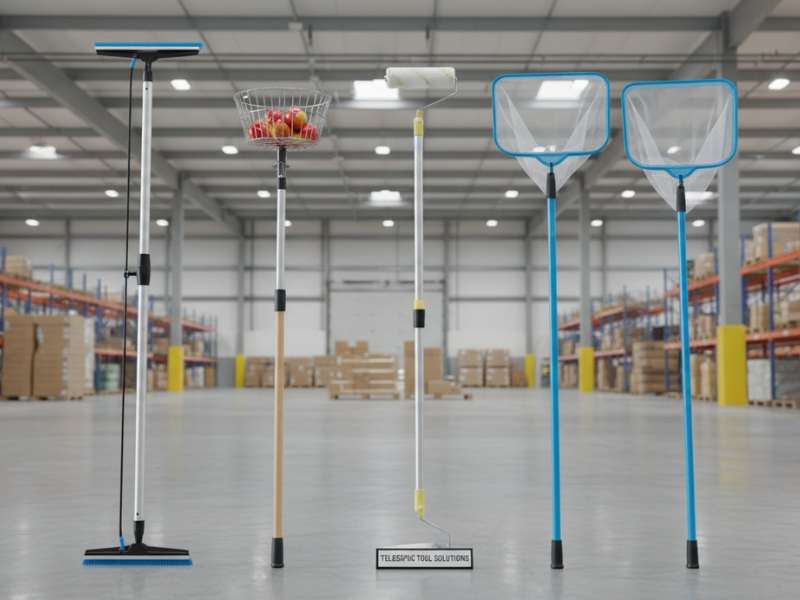
For load-bearing products like telescopic poles, proper aging is essential.
6. Surface Finishing and Machining
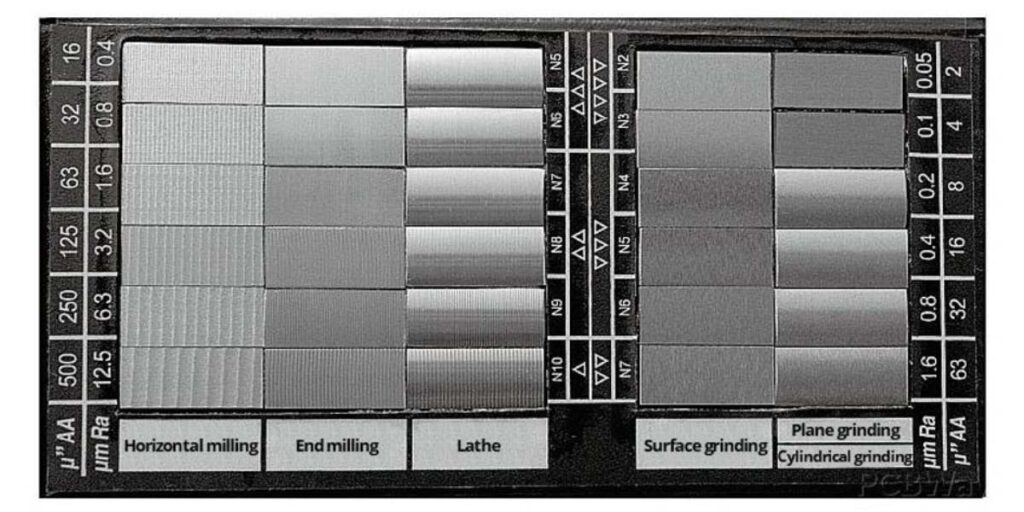
After extrusion, profiles can be:
- Anodized (natural, black, silver, or color)
- Powder coated
- Sandblasted or brushed
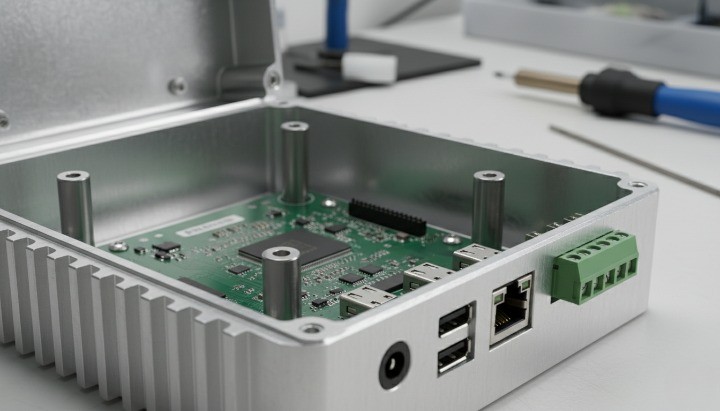
- CNC machined, drilled, punched, or laser marked
This is where appearance meets function.
Why Aluminum Extrusion Is Used So Widely
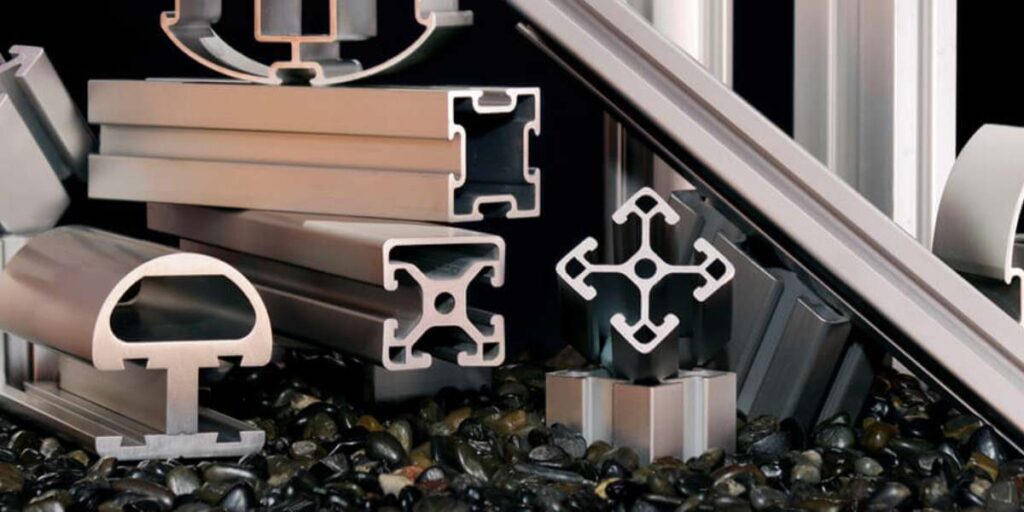
Aluminum extrusion offers a balance that many manufacturing methods cannot.
Key benefits include:
- Lightweight with high structural strength
- Excellent corrosion resistance
- High design flexibility
- Consistent dimensions across large volumes
- Cost-effective for medium to high production runs
- Fully recyclable material
For international buyers, extrusion also means predictable quality and scalable supply.
Common Applications of Aluminum Extrusion
- Aluminum telescopic poles
- Pool cleaning poles and pool cover reels
- Window and door frames
- Furniture and display systems
- Automotive and EV components
- Industrial rails and frames
If your product is long, hollow, or requires internal reinforcement, extrusion is typically the best choice.
What the Extrusion Process Means for You as a Buyer
Understanding extrusion helps you make better sourcing decisions.
It allows you to:
- Specify the right wall thickness and alloy
- Balance weight, strength, and cost
- Avoid unnecessary material waste
- Communicate clearly with your supplier’s engineers
A capable extrusion factory can also help optimize your profile design, reducing total product cost without sacrificing performance.
Related Resources
- Internal: Aluminum Telescopic Poles for Pool Cleaning
- Internal: Anodized Aluminum Surface Finishes
- External: Aluminum Extrusion – Wikipedia
Ready to Move Forward?
Request a sample profile
Contact our export engineering team
When you understand how aluminum extrusion works, you don’t just buy parts—you buy consistency, performance, and long-term reliability.