
50 Ft Telescoping Pole Manufacturer
Xingyong builds aluminium poles that actually work at 50 ft — a graduated diameter cascade, stepped wall thickness and locks sized to the section they clamp, supplied OEM to cleaning, solar and maintenance tool brands.
- Flex is the engineering problem — each lower section steps up in diameter and wall, so the pole stays workable instead of whipping.
- Honest duty class — light heads worked at an angle or braced; this is a reach tool, not a rigid mast.
- OEM terms that hold — private label, free samples in 7–15 days, quotes in 24 hours.
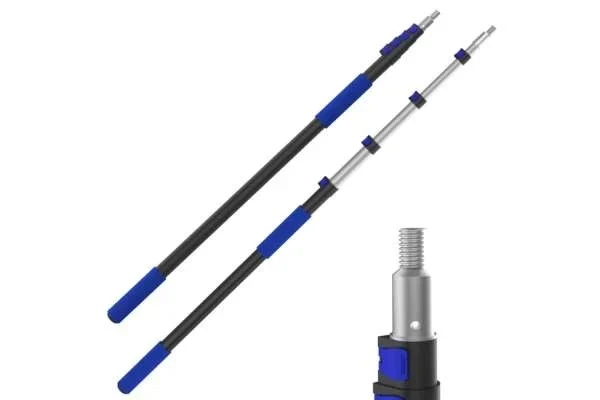
What a 50 Ft Telescoping Pole Can and Cannot Do
Yes — a 50 ft telescoping pole is a real, buildable product. At that length flex control is the whole engineering problem, and it is solved in the tube stack, not in the marketing copy.
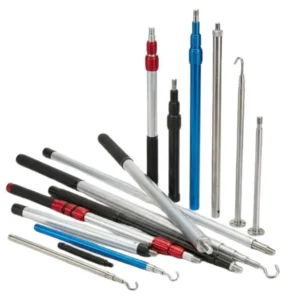
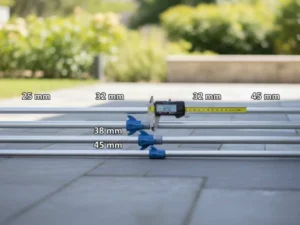
Xingyong holds it with a graduated diameter cascade: every lower section steps up in tube diameter and wall thickness, in stiff 6065/6063 alloy, with each lock sized to the section it clamps. That combination is what separates a pole a crew keeps using from one that whips at full extension.
The duty class, stated plainly: 50 ft suits light heads — rinsing, dusting, inspection — worked at an angle or braced against the structure, the way high-reach wash professionals in the Power Washers of North America community operate. It is not a rigid mast for heavy loads, and we say so before you tool up.
Catalogues shorten the same product to 50 foot extension pole, 50 ft pole or simply a long extension pole — one build platform, named four ways. Shorter and longer reach classes have their own pages: 40 ft, 60 ft and 100 ft; the full range sits at aluminium telescoping poles.
50 Ft Telescoping Pole OEM Options — Line by Line
Send the tool head and the working angle first — at 50 ft those two decide the tube stack, and everything else follows.
| Specification | OEM Options | Confirm Before Sampling |
|---|---|---|
| Structure | Multi-section telescopic, or sectional extension build | Reach target and storage length |
| Tube & alloy | 6065 / 6063, diameter and wall stepped per section | Head weight and working angle |
| Wall & diameter cascade | Wall steps up on every lower section to hold flex | Duty class: light head or braced work |
| Locking | Flip, twist or push-button, sized to the section it clamps | Cycle count and operator |
| Tool interface | ACME thread, cone, button or custom end | Sample or drawing of the actual head |
| Finish | Anodised or powder coated, brand colors | Color codes |
| Plastic parts & assembly (in-house) | Collars, grips and end caps molded on site; poles ship assembled | Assembly level |
| Collapsed length & packing | Section count sets packed length; carton or palletised | Container plan and carton limit |
| MOQ & lead time | Per configuration; sampling 7–15 days | Volumes and season dates |
Three Ways Buyers Order 50 Ft of Reach
Same 50 ft on the spec sheet, three different products on the truck — the choice is made on storage, rigidity and price point.
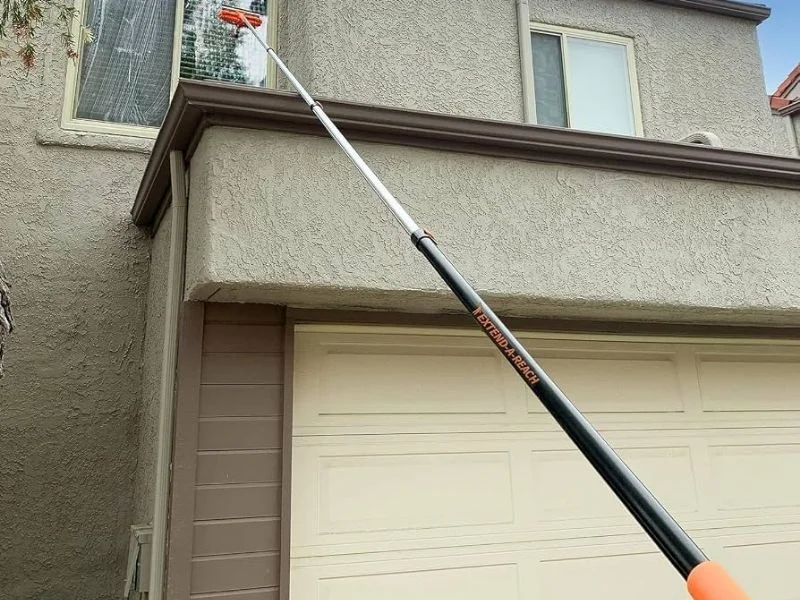
50 Ft Telescoping Pole
The collapsing build — nests to a fraction of its length, so a service van carries 50 ft of reach without a roof rack.
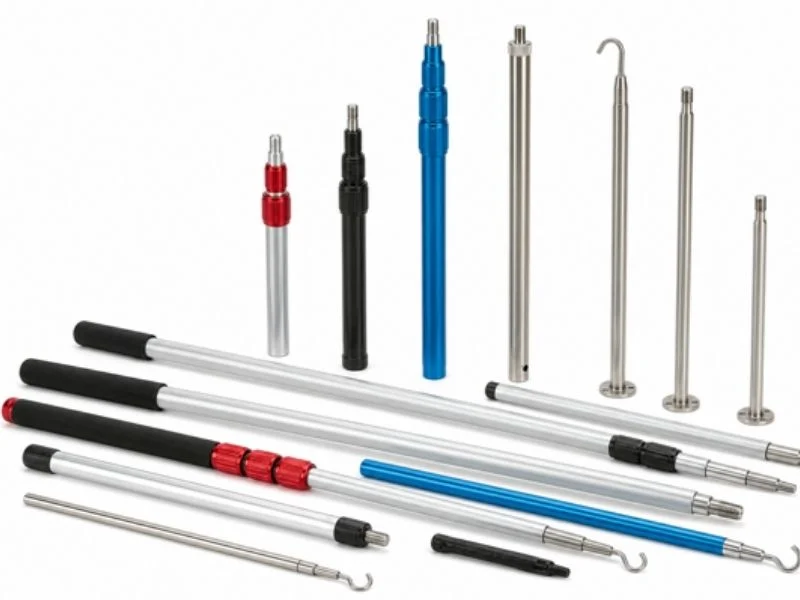
50 Foot Extension Pole
The sectional build — joined lengths give more rigidity per kilo, for crews that assemble on site and value stiffness over speed.
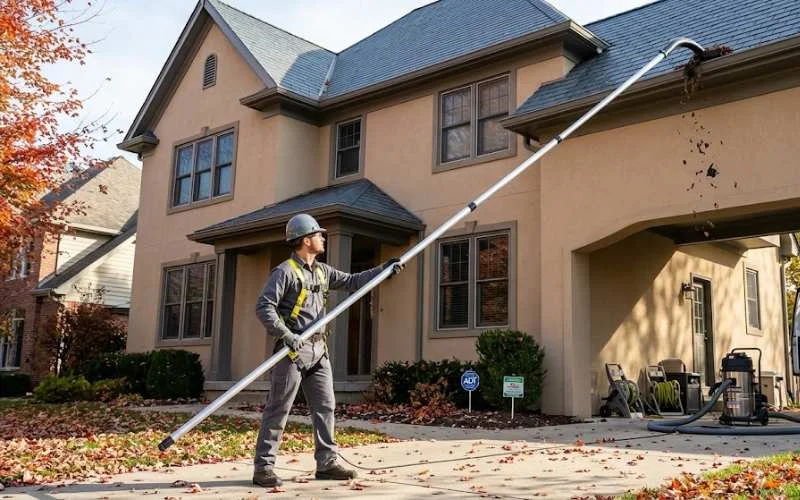
Long Extension Pole
The reach ladder either side of 50 ft — 40, 60 and 100 ft classes on the same cascade logic, so one supplier covers the whole shelf.
Specs reflect 6065/6063 poles built at Jiangsu Xingyong (ISO 9001, since 2010); duty class confirmed per head before sampling.
Cleaning-Duty 50 Ft Poles vs Antenna Masts vs Carbon Water-Fed Poles
Three different industries answer to “50 ft pole” — buying across the line is where programs go wrong:
| Point | Aluminium cleaning-duty pole (this page) | Telescoping antenna mast | Carbon water-fed pole |
|---|---|---|---|
| Job | Light heads worked at an angle or braced | Holds an antenna or dish against wind load | Fed-water glass cleaning at height |
| Load case | Hand-held, dynamic, operator-limited | Static, guyed, wind and ice rated | Hand-held, weight-critical |
| Material | 6065 / 6063 aluminium, stepped wall | Steel or heavy-wall aluminium sections | Carbon fiber — lighter, several times the price |
| What decides it | Flex at full extension | Guying, grounding and wind rating | Weight at the operator’s wrists |
| We build | Yes — OEM, private label | No — different industry, different standards | No — we supply the aluminium class honestly |
Why Brands and Distributors Choose Xingyong for 50 Ft Telescoping Poles
At 50 ft the supplier either understands the tube stack or ships a pole that whips at full extension. Four reasons buyers stay after the first container.
If you build a branded high-reach line, see how Xingyong works with importers and trading companies.
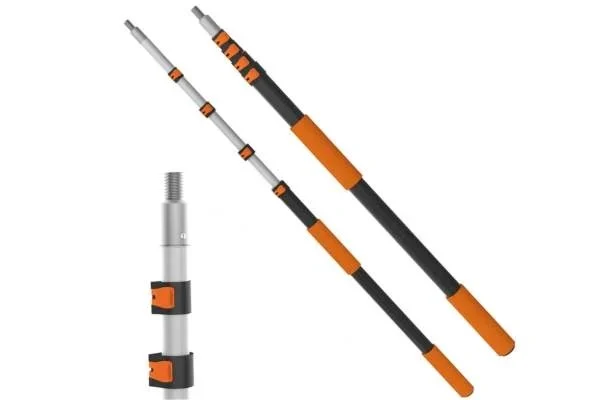
The Diameter Cascade Is Engineered, Not Copied
Diameter and wall step up on every lower section, and each lock is sized to the section it clamps — the pole is designed as one stack rather than assembled from whatever tube was in stock. That is the whole difference between a 50 ft pole a crew keeps using and one that whips.
- For distributors: 50 ft is a low-competition, high-ticket niche — one factory supplies pole, locks and mouldings, so a private-label SKU closes in a single purchase order.
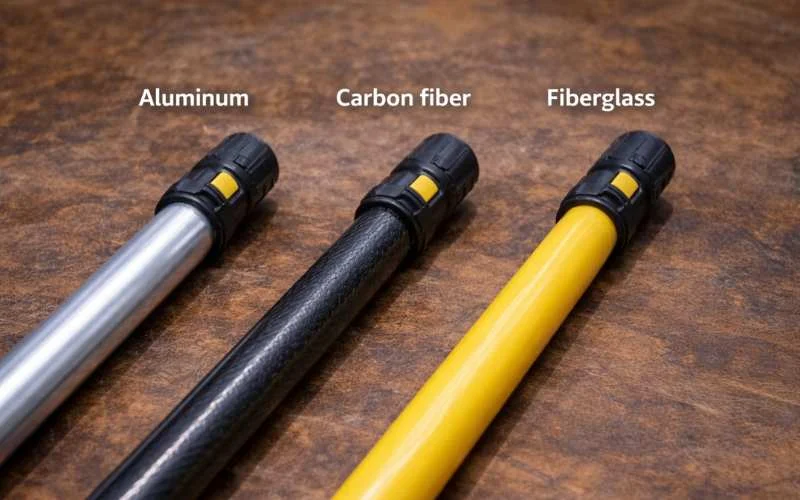
We Tell You Where Aluminium Stops and Carbon Starts
Above this duty class the honest answer is carbon fiber, and we say so. Aluminium at 50 ft is the right call for light heads, braced work and a price point a channel can actually sell — selling it as a rigid mast is how programs come back as returns.
- For distributors: private label, MOQ structure and lead-time terms are set out at for importers and trading companies.
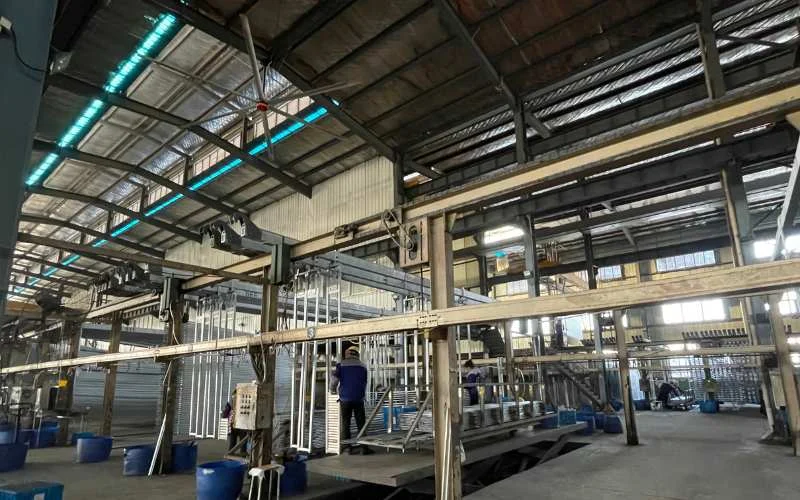
The Factory That Extrudes Your 50 Ft Sections
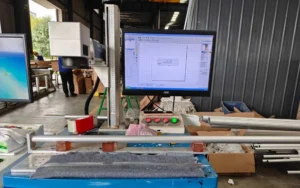
A 2,000-tonne press, an anodising line, in-house injection molding and whole-pole assembly under one roof. Most custom tube suppliers hand over parts and leave the assembly, the locks and the packaging to you.
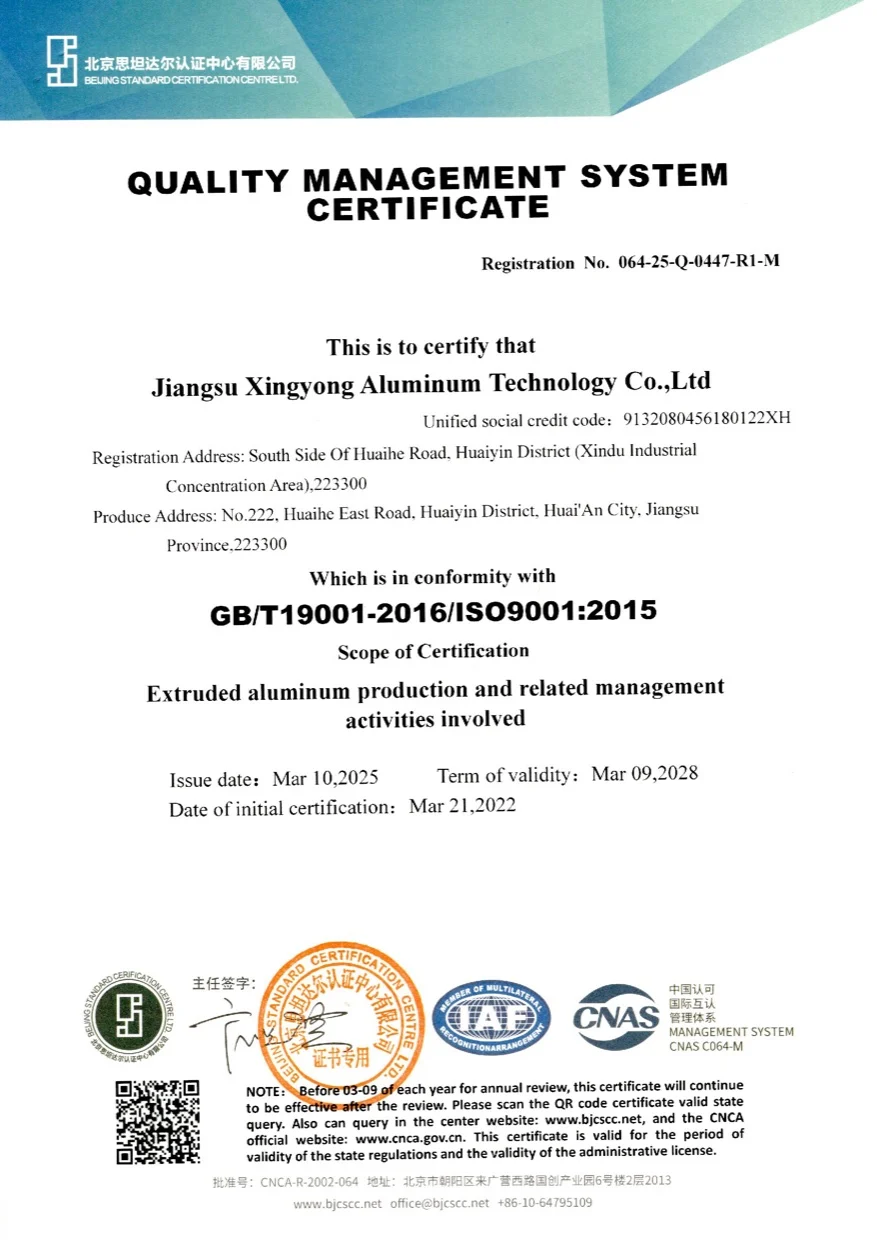
ISO — Send a Head, Get a Sample Pole
ISO 9001 audited, with three-year traceability on tube lots. Send the tool head or its drawing and a free sample pole is built to that exact interface in 7–15 days.
Certifications and press capacity verified at Jiangsu Xingyong Aluminum Technology Co., Ltd (Huai'an, since 2010); tube lot traceability held 3 years.
Case Studies From the Same Extrusion Floor
High-reach buyers qualify a factory on shipped programs, not catalog photos. Three from the same floor: a four-section pole program that proves the multi-section tolerance discipline a 50 ft stack depends on; a US cleaning distributor’s replenishment run showing what a high-reach SKU looks like after launch; and a molded push-button lock program — the lock tooling a long pole lives or dies on.
Frequently Asked Questions
Six answers for the people who own a high-reach line — brand managers, distributors and importers. Cleaning one warehouse yourself? A local supplier is faster; this desk is for their suppliers.
Will a 50 ft pole flex too much to be usable?
Some flex is physics at 50 ft. A graduated diameter cascade, stepped wall thickness and stiff 6065/6063 alloy keep it workable for light heads used at an angle or braced against the structure — not for heavy rigid-mast loads. We would rather lose the order than have the pole come back.
How long is it collapsed, and how does it ship?
Packed length is set by section count, so it is a program decision, not a fixed number: more sections means a shorter carton and a taller tube stack. Tell us the carton or container limit and the section plan is built backwards from it. Poles ship cartoned or palletised.
Can you match the pole to the tool head we already sell?
Yes — send a sample head or a dimensioned drawing. ACME thread, cone, button and custom ends are all built to the interface you ship, so the new pole drops onto the installed base your customers already own. Sampling runs 7–15 days.
Should we carry aluminium or carbon at this length?
Aluminium for light heads, braced work and a price point a channel can sell; carbon when the operator holds it unbraced for hours and will pay several times the price. We build the aluminium class and say so plainly rather than selling you into the wrong material.
What is the MOQ for a private-label 50 ft line?
Set per configuration — one lock tool and one tube cascade serve the 40, 50 and 60 ft classes together, which keeps entry volume workable across a reach ladder rather than a single SKU. Free sample poles ship against a confirmed spec.
How is a 50 ft pole priced at volume?
By section count, tube stack, lock class, finish and packing. Factory-direct pricing follows aluminium billet, not catalog markup, and quotes return within 24 hours. Length alone is the wrong question — ask what the tube stack costs at your duty class.
Technical Guides for High-Reach Buyers
A 50 ft program locks reach, tube stack and head weight before the first crew tries it. These three reads cover the decisions in order.
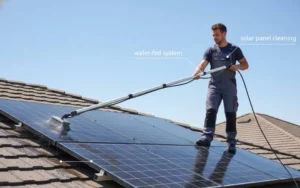
How to Choose Extension Pole Length
The reach maths — how to land on a length class instead of buying the longest pole on the page.
Telescopic Pole Load Capacity Guide
Load capacity at extension — the calculation behind the duty class this page keeps to.
10ft vs 20ft vs 30ft Telescopic Poles
How the shorter classes compare — useful context before committing a shelf to 50 ft.
Start Your 50 Ft Pole Program
One email starts it: tool head, working angle, target reach ladder, finish, packing limit and annual volumes. Engineering reads it the same day and the quote is back within 24 hours.
 English
  Español
  Français
  Deutsch
  Português