100 Foot Telescoping Pole Manufacturer
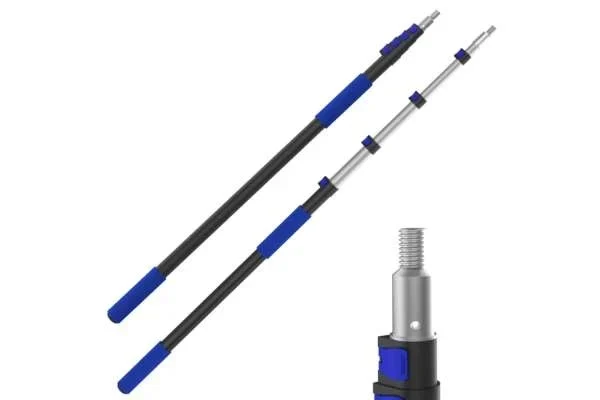
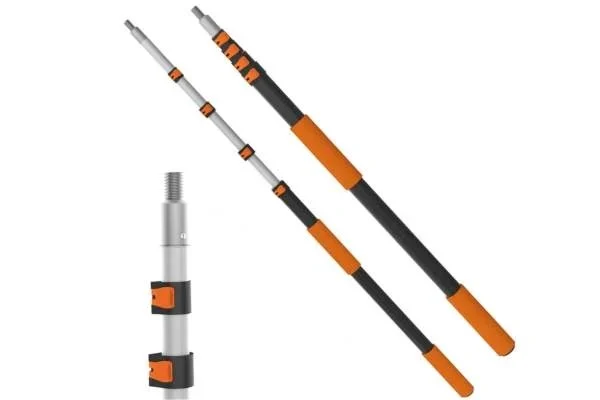
The Xingyong 100 foot telescoping pole reaches roughly 30 m through 6–12 custom sections for tall-structure access and building inspection where no standard pole can reach — an extreme-reach specialty tool engineered for very light tips only, because deflection at 30 m is significant.
- ✓ 6005 / 6063 / 6065 aluminum alloy — structural alloys for extreme reach
- ✓ 6–12 custom nested sections, collapsing to ~2–3 m
- ✓ Flip / twist / button lock — MOQ from 100 pcs
What Is a 100 Foot Telescoping Pole
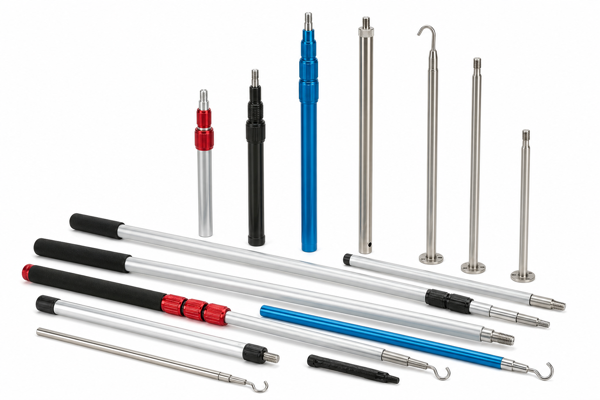
A 100 foot telescoping pole is the longest extreme-reach aluminum pole class, extending to roughly 30 m across 6–12 custom nested sections. At this length the engineering reality is significant deflection: this is a specialty access tool, not a working pole for heavy tools. Built with structural 6005 / 6063 / 6065 alloy and a step-down nesting design, it is intended for building inspection, flag and antenna work, tall-structure access and specialty industrial reach — only the lightest tips apply at full extension. For a more rigid, more general-purpose long pole see the 60 ft pole and 50 ft pole; for load-bearing work see our heavy-duty telescoping poles.
It helps to understand why 30 m is an engineered build rather than a general tool. A telescoping pole is a cantilever: the deflection at the tip rises roughly with the cube of the extended length, so going from 60 ft to 100 ft does not add 67% more sag — it multiplies it several times over. No amount of alloy fully removes that physics; we can only slow it with section geometry, wall thickness and temper. That is why the 100 ft pole is quoted as a per-project specialty item with custom section counts, not pulled from a standard catalogue. Buyers who need a stiff working pole are almost always better served one or two classes down, where a heavier tip can be carried with confidence.
Compared with the 60 ft class, the 100 ft pole adds about another 12 m of reach but trades away most of the rigidity that makes a 60 ft pole usable for water-fed cleaning or camera work with a real payload. Where the 60 ft pole still behaves like a working tool, the 100 ft pole behaves like a reach instrument: you raise a very light tip to a height nothing else can touch, take your reading or make your attachment, and bring it back down. Setting that expectation up front is the most useful thing a factory can do for a B2B buyer specifying this length — it prevents field disappointment and warranty disputes, and it lets us engineer the pole for the job that actually exists.
Types of 100 Foot Telescoping Pole
By Section Count (6–12)
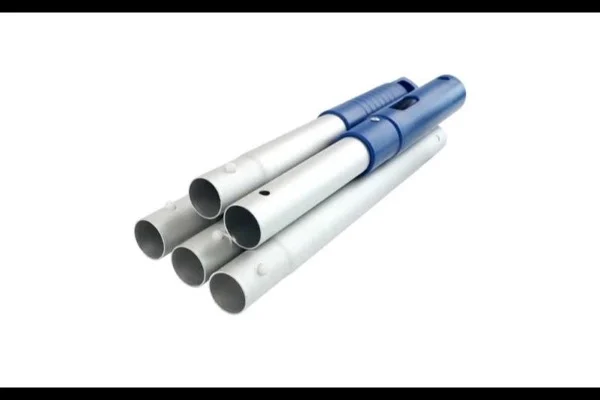
Fewer sections (6–7) give stiffer joints but a long collapsed length; 10–12 sections pack down to roughly 2–3 m for freight. At 100 ft the section count is a custom trade-off between rigidity and shipping length.
By Lock System
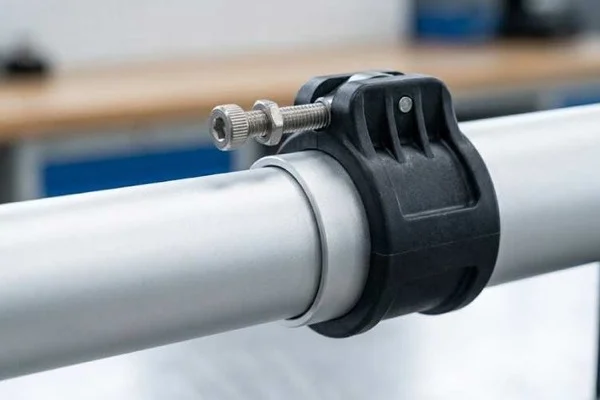
Flip locks resist slip best under the long lever of a 30 m pole; twist locks and button locks are also available. At this class the lock simply has to hold each section — no tool load is carried.
By Application
Building inspection, flag and antenna work, tall-structure access and specialty industrial reach — extreme-reach jobs no shorter pole can attempt. For load-bearing tasks use a heavy-duty pole instead.
100 Foot Telescoping Pole Applications by Industry
Every application below shares one trait: it needs extreme height with a near-weightless tip. These are the jobs that justify a 30 m pole and that no shorter class can attempt. Where a use names a real payload, it belongs on a stiffer pole instead.
Building & Tower Inspection
Use: raising an inspection camera, borescope tip or sensor to facades, parapets, water towers and lattice masts. Why 100 ft: it reaches upper storeys and structures without scaffolding, a MEWP or a drone permit. Constraint: only a lightweight camera head qualifies; at full extension hold the pole steady and let the tip settle before reading, as the bow will be visible.
Flag, Antenna & Aerial Mounting
Use: temporary flag staffs, event banners, lightweight aerials, wind socks and string-line for telecom or survey crews. Why 100 ft: it places a small fitting at a height fixed masts cannot match, then collapses for transport. Constraint: tip load must stay minimal and wind loading is the real limit at 30 m — specify guy points or a base mount for anything left standing.
Specialty Access & Reach
Use: threading lines over obstacles, retrieving or placing light items at height, film and broadcast rigs that need a high vantage for a small device. Why 100 ft: it solves one-off reach problems where bringing in a lift is impractical. Constraint: single-operator handling at full extension is awkward — plan for a second person or a base support.
Niche Industrial Reach
Use: reaching high process equipment, stack rims, silo tops and overhead structures for visual checks, sampling or marking. Why 100 ft: it keeps the operator on the ground where access platforms are blocked. Constraint: not for cleaning, scrubbing or any task with continuous downward force — use a heavy-duty pole for those.
Engineering & Sourcing Notes for 100 ft Poles
Sourcing a 30 m pole is a different conversation from sourcing a 20 ft one. The notes below cover what actually drives quality, safety and freight at the extreme-reach class — share these constraints with your end customers so expectations are set before the first unit ships. For the underlying maths see our multi-section design guide and load & deflection calculation guide.
Deflection & Whip at 30 m
Tip deflection scales with roughly the cube of length, so the 100 ft pole bows visibly even unloaded and develops a slow whip when moved. We manage it three ways: a larger, thicker-walled base section to anchor the cantilever; a carefully graded step-down nesting so each joint hands off stiffness smoothly; and structural 6005 / 6063 / 6065 alloy in a T5/T6 temper. None of this eliminates deflection — it makes a controllable amount of it.
Why Tip Weight Must Be Minimal
A small mass at 30 m exerts a huge bending moment on the base section. Even a few hundred grams turns a manageable bow into an unsafe sag, so we specify the lightest practical tip and treat the pole as carrying reach, not load. A realistic maximum tip weight is confirmed per build; do not assume a heavier-class figure transfers to 100 ft.
Section Count & Nesting Trade-off
Fewer sections (6–7) give stiffer joints and less cumulative play, but the pole collapses long — harder to crate and ship. More sections (10–12) pack down to roughly 2–3 m but add joint count and slightly more flex. We tune this split to your freight and rigidity priorities rather than forcing one fixed design.
Packing & Freight
Even collapsed, a 100 ft pole is a long, low-density item, so freight is driven by carton length and volumetric weight, not actual weight. We optimise pcs per carton, add end-caps and edge protection against transit shock, and advise on container loading. Share your destination and packing target up front so we can quote the most economical lane.
Per-Batch QC
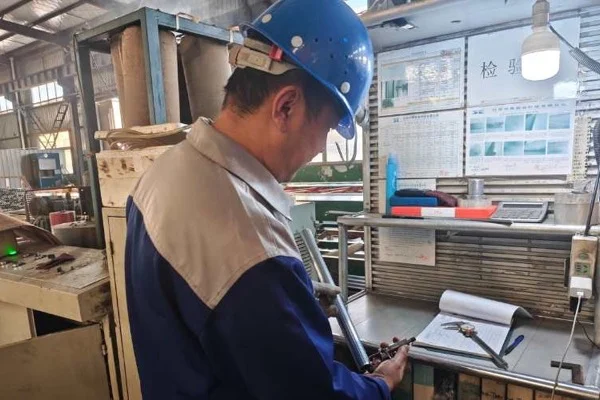
At this length tolerance stack-up matters, so every batch is checked for alloy, wall thickness, straightness, deflection under a reference tip and lock thread-fit — documented under ISO 9001 / IATF 16949 / BSCI. Sample reports travel with the shipment so your QC and end customer can verify the build.
Why Choose Xingyong for 100 Foot Telescoping Poles
In-House Production
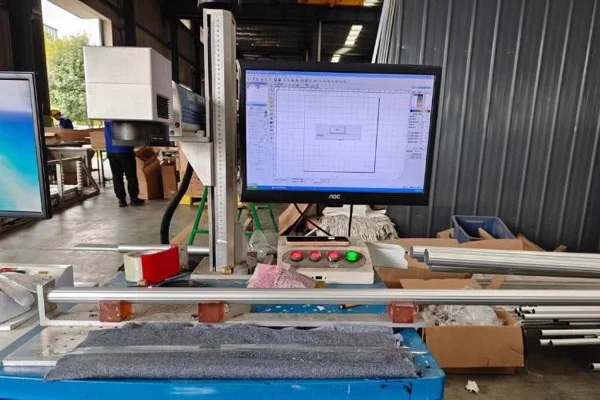
14 extrusion lines, 12 anodizing lines and 22 machining lines — tube, finish and assembly under one roof since 2010.
Sag-Control Engineering
Step-down diameters, reinforced base section and structural-T5 tempers are tuned specifically for the long-reach classes.
Custom OEM Options
Color anodizing, printed grips, custom section counts and private-label branding for your 100 ft line.
Audit-Ready QC
Alloy, wall-thickness, deflection and thread-fit tests per batch under ISO 9001 / IATF 16949 / BSCI.
Frequently Asked Questions: 100 Foot Telescoping Pole
How much does a 100 ft pole deflect, and why can't most poles reach 30 m?
Be realistic: at 30 m deflection is significant — the tip will visibly bow even unloaded, and the longer you extend, the more it sags. That is why most poles physically cannot reach this length: the bending moment grows faster than aluminum can resist it. We manage it with structural 6005 / 6063 / 6065 alloy and a tightly nested step-down design, but the 100 ft pole stays an extreme-reach access tool — carry only the lightest tips and extend only as far as the job truly needs.
How many sections does the 100 ft pole have and how do they nest?
It uses 6–12 sections (custom), each nesting inside the next via a step-down diameter. Fewer sections are stiffer but ship long; more sections collapse shorter for freight. Flip locks are recommended on a pole this long because they resist slip best; twist and button locks are also available.
What is the collapsed / shipping length of the 100 ft pole?
Roughly 2–3 m collapsed, depending on section count — even folded this is a long item, so we tune section count to balance rigidity against your carton and container limits. Tell us your packing target and we optimize pcs/carton and freight class.
What can a 100 ft pole actually be used for?
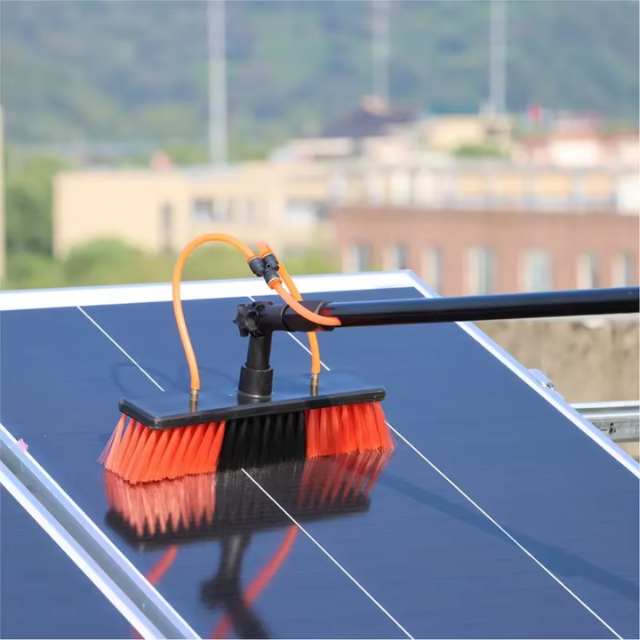
Building inspection, flag and antenna work, tall-structure access and specialty industrial reach — tasks that need reach, not load. Only very light tips apply at full extension. For water-fed cleaning or any tool with real weight, choose the 50 ft / 60 ft class or a heavy-duty pole instead.
How heavy a tool can the 100 ft pole realistically carry?
Only the lightest tips — an inspection camera head, a small fitting, a flag or a sensor. At 30 m a small mass creates a large bending moment on the base section, so even a few hundred grams can turn a manageable bow into an unsafe sag. We confirm a realistic maximum tip weight per build; please do not assume a figure from a heavier, shorter pole carries over. If your task involves a real payload, water-fed brushing or any continuous force, the 50 ft / 60 ft class or a heavy-duty pole is the correct choice.
Why is deflection unavoidable, and how do crews use the pole safely?
Tip deflection scales with roughly the cube of the extended length, so at 30 m the bow is inherent — no alloy or design removes it, we only keep it controllable. Use it safely by extending only as far as the job needs, raising the lightest possible tip, steadying the pole and letting the tip settle before reading, and watching wind, which is the dominant load at this height. For standing installs, specify a base mount or guy points. See the deflection calculation guide for the underlying maths.
Can the 100 ft pole be customized for our application?
Yes — the 100 ft pole is a per-project specialty build, so we tune section count (6–12), wall thickness (0.8–1.5 mm), alloy (6005 / 6063 / 6065), lock type (flip / twist / button) and tip fitting to your task. Color anodizing, printed grips, custom collapsed length and private-label branding are all available. Tell us the reach, tip weight, lock spec and packing target and we engineer to it. See custom OEM options and the multi-section design guide.
What is the MOQ and lead time for OEM 100 ft poles?
MOQ starts at 100 pcs and is flexible for established buyers. Because the 100 ft pole is a custom engineered build, lead time depends on section count, finish and tooling status — we confirm an exact schedule with your quote. See our sample & MOQ policy and lead-time guide.
Related High-Reach Lengths
Technical Support & Buying Guides
Brief Your 100 ft Telescoping Pole PO to a Real Factory
Send your target reach, section count, tip weight and lock spec — we quote within 24 hours.
Request a Quote