
Many suppliers label their products as “top flight telescoping flagpoles.”
In real projects, that claim often breaks down after installation.
OEM buyers face a different risk than retail consumers. Lock slippage, bent sections, surface corrosion, or inconsistent tolerances quickly turn into warranty claims and returns. These failures do not come from height or price alone. They come from engineering choices made upstream.
This guide explains what “top flight” really means in OEM and bulk procurement, using measurable specifications, manufacturing controls, and sourcing criteria you can verify before placing volume orders.
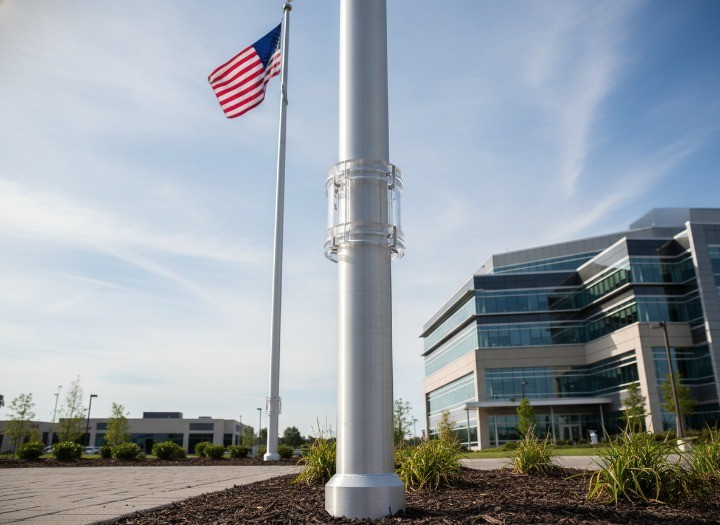
What a Top Flight Telescoping Flagpole Is
A top flight telescoping flagpole is a telescoping aluminum flagpole engineered for long-term outdoor use, consistent performance under wind load, and low failure rates in commercial or repeated residential applications.
For OEM buyers, “top flight” means:
- Defined wall thickness and diameter, not nominal marketing sizes
- Reliable locking systems that do not rely on friction alone
- Controlled aluminum alloy and surface treatment
- Repeatable quality across batches, not one-off samples
If these elements are not specified and tested, the flagpole is not top flight—regardless of how it is positioned online.
Engineering Standards That Define “Top Flight” Quality
Structural Parameters Buyers Should Specify
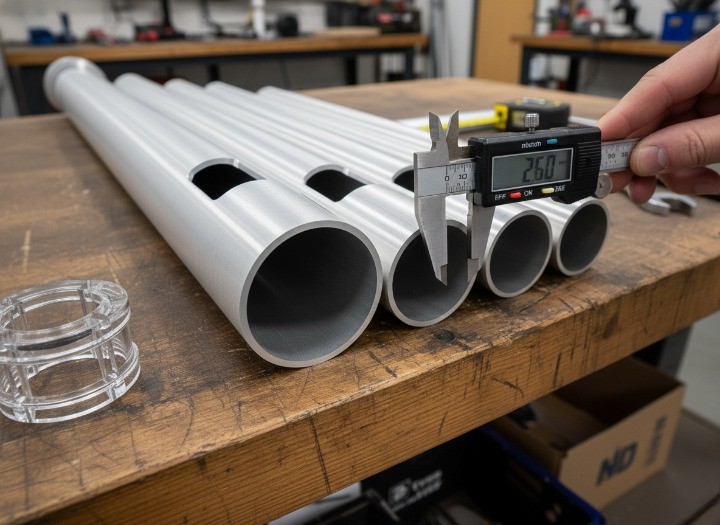
- Wall thickness (gauge)
Thicker walls reduce ovalization and joint deformation under gust loads. - Base (butt) diameter
Larger base diameters improve bending resistance at ground level. - Section count
Fewer sections reduce joint stress but increase collapsed length.
Manufacturing Controls That Matter
- Extrusion straightness tolerance
- Section-to-section clearance consistency
- Joint surface finish to prevent galling
- Lock engagement depth and repeatability
Without these controls, telescoping systems degrade quickly in real use.
Aluminum Alloy Selection for Telescoping Flagpoles
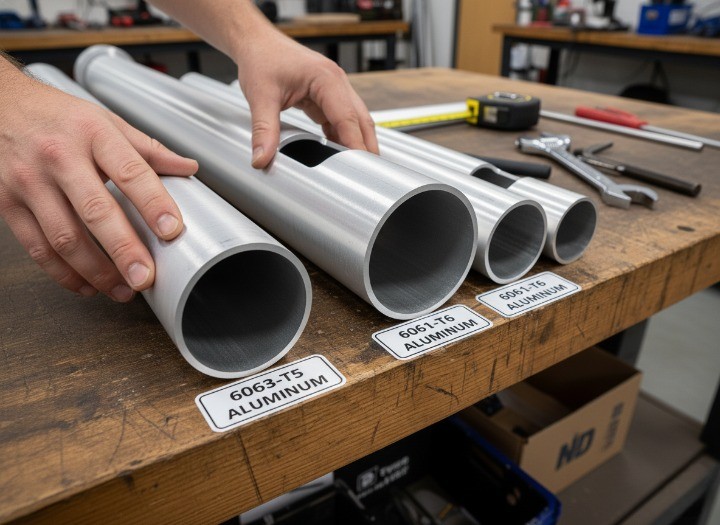
| Alloy | Typical Use | Strength | Surface Finish Quality | OEM Suitability |
|---|---|---|---|---|
| 6063-T5 | Standard architectural profiles | Medium | Excellent | Suitable for most OEM programs |
| 6061-T6 | Structural applications | High | Good | Used for heavy-duty or high-wind poles |
Key OEM insight:
Using mixed alloy sources within the same batch increases failure risk. A top flight telescoping flagpole program uses single-alloy sourcing with batch traceability.
Wind Rating Explained for OEM Buyers
Many suppliers quote wind ratings without context. OEM buyers should treat these numbers carefully.
What Wind Ratings Usually Assume
- Flag removed or furled
- Vertical installation with ideal soil or concrete
- Short gusts, not sustained wind
What You Should Ask Instead
- Wind rating with a standard flag size attached
- Sustained wind vs gust rating
- Test assumptions or calculation method
- Recommended flag size per pole height
Procurement rule:
If the wind rating is not tied to flag area and installation method, it is not procurement-grade data.
Locking Systems Used in Telescoping Flagpoles
Common Locking Types
- Friction collar locks
Simple but prone to slipping under vibration. - Interlocking sleeve systems
More stable under wind load and repeated use. - Pin or cam-assisted locks
Higher precision, better load distribution, higher manufacturing control required.
OEM Evaluation Checklist
- Lock engagement force consistency
- Resistance to vibration loosening
- Wear after repeated raise/lower cycles
- Noise generation under wind load
Lock failure is the most common warranty trigger in telescoping flagpoles.
Typical Specifications of a Top Flight Telescoping Flagpole

| Height | Sections | Wall Thickness | Base Diameter | Recommended Flag |
|---|---|---|---|---|
| 15 ft | 4–5 | ≥1.8 mm | ≥65 mm | 3×5 ft |
| 20 ft | 5 | ≥2.0 mm | ≥75 mm | 4×6 ft |
| 25 ft | 5–6 | ≥2.2 mm | ≥85 mm | 5×8 ft |
These ranges reflect stable OEM configurations, not maximum claims.
Telescoping vs Sectional Flagpoles (OEM Perspective)
| Factor | Telescoping | Sectional |
|---|---|---|
| Installation | Tool-free | Tools required |
| Shipping | Compact | Longer cartons |
| Maintenance | Lock-based | Rope/pulley |
| End-user skill | Low | Medium |
| OEM return risk | Lower if engineered well | Higher if hardware fails |
For bulk retail and project supply, telescoping designs reduce installation complaints.
Common Failure Points in Low-Grade Telescoping Flagpoles
- Section jamming due to poor tolerance control
- Lock slip after temperature cycling
- Surface oxidation from thin anodizing
- Hardware corrosion at contact points
- Excessive noise from loose joint fit
These issues rarely appear in single samples but emerge after volume deployment.
OEM & Bulk Procurement Considerations
MOQ and Lead Time
- Typical OEM MOQ: 300–1,000 units per height
- Lead time: 25–40 days, depending on finish and packaging
Quality Control Points to Specify
- Wall thickness measurement per batch
- Straightness inspection
- Lock cycle testing
- Anodize or coating thickness verification
Packaging for Bulk Supply
- Retail-ready cartons with internal protection
- Separate accessory bags to reduce scratching
- Drop-tested packaging for container shipping
Branding Options
- Laser marking on base or section
- Custom instruction manuals
- Barcode and compliance labeling
Who Should Source a Top Flight Telescoping Flagpole
- Importers supplying home improvement retail
- Brands targeting coastal or high-wind regions
- Project suppliers for schools or commercial buildings
- OEM buyers prioritizing low return rates
If long-term performance matters, top flight specifications are not optional.
Making the Right Call on a Top Flight Telescoping Flagpole
A top flight telescoping flagpole is not defined by height or price.
It is defined by engineering discipline, material control, and repeatable quality.
For OEM and bulk buyers, the right decision comes from:
- Clear specifications
- Verified manufacturing controls
- Realistic wind and usage assumptions
That approach protects your margins long after the shipment arrives.
Send your target height, wind exposure, and annual volume.
We will confirm specifications, MOQ, and a stable OEM production plan.
- Aluminum alloy mechanical properties: https://asm.matweb.com
- Wind speed classification and effects: https://www.weather.gov