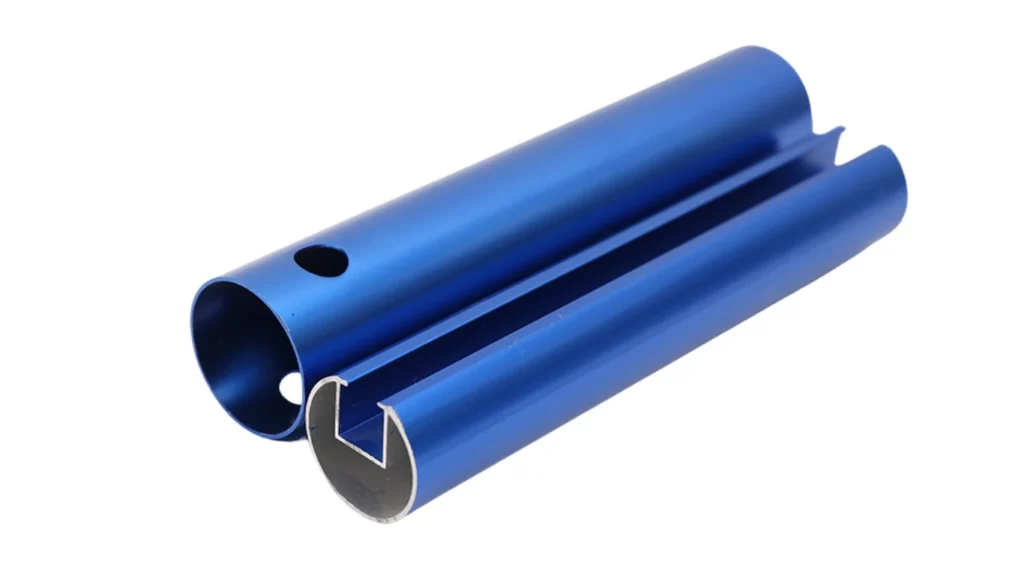
Corrosion resistance in a telescopic pole comes from a complete material and surface system—not from aluminum or anodizing alone. The alloy, surface preparation, anodized finish, cut and drilled areas, locks, connectors, dissimilar metals, cleaning practice and exposure environment all affect service life.
This is especially important for poolside and outdoor products exposed to moisture, chlorinated water, salt, sunlight and cleaning chemicals. A well-specified pole can reduce predictable corrosion risks, but no finish makes every assembled product immune to every chemical or environment.
What Causes Corrosion on an Aluminum Telescopic Pole?
Aluminum naturally forms a thin oxide layer, but visible staining, pitting or localized attack can still develop when the surface, environment and assembly create unfavorable conditions.
- Prolonged wet exposure: water trapped in joints, sleeves or packaging keeps the surface wet.
- Chlorides: pool chemicals, coastal air and saltwater can promote localized corrosion.
- Damaged finishes: deep scratches, cutting and drilling can expose or disrupt protected areas.
- Dissimilar metals: unsuitable metal combinations can create galvanic corrosion when an electrolyte is present.
- Chemical residues: concentrated cleaners or pool chemicals left on the pole can attack finishes or components.
- Poor drainage: water retained inside nested tubes or around fasteners extends contact time.
- Contaminated handling: metal debris, dirty racks or unsuitable packaging can mark or contaminate the surface.
The first design step is therefore to describe the actual exposure: freshwater pool, chlorinated pool, saltwater pool, coastal air, marine use, industrial cleaning or general outdoor storage.
1. Select the Alloy and Finish as One System
Extrusion alloys such as 6063 are widely used for telescopic tubes because they combine manufacturability, appearance and useful mechanical properties. Alloy choice also influences anodizing response and the consistency of the finished surface.
However, the alloy designation does not by itself define corrosion performance. The buyer and manufacturer should also confirm:
- temper and tube specification;
- surface condition before finishing;
- required finish and color;
- visible versus concealed surfaces;
- post-finish machining or assembly;
- expected water, chemical and outdoor exposure;
- appearance and test acceptance criteria.
Xingyong reviews these variables together when developing a custom aluminum telescopic pole.
2. What Anodizing Does—and Does Not Do
Anodizing is an electrochemical process that grows a controlled oxide layer from the aluminum surface. It can improve surface durability, appearance and corrosion resistance while supporting a range of colors.
An anodized layer is not a separate plastic coating and does not make the assembled pole corrosion-proof. Its performance depends on the alloy, pre-treatment, process control, layer specification, sealing, subsequent machining, handling and exposure.
| Anodizing can help | Anodizing cannot replace |
|---|---|
| Improve the aluminum surface and appearance | Correct alloy and tube design |
| Reduce routine oxidation and handling wear | Protection of cut, drilled or damaged areas |
| Support controlled decorative colors | Compatible locks, connectors and fasteners |
| Improve resistance for a defined environment | Cleaning, drainage and appropriate storage |
| Provide a measurable finish specification | Testing against the buyer’s actual exposure |
Review available anodizing and surface-finish options before approving color and performance requirements.
3. Control Surface Preparation and Anodizing Consistency
Cleaning and pre-treatment remove oil, debris and surface contamination so the tube can receive a more consistent finish. The exact route depends on the required appearance and anodizing specification; counting cleaning steps alone does not prove performance.
Production controls can include:
- incoming tube surface inspection;
- approved pre-treatment route;
- rack and contact-point control;
- bath and process monitoring;
- color comparison against an approved sample;
- specified layer or sealing checks where required;
- visual inspection for stains, burns, streaks and handling marks;
- batch identification and inspection records.
Color variation can be influenced by alloy, extrusion batch, surface condition and process parameters. Buyers needing tight color matching should provide an approved physical sample and define how batches will be compared.
4. Protect Cut, Drilled and Threaded Areas
A telescopic pole is often cut, drilled, slotted or threaded for locks and connectors. Whether processing occurs before or after anodizing changes which surfaces receive the full treatment.
Review these locations during development:
- tube ends hidden by caps or exposed to retained water;
- holes and slots around locks or push buttons;
- threads and fastener contact areas;
- scratches introduced during assembly;
- burrs that damage plastic parts or trap residue;
- interfaces between connectors and finished tubes.
Deburring, clean handling, suitable component fit and the agreed process order help reduce localized damage. Inspection should cover the complete assembled pole rather than only an unprocessed anodized tube.
5. Manage Dissimilar Metals and Galvanic Risk
When aluminum contacts another metal in the presence of water or salts, galvanic corrosion may occur. The risk depends on the metal combination, exposed area, electrical contact and environment.
Fasteners, springs, clips, threaded inserts and tool connectors should be reviewed for:
- material compatibility;
- direct electrical contact with aluminum;
- water retention at the interface;
- barriers, isolation or coatings where needed;
- replacement and maintenance requirements;
- the actual poolside, coastal or marine exposure.
A generic statement such as “stainless steel is corrosion-resistant” is not enough; the complete metal pair and environment must be considered.
Area ratio also matters in a galvanic couple. A small aluminum area connected to a comparatively large, more noble metal surface can behave differently from the reverse arrangement. For this reason, a material decision copied from one connector cannot automatically be applied to every fastener or pole diameter. The assembled joint should be reviewed in the wet condition it is expected to encounter, including crevices where water or chemical residue can remain after the visible tube has dried.
6. Include Plastic Locks, Grips and Connectors
Corrosion resistance is only one part of outdoor durability. Plastic locks and connectors can fade, crack, swell or lose fit because of UV exposure, chemicals, temperature cycling or assembly stress.
Resin type and UV stabilization should be selected for the target environment, then checked on the finished component. Appropriate evaluation may cover molding quality, fit, lock operation, impact, repeated cycles and agreed weathering requirements.
A sound anodized tube does not prevent failure of an unsuitable plastic lock. The tube, lock and connector should therefore be approved as one product system.
7. Define a Corrosion Test That Matches the Application
“Salt-spray tested” or “chemical-resistant” is incomplete without the method and acceptance criteria. ASTM Committee G01 lists ASTM B117 for operating salt-spray (fog) apparatus, but B117 does not by itself prescribe the product-specific specimen, exposure duration or pass/fail limits. Different tests simulate different conditions, and an accelerated laboratory test does not reproduce every aspect of real service.
A useful test requirement records:
- Sample condition: tube coupon, processed part or complete assembled pole.
- Exposure: solution, concentration, temperature, duration and cycle.
- Preparation: cleaned, scratched, cut or otherwise conditioned sample.
- Inspection areas: main tube, ends, holes, locks, fasteners and connectors.
- Acceptance: allowed color change, staining, pitting, blistering or functional change.
- Post-test function: extension, retraction, locking and connector fit.
The test method and limits should be agreed during sampling. The broader production plan is covered in the telescopic pole durability and quality-testing guide.
8. Use, Cleaning and Storage Still Matter
Even a suitable finish benefits from simple maintenance. After exposure to pool chemicals, salt or dirt, rinse the pole with suitable fresh water, remove residue, allow nested sections to drain and dry, and store the pole away from concentrated chemicals.
Users should also:
- avoid storing the pole wet inside sealed packaging;
- keep abrasive debris out of telescoping joints;
- inspect deep scratches, dents and damaged components;
- avoid mixing unapproved cleaners;
- follow the supplier’s maintenance instructions;
- replace damaged structural or locking parts instead of masking the problem.
Packaging must also protect the finish during delivery. See the pool pole packaging and shipping-damage guide.
9. Corrosion Risks and Controls
| Observed issue | Possible cause | What to review |
|---|---|---|
| White staining or deposits | Retained moisture, residues or storage conditions | Cleaning, drainage, packaging and exposure |
| Localized pitting | Chlorides, damaged finish or concentrated residue | Environment, finish, scratches and maintenance |
| Corrosion near a fastener | Dissimilar-metal contact and retained electrolyte | Material pair, isolation and drainage |
| Dark marks around holes | Processing damage, contamination or trapped water | Process order, deburring, cleaning and assembly |
| Color variation | Alloy, surface or anodizing batch differences | Approved sample and batch color control |
| Lock failure with sound tube | Plastic weathering, chemical exposure or assembly stress | Resin, geometry and finished-component testing |
10. What Buyers Should Put in the RFQ
- poolside, coastal, marine or general outdoor application;
- freshwater, chlorinated water, saltwater and cleaning chemicals involved;
- alloy and tube specification if already defined;
- anodized, powder-coated or other finish requirement;
- approved color and appearance limits;
- locks, connectors, fasteners and other material combinations;
- cutting, drilling or threading requirements;
- required corrosion or weathering test method;
- acceptance criteria and inspection report;
- cleaning instructions, packaging, quantity and target market.
If corrosion has occurred on an existing product, send the complete sample with its use, cleaning, storage and exposure history. Location and appearance can help distinguish surface damage, trapped residue, galvanic contact and unsuitable finishing.
Frequently Asked Questions
Are anodized aluminum telescopic poles corrosion-proof?
No. Anodizing improves the aluminum surface, but service life still depends on exposure, cut areas, damage, component materials, cleaning and storage.
Can an anodized pole be used in a saltwater pool?
It may be suitable when the complete finish and assembly are specified for that exposure, but the manufacturer should review chlorides, fasteners, connectors, cleaning and testing before approval.
Does a thicker anodized layer always solve corrosion?
No. Layer specification matters, but alloy, preparation, sealing, scratches, processing, galvanic contact and retained chemicals can still control the outcome.
Why can corrosion appear around holes or screws?
These areas may expose processed surfaces, retain moisture or bring dissimilar metals into contact. Process order, deburring, isolation and drainage should be checked.
Should pool poles be rinsed after use?
Rinsing off pool chemicals or salt with suitable fresh water, then draining and drying the pole, generally reduces residue and prolonged wet exposure.
What evidence should an OEM buyer request?
Request the approved alloy and finish specification, color sample, defined test method, acceptance criteria, production sample and relevant inspection records.
Specify the Exposure Before the Finish
Develop a Corrosion-Resistant Telescopic Pole System
Share the water, chemical, outdoor and material-contact conditions. Xingyong can review the alloy, finish, processed areas and components before sampling.
Explore anodizing options · Send your corrosion-resistance RFQ

 English
  Español
  Français
  Deutsch
  Português