
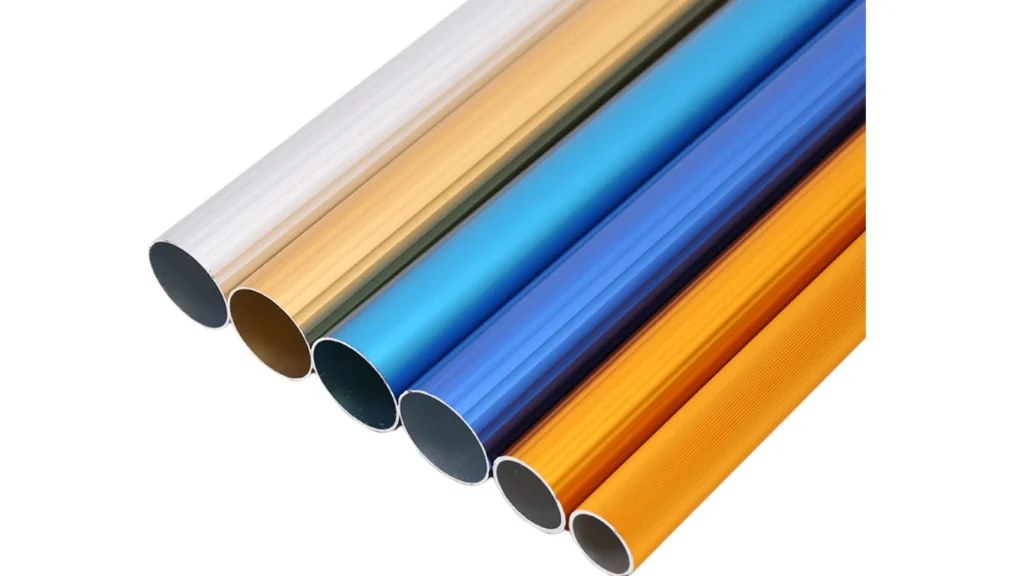
A telescopic pole is stable when its tube sections, overlap, lock, connector and surface finish continue to work together under the intended load and environment. Alloy choice matters, but it cannot compensate for a tube that is too thin, a loose section fit or a lock that is poorly matched to the pole.
For OEM buyers, durability should therefore be defined as a set of measurable requirements rather than a general claim that a pole is “strong” or “does not break.” This guide explains the material, structural and production controls that should be reviewed before sampling and mass production.
What Determines Telescopic Pole Durability?
Telescopic pole performance is the result of several connected design decisions. Changing one part can affect the rest of the assembly.
- Alloy and temper: influence tube strength, formability, finish and weight.
- Tube diameter and wall thickness: influence stiffness, handling and resistance to local denting.
- Section count and overlap: influence collapsed length, extended rigidity and joint stability.
- Section clearance: must allow smooth movement without excessive wobble.
- Lock design: must hold the sections under the expected push, pull and rotational forces.
- Tool connector: must match the attachment and transfer its working load into the pole.
- Surface treatment: protects appearance and helps the pole tolerate moisture, pool chemicals and outdoor exposure.
- Assembly consistency: determines whether the approved sample can be repeated across production batches.
A pole intended for a lightweight skimmer net does not need the same structure as a pole used with a vacuum head, wet brush or other high-resistance attachment. The specification should start with the real tool and working conditions.
1. Aluminum Tube and Raw-Material Control
Material selection begins with the application, required reach and target load. Aluminum alloys commonly used for pole and tube programs offer different balances of extrusion behavior, strength, surface finish and cost. The final alloy and temper should be recorded on the approved specification instead of being left as a general “aluminum” description. ASTM B221 for aluminum and aluminum-alloy extruded tubes provides a recognized reference for alloy, temper and mechanical-property requirements, but the finished pole still needs an application-specific structural and functional test.
Incoming and in-process checks should confirm the items that affect assembly and pole behavior:
- material grade and batch identification;
- outside diameter and wall thickness;
- tube straightness and roundness;
- surface condition before finishing;
- cut length and end condition;
- fit between adjacent telescoping sections.
The acceptable values depend on the approved pole design. Buyers should avoid copying a tolerance or wall thickness from an unrelated product: a longer pole, heavier tool or different lock can require a different tube structure. Xingyong reviews these variables together when developing a custom aluminum telescopic pole.
2. Section Fit, Overlap and Extended Stability
A multi-section pole needs enough clearance to extend smoothly, but too much clearance creates wobble and uneven load transfer. Section overlap is equally important. If the engagement between tubes is insufficient, stress becomes concentrated near the joint and the pole may feel unstable before the tube itself reaches its material limit.
During development, the pole should be assessed in both collapsed and fully extended positions. The review should consider:
- whether every section extends and retracts without binding;
- whether the section order and stop features prevent accidental separation;
- whether joint movement remains acceptable at full reach;
- whether the pole can be controlled with the intended attachment installed;
- whether repeated operation changes the section fit.
For longer designs, adding sections can reduce shipping length, but each additional joint introduces another interface that must be controlled. A practical design balances reach, collapsed length, stiffness, weight and packaging.
3. Bending, Deflection and Working-Load Evaluation
“Load capacity” is incomplete unless the test setup is defined. A meaningful evaluation records the extended length, support position, load direction, attachment, loading point and acceptance criteria. A horizontal bending test, a vertical pull test and an in-use push-and-pull trial measure different behavior.
A development or inspection plan can include:
- Confirm the test configuration. Assemble the same number of sections, overlap and connector that will be supplied.
- Apply a defined load. Place it at the position that represents the real tool or working force.
- Record deflection. Measure movement while the load is applied rather than relying on a visual judgment.
- Inspect after unloading. Check for permanent bending, local dents, joint movement, lock slip and connector damage.
- Repeat where required. Cyclic loading can reveal changes that a single static test does not show.
The target load and allowable deflection must be agreed for each product. Xingyong does not apply one published capacity to every telescopic pole because length, tube structure, lock and attachment change the result. Buyers can use the telescopic pole load-capacity guide to prepare the engineering discussion, then confirm the production acceptance method during sampling.
4. Lock Holding and Extension-Cycle Checks
The lock converts a set of loose tube sections into a usable extended pole. Its performance depends on the contact surfaces, tube dimensions, lock geometry and assembly—not only the lock type.
Checks should cover the way the user will operate the product:
- initial engagement and release;
- holding under axial and rotational force;
- slip at the specified extension;
- operation with wet or gloved hands where relevant;
- repeat extension and retraction cycles;
- wear, cracking or loosening of plastic components;
- performance after surface treatment and final assembly.
Twist, flip and push-button locks solve different user and structural requirements. The twist-lock versus flip-lock comparison can help select a starting design, but the chosen lock still needs to be tested on the actual tube set.
5. Corrosion Resistance and Surface-Finish Control
Poolside and outdoor poles can be exposed to moisture, chlorinated water, salt, sunlight and cleaning chemicals. Aluminum naturally forms an oxide layer, but the complete product still needs a finish selected for its environment and appearance requirements.
Anodizing is commonly used because it builds a controlled oxide layer on the aluminum surface and supports consistent color options. Powder coating may be selected for other appearance or protection requirements. The appropriate treatment depends on the alloy, desired color, handling, exposure and buyer specification.
Surface-control points can include:
- pre-treatment and surface condition;
- approved color sample and batch-to-batch comparison;
- finish coverage at visible and processed areas;
- scratches, handling marks and contact damage;
- film or coating checks when specified;
- exposure or corrosion testing agreed for the target market.
Cut edges, drilled areas, mixed materials and damaged surfaces deserve special attention. Plastic locks, grips and connectors also require suitable weathering and UV performance; a corrosion-resistant tube does not prevent a poorly selected plastic part from failing outdoors. See the available anodizing and surface-finish options when defining the product.
6. Quality-Control Checkpoints from Tube to Packed Pole
A practical quality plan links each production stage to the failure it is intended to prevent.
| Production stage | Typical checks | Risk controlled |
|---|---|---|
| Material receipt | Grade, batch and surface condition | Wrong or inconsistent material |
| Extrusion and tube preparation | Diameter, wall, straightness, cut length and section fit | Wobble, binding or dimensional mismatch |
| Surface finishing | Appearance, color, coverage and specified finish checks | Color variation, scratches or inadequate protection |
| Deep processing | Hole position, slots, threads, ends and deburring | Assembly error or local damage |
| Lock and connector assembly | Fit, engagement, holding and attachment compatibility | Slip, loose tools or difficult operation |
| Finished-pole inspection | Extension, retraction, alignment, function and agreed load checks | Unstable or inconsistent finished products |
| Packaging | Quantity, protection, labels, carton and accessories | Transit damage, shortages or mixed SKUs |
Inspection frequency and acceptance levels should be set against the product, order size and buyer requirements. Where traceability is required, material, processing, assembly and inspection records should be tied to the production batch. Review Xingyong’s quality-assurance process and material batch traceability for the supporting workflow.
7. Common Failure Modes and How the Specification Reduces Them
| Observed problem | Possible causes to investigate | Specification or control response |
|---|---|---|
| Pole bends excessively | Tube structure, reach or attachment load is mismatched | Confirm working setup, tube design and allowable deflection |
| Sections wobble | Clearance, overlap or dimensional consistency is unsuitable | Define section fit and inspect at full extension |
| Lock slips | Lock geometry, contact, assembly or tube dimensions vary | Set a holding test on the actual finished pole |
| Pole binds during extension | Bent tube, poor roundness, debris or excessive finish build-up | Check straightness, fit and finished-section operation |
| Connector becomes loose | Interface or attachment load was not matched | Approve the connector with the buyer’s actual tool sample |
| Finish scratches or varies | Surface preparation, handling or batch color control is inconsistent | Approve a finish standard and protect parts through packing |
| Plastic component cracks | Material, UV exposure, geometry or assembly stress is unsuitable | Confirm resin and test the assembled component for its environment |
8. What Buyers Should Put in the RFQ and Acceptance Plan
A useful RFQ gives the manufacturer enough information to design and test the same product the buyer expects to receive. Include:
- application and tool attachment;
- working and collapsed length;
- preferred number of sections;
- tube diameter, wall or target performance if already defined;
- expected working force or agreed test configuration;
- acceptable deflection or functional result;
- lock and connector type;
- surface finish, color and exposure environment;
- logo, labels and packaging;
- sample quantity, order quantity and target market;
- inspection records or test reports required with the order.
If a numeric requirement is not yet known, send the existing product, tool head or failure example. The specification can then be developed around the actual use case instead of an unsupported universal strength claim. The pool pole RFQ checklist provides a concise starting point.
Frequently Asked Questions
Is a thicker aluminum tube always more durable?
No. Wall thickness can improve stiffness or dent resistance, but it also changes weight, section fit, lock matching and cost. Diameter, alloy, reach, overlap and attachment load should be reviewed together.
How should a telescopic pole load test be specified?
State the pole extension, support position, load direction, tool or loading point, load duration and acceptance criteria. Without the test configuration, one capacity number cannot be compared reliably between different poles.
Does anodizing make a telescopic pole corrosion-proof?
No finish makes every assembled pole immune to every chemical or environment. Anodizing improves the aluminum surface, while cut areas, scratches, plastic parts, mixed materials, maintenance and actual exposure still affect service life.
How are locks checked for consistent performance?
The lock should be evaluated on the finished tube set for engagement, release, holding, slip and repeated operation. The appropriate force and number of cycles are agreed for the product rather than assumed for all designs.
Can one approved sample define mass-production quality?
The sample defines the product only when its critical dimensions, materials, finish, functional checks and packaging are recorded. Production inspection then checks batches against that approved specification.
What should an OEM buyer send before development?
Send the application, attachment, required reach, collapsed-length limit, expected working force, finish, quantity, packaging and target market. A reference pole or tool sample is helpful when the interface or loading is difficult to describe.
Plan the Test Before Production
Define a Telescopic Pole That Can Be Inspected and Repeated
Share the tool, working reach, load condition, lock, finish and packaging brief. Xingyong can review the tube, section and test requirements before sampling.
Explore custom telescopic pole manufacturing · Send your RFQ


 English
  Español
  Français
  Deutsch
  Português