
CNC-machined aluminum is everywhere — in the pool pole your technician uses daily, the locking collar on a telescoping window squeegeethe bracket holding a solar panel to a rooftop frame. It is one of the most widely used manufacturing outputs in global hardware production. Yet most B2B buyers cannot define it precisely enough to qualify a supplier, specify a grade, or protect themselves from the most common sourcing failure: paying for aluminum that looks right but performs wrong.
To make the article actionable, convert the key takeaway into an RFQ line item, compare it against CNC machining for aluminum pole componentsand use precision aluminum tube manufacturing for the production route. For external technical context, use Aluminum Association material resources.
I’ve worked on Xingyong’s production floor since the early 2000s. We’ve been running extrusion presses since 2010. And the single biggest gap I see in supplier qualification is this: buyers evaluate aluminum products, but they don’t evaluate the process that made them. When a locking cam strips at 200 cycles, or a 20ft pool pole droops before a customer puts it in water, by that point, you’ve already paid for the container, cleared customs, and stocked the shelves.
Understanding what CNC-machined aluminum actually is, and what it demands from a factory, will change how you qualify your next supplier.
What is CNC-machined Aluminum?
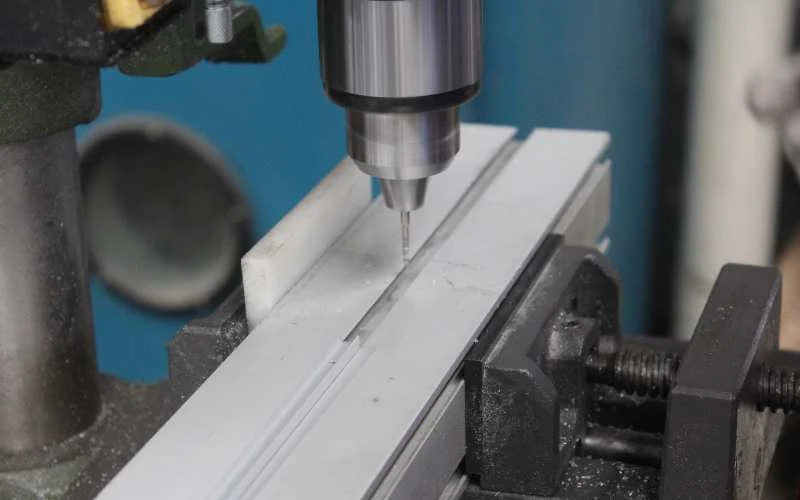
CNC-machined aluminum is aluminum shaped by computer-controlled cutting tools that remove material from a solid workpiece to produce precise geometry, tight tolerances, and repeatable dimensions — rather than being cast, pressed through a die, or formed by hand.

CNC stands for Computer Numerical Control. A CAD model is translated into G-code, which instructs the machine exactly where to cut, how deep, and at what speed. Standard runs hold tolerances of ±0.005 inches (0.13mm). Precision setups reach ±0.001″ on critical dimensions.
Three things CNC machining achieves that extrusion alone cannot:
- Complex 3D geometry — internal cavities, threaded holes, pockets, and multi-axis contours impossible through a fixed extrusion die
- Tight dimensional tolerances — essential for functional assemblies like locking cams, cam-lock joints, and pivot interfaces
- Part-to-part repeatability — consistent across thousands of units, which retail buyers supplying Walmart or Home Depot cannot negotiate away
How the CNC Machining Process Works
From CAD File to Cut Part
Every CNC job begins in software. An engineer builds a 3D model, runs it through CAM (Computer-Aided Manufacturing) software, and generates the G-code that the machine will execute. At Xingyong, our engineering team reviews every DXF or STEP file a client sends before we confirm toolpaths. Geometry that looks manufacturable on screen often has features that cause chatter, deflection, or tool breakage on the machine. We catch those in pre-production review — not in the quality inspection room after scrap has already been generated.
Material Selection Comes First
This decision determines everything downstream. Alloy grade selection is not a sourcing detail — it is a structural engineering decision.
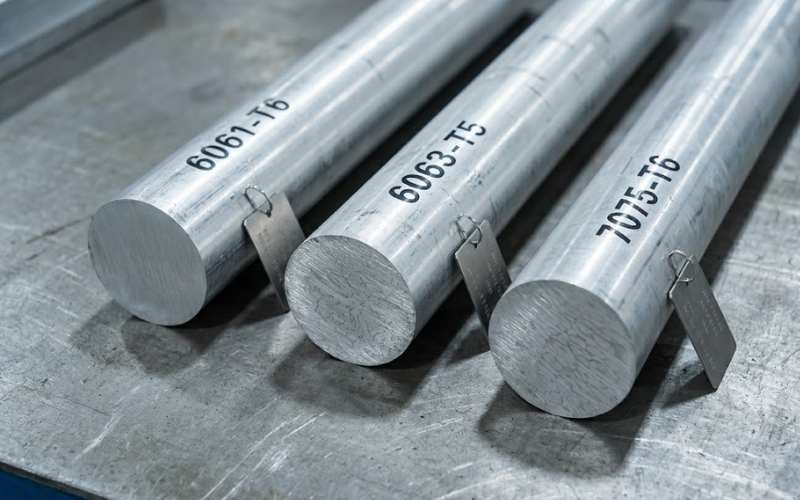
Different aluminum grades behave entirely differently under cutting conditions. Feed rate, spindle speed, chip load, and coolant strategy all shift based on the alloy. Specifying the wrong grade means you machine a part too soft for its application, or one that fights your tooling and drives up per-unit cost.
The Core Cutting Operations
Modern CNC machining uses several operations, often on the same part in sequence:
- CNC Milling — a rotating multi-point cutter removes material from a stationary workpiece. Used for pockets, slots, flat surfaces, and complex contours.
- CNC Turning — the workpiece rotates against a stationary cutting tool. Used for cylindrical parts, shafts, and tube-end features.
- Drilling and Boring — creating or enlarging holes to precise diameters. Boring achieves tighter tolerances than drilling alone, used for precision alignment features and bearing seats.
- Tapping — cutting internal threads. Critical for any assembly that uses fasteners under load.
Post-Processing: Where Surface Quality Is Made or Lost
Machining gives you the geometry. Post-processing gives you longevity. After CNC operations, aluminum parts move into surface treatment. At Xingyong, we run two large automatic anodizing lines capable of producing multiple color finishes across our full 3,000-ton monthly output. We also operate three long-bar sandblasting machines and two short-bar sandblasting machines for pre-anodizing surface preparation.
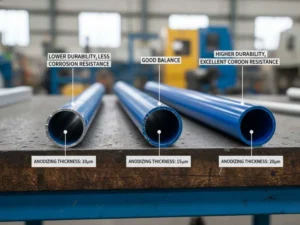
Anodizing matters more than most buyers realize. A 15-micron anodizing coat — applied correctly, after proper sandblasting — is the difference between a pool pole that lasts five seasons and one that leaves black residue on a technician’s hands after a single day. That residue is oxidized aluminum transferring directly because the anodizing layer was too thin, improperly sealed, or cut from the production cost. According to Protolabs’ aluminum CNC design guideanodizing creates a hard ceramic oxide layer that significantly outperforms untreated aluminum in wear and corrosion resistance — a property that directly determines whether a telescoping pole slides cleanly after two seasons or binds and scratches.
Why This Matters for Pool Equipment Procurement
Pool cleaning equipment operates in one of the harshest environments a consumer product can face: chlorinated or salt water, UV radiation, repeated physical stress, seasonal storage cycles, and, in commercial settings, daily high-torque use by professionals.
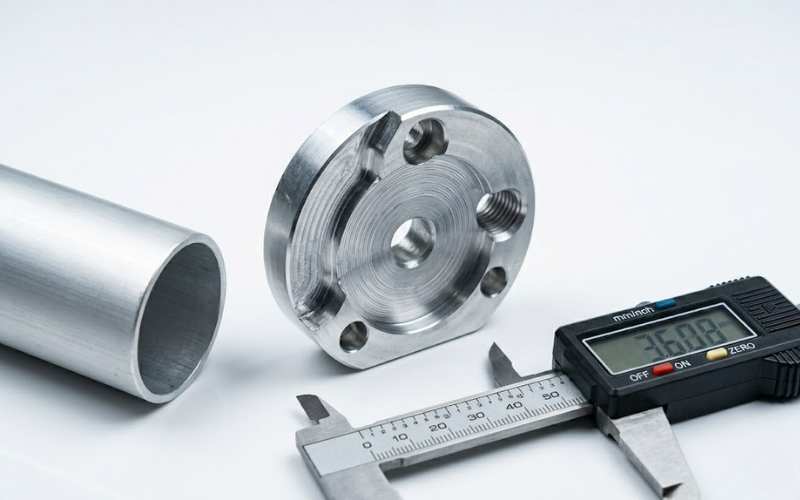
The locking mechanism is the weakest link in every telescoping pole. Cheap friction rings and plastic cams fail because they are not machined to a precise dimensional interface with the aluminum tube. The cam slips. The pole collapses mid-stroke. The pool service professional either returns the product or, worse, drops it in the pool — and you own that liability.
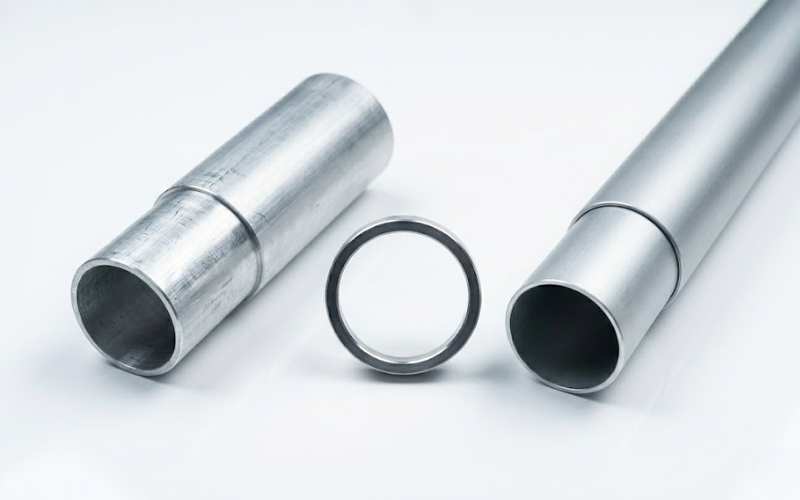
At Xingyong, our locking cams for commercial-grade poles are CNC-machined aluminumnot injection-molded plastic. The dimensional relationship between the cam and the tube inner diameter is held to a tolerance that produces a consistent locking force across the full extension range. That is not achievable with a plastic part produced in a mold that degrades across its production life.
For structural performance on long-reach poles, we use internally ribbed profiles extruded on our 2000T press. The ribbing increases the section moment of inertia — the engineering property that resists bending — by approximately 30% compared to a plain-wall tube of the same outer diameter. CNC machining then adds the precision end fittings, cam apertures, and attachment interfaces that complete the assembly.
For more details on how these specifications translate into procurement decisions by pole length, see our telescopic pole procurement guide. For the full product specification matrix from 4ft spa poles to 24ft commercial poles, our aluminum pool poles range covers every SKU with technical details.
Aluminum Alloy Grades for CNC Machining
Not all aluminum machines the same way. The Aluminum Association’s alloy classification system uses a four-digit numbering standard where the first digit identifies the primary alloying element. For CNC machining in B2B hardware production, these are the grades that matter:
| Grade | Primary Element | Tensile Strength | Machinability | Best Application |
|---|---|---|---|---|
| 6061-T6 | Si + Mg | 310 MPa | Excellent | Structural parts, locking cams, brackets |
| 6063-T5 | Si + Mg | 186 MPa | Very Good | Telescoping tube shafts, architectural profiles |
| 7075-T6 | Zinc | 503 MPa | Good | High-stress aerospace and defense parts |
| 5052-H32 | Magnesium | 228 MPa | Moderate | Marine hardware, saltwater environments |
| 2024-T351 | Copper | 469 MPa | Good | Fatigue-critical aerospace structures |
At Xingyongwe use 6063-T5 for the main shaft tubes of pool cleaning poles. It has the surface finish quality and formability for clean telescoping action and anodizes beautifully. For locking cam componentswe switch to 6061-T6 — it has the shear strength to handle working torque when a professional is scrubbing a 30ft commercial pool at full extension.
Using 6063 on a locking cam is one of the most common component-level sourcing mistakes I see from buyers who don’t ask about alloy selection per part. One alloy grade applied across an entire assembly to save sourcing complexity is a quality compromise that shows up in warranty returns 18 months after your container lands.
According to Wevolver’s engineering guide on CNC aluminumaluminum’s natural oxide layer also provides self-sealing corrosion protection — a property that pool equipment manufacturers cannot ignore, given constant chlorine and UV exposure.
CNC-Machined Aluminum vs. Aluminum Extrusion: Which Do You Actually Need?
This is the question B2B buyers get wrong most often — not because they’re careless, but because most suppliers only offer one process and write their sales pitch accordingly.
| Lower in volume | CNC Only | Extrusion Only | Extrusion + CNC (Hybrid) |
|---|---|---|---|
| Geometry | Unlimited 3D | Fixed cross-section | Profile + precision features |
| Tolerance | ±0.005″ standard | ±0.015″–0.030″ typical | Hybrid: tight where it counts |
| Best Volume | <200 units | >1,000 units | 200–50,000+ units |
| Tooling Cost | Low (no die) | $500–$10,000 die | Die cost amortized across runs |
| Lead Time | Fast | 2–4 weeks (die) | Medium |
| Per-Part Cost | Higher at volume | Lower at volume | Lowest at volume |
The hybrid model — extrude the profile first, then CNC machine the precision features — is how serious aluminum product manufacturers operate at scale. According to Standard Machining’s process comparisonthe break-even between pure CNC and hybrid production typically falls between 100 and 200 units. Beyond that threshold, the economics shift decisively toward the hybrid approach.
At Xingyong, our 14 extrusion presses (350T to 2000T) produce the profiles. Our CNC workshop then machines the locking joints, holes, threads, and end fittings. We control both steps in-house. A trading company sourcing from separate extrusion and machining vendors cannot offer this. They carry two supply chains, two quality risks, and two sets of lead time — and they pass all of that uncertainty to you.
The Production Math Buyers Never See
A factory running only a single 350T press maxes out at roughly 150–180 tons per month on standard pool pole profiles. Our 2000T press alone can push 600+ tons of thick-wall ribbed profile per month. That is the difference between a supplier who can service your spring season reorder and one who goes on allocation in February when demand spikes.
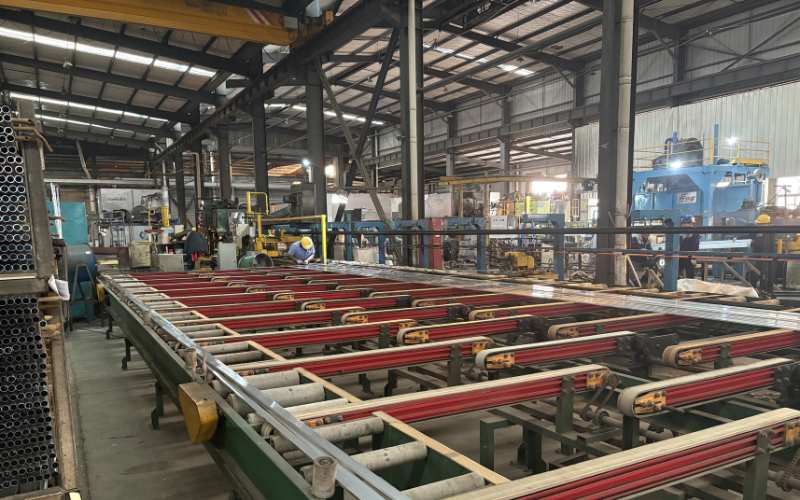
At 3,000 tons of monthly capacity across 14 presses, we can run your standard SKUs on dedicated press time while simultaneously producing custom OEM runs — without the scheduling conflicts that force smaller factories to push out your order by six weeks.
The Distributor Profit Logic
Here is what most suppliers won’t walk you through: the process selection decision affects your margin directly, not just your unit cost.
A distributor sourcing pool poles from a pure-machining supplier pays a premium per unit that the end consumer will not absorb at mass-market retail price points. The gross margin collapses. The SKU gets delisted after one season.
A distributor sourcing from an integrated extrusion + CNC facility pays lower per-unit COGS because the supplier’s production economics are fundamentally lower. That cost advantage flows through to either a stronger margin at the same retail price, or a sharper competitive price that wins shelf space.
For 40HQ container buyers: our 10ft pool poles are designed to collapse under 1.5 meters packed length. That keeps you below the “oversized” carrier surcharge thresholds from UPS and FedEx on mixed-SKU shipments, and maximizes unit count per container. At $1.20–$2.00 per cubic foot savings on freight, across a 3,000-unit container, that is $1,800–$6,000 per shipment that your competitor, who didn’t ask about pack dimensions, is leaving on the table.
Surface Finishes on CNC-Machined Aluminum Parts
The finish you specify affects corrosion resistance, aesthetics, product longevity, and end-consumer safety. Main options:
Anodizing Type II (Decorative)
Creates a porous oxide layer, typically 5–25 microns. Ideal for color matching and moderate corrosion protection. Our two automatic anodizing lines at Xingyong produce full custom color runs consistently across high-volume production.
Anodizing Type III (Hardcoat)
Denser oxide layer, 25–50 microns. Used for parts experiencing abrasive contact — like the inner and outer telescoping tube surfaces, where repeated sliding wears through a standard Type II coat in one season.
Sandblasting
A critical pre-anodizing step. Our machines use fine abrasive media at controlled pressure to strip tool marks, create uniform surface texture, and improve anodizing adhesion. Skipping this produces patchy color and poor coating adhesion. Cheap suppliers skip it routinely.
Powder Coating
Thicker, paint-like finish applied electrostatically and cured under heat. Harder than liquid paint, but less UV-resistant than hardcoat anodizing in pool environments.
Four questions to ask any supplier before placing a surface finish order:
- What is the micron thickness of your standard anodizing coat, and how do you verify it? (Answer should reference a film thickness gauge with documented readings)
- Do you sandblast before anodizing? What abrasive media and pressure specification do you use?
- What is your color tolerance standard? Do you use a color difference comparison light box with documented batch records?
- Can you share your anodizing line certifications and wastewater treatment compliance documentation?
Quality Inspection: What a Certified Factory Actually Controls
This is where most supplier qualification conversations should start — but rarely do.
At Xingyong, our inspection center runs equipment that most trading companies have never seen:
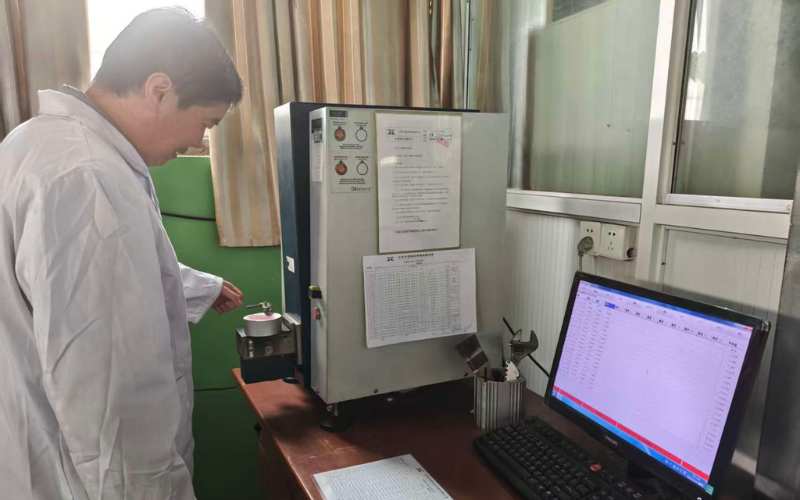
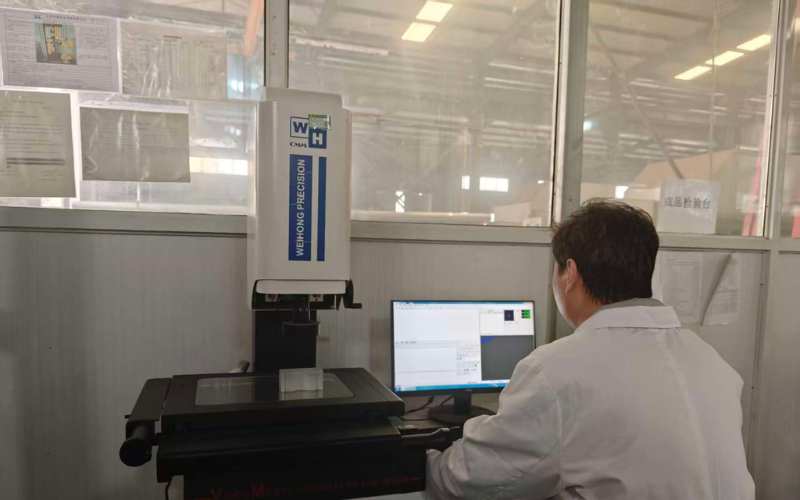
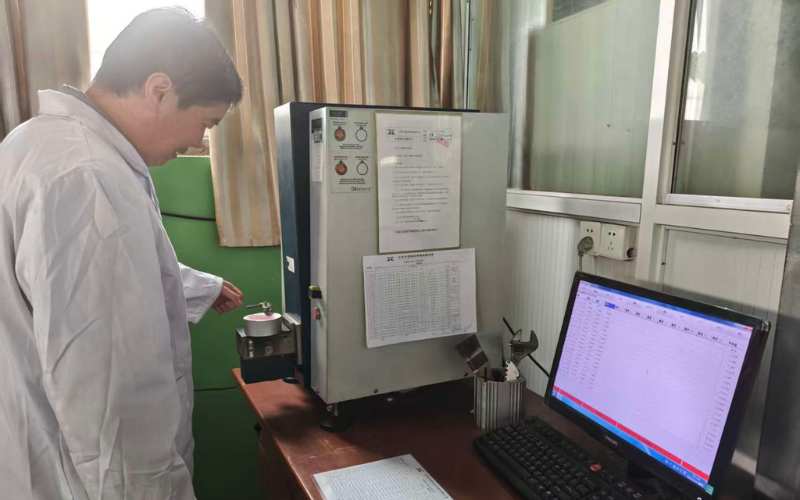
- Oxford Spectrometer — verifies alloy composition at billet intake. If incoming aluminum is not 6061-T6 when it claims to be, we know before it enters the press. Buyers who don’t ask about spectrometer verification are trusting a certificate document, not a physical test result.
- Israel Romidot Section Scanner — scans concentricity of extruded tubes after pressing. At 30ft of extension, a tube 0.3mm off-center deflects visibly under working load. This scanner catches that before it becomes a field return.
- Barcol, Rockwell, and Webster Hardness Testers — three methods covering different material thicknesses and temper states.
- Tensile Testing Machine — physical load testing of finished assemblies. Not simulated. Not estimated.
- Cross-Section Imaging System — verifies wall thickness uniformity across the tube cross-section after extrusion.
- Color Difference Comparison Light Box — color consistency verification across anodizing batches, essential for retail planogram compliance.
Our certifications — ISO 9001:2015, ISO 14001:2015, ISO 45001:2018 and ISO 50001:2018 — are documented quality system requirements, not marketing badges. These systems demand documented process control at a level most consumer-goods manufacturers never reach. For buyers supplying mass-market retailers, this certification means our production system — not just our finished parts — meets a documented, auditable standard.
I’ve seen buyers sign 40ft container contracts based on a product photo and a price sheet. The Oxford Spectrometer doesn’t lie. A product photo does.
According to ASTM B209 — the standard governing aluminum alloy sheet and plate — material composition must be verified at intake, not assumed from a mill certificate. We verify. Most suppliers don’t.
Frequently Asked Questions
Q: Is CNC-machined aluminum stronger than extruded aluminum?
Not inherently — strength comes from the alloy grade and temper, not the machining process itself. However, CNC-machined parts are often cut from solid billet or precision-extruded stock with controlled grain structure. The machining process also allows engineers to leave more material in high-stress regions, which extrusion cannot do because the cross-section must remain constant along the part length.
Q: What is the best aluminum alloy for CNC machining?
6061-T6 is the most widely used alloy for general CNC machining due to its balance of strength, machinability, weldability, and corrosion resistance. For telescoping tube shafts, 6063-T5 is preferred for its surface finish and anodizing quality. For maximum strength in high-stress applications, 7075-T6 is the aerospace-grade choice.
Q: What is the difference between cast aluminum and CNC-machined aluminum?
Cast aluminum is poured as molten metal into a mold and solidifies in that shape — fast and inexpensive for complex geometries, but with lower strength, porosity risk, and dimensional tolerances that cannot match CNC machining. CNC-machined aluminum is cut from solid wrought stock (billet or extruded profile), which has a denser, more consistent grain structure and holds tighter tolerances. For structural and load-bearing applications, wrought CNC-machined aluminum consistently outperforms cast.
Q: How much does CNC-machined aluminum cost per kg?
Material cost for 6061-T6 billet runs approximately $2.50–$4.00/kg depending on market conditions and order volume. Machining adds cost based on complexity, cycle time, and finish requirements. For high-volume pool pole components using the hybrid extrusion + CNC model, per-unit economics are significantly more favorable than pure-machining from billet. Request a breakdown from your supplier that separates material cost, machining cost, surface treatment cost, and per-unit freight contribution.
Q: What certifications should my CNC aluminum supplier have?
At minimum for B2B retail supply: ISO 9001:2015 (quality management) and ISO 14001:2015 (environmental management). For supply chains serving automotive-tier buyers or high-compliance retailers: ISO 9001. Always request the certification body name and expiry date — not just a logo on a website.
Q: Is CNC-machined aluminum suitable for saltwater pool environments?
Yes, with the right alloy and surface treatment. Specify 6063 or 6061 with Type III hardcoat anodizing (25–50 microns) for maximum chlorine and salt resistance. Avoid 2024 series alloys in pool environments — their lower corrosion resistance requires additional protective coating that is difficult to maintain in commercial use.
The Real Question Behind Every Sourcing Decision
When a procurement manager asks, “What is CNC-machined aluminum?” they are almost always asking something deeper: what does my supplier actually control?
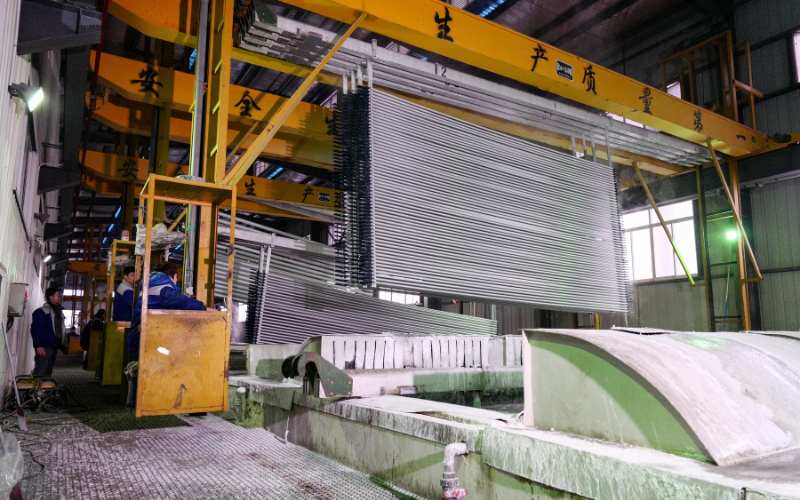
A factory that controls extrusion and CNC machining in-house controls the alloy composition, the profile geometry, the machined tolerances, the surface treatment, and the inspection protocol — under one roof, one quality system, one accountability structure. That vertical integration is not a marketing claim. It is a supply chain risk reduction that shows up in your defect rate, your compliance audit results, and your margin.
At Xingyong, we have run this integrated process since 2010. Our 3,000-ton monthly output moves through 14 extrusion presses, two automatic anodizing lines, a full CNC workshop, and an inspection center with Oxford Spectrometer and Romidot scanner — all under one ISO 9001 certified quality management system.
That is what CNC-machined aluminum looks like when it is done at scale, done correctly, and done with the documentation to prove it.
Get a Technical Breakdown Within 48 Hours
If you are sourcing aluminum pool poles, telescoping rods, or any custom aluminum assembly for retail or OEM production, send us your product drawing, target specifications, and annual volume estimate.
Within 48 hours, you receive:
- Alloy recommendation with rationale per component
- Oxford Spectrometer test protocol documentation
- Tolerance analysis against your drawing
- FOB unit pricing at your target volume
- 40HQ container loading plan with pack dimensions
We supply OEM manufacturers, brand owners, and retail procurement teams serving Walmart, Home Depot, ROSS, and equivalent mass-market channels. Custom packaging, private label, and seasonal stocking programs available on request.
Request your technical breakdown from Xingyong’s engineering team →
Related products: Explore related products and review matching solutions.

 English
  Español
  Français
  Deutsch
  Português