
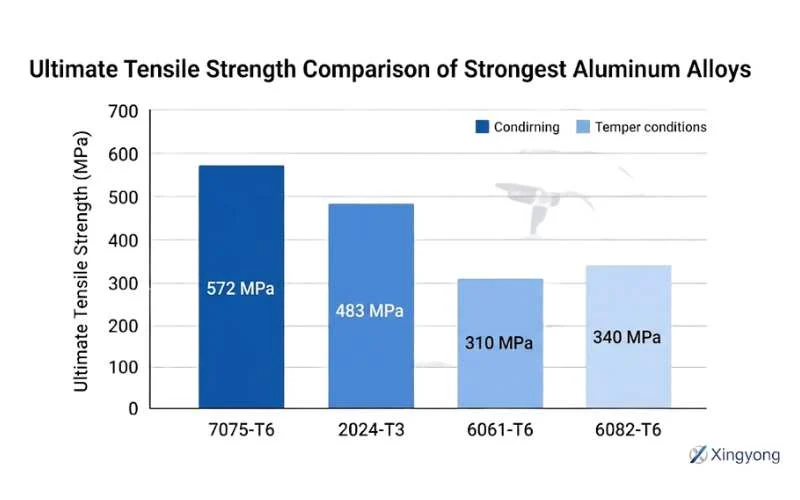
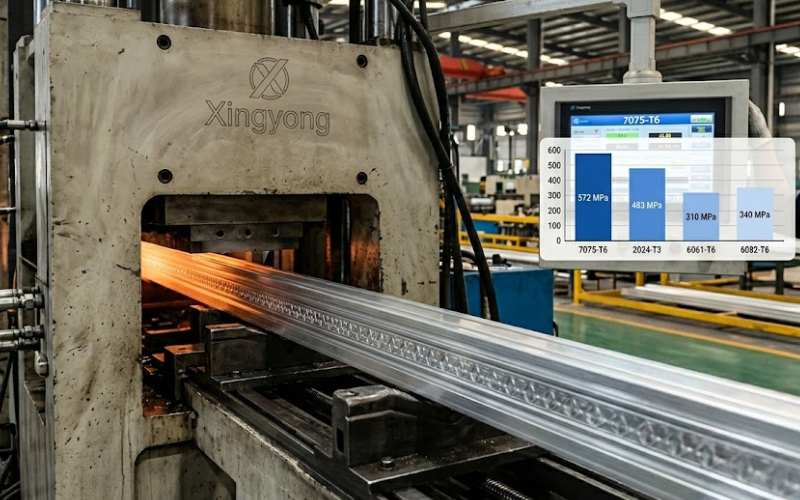
7075-T6 is the strongest commercial aluminum alloy, with ultimate tensile strength up to 572 MPa (83,000 psi). Does your supply chain suffer from high return rates due to “bent” products, or are you losing margins to exorbitant ocean freight? In the B2B international trade sector, selecting the wrong aluminum grade is a silent profit killer. As a technical lead at Xingyong with 20+ years in aluminum extrusionI’ve seen procurement managers prioritize raw “tensile strength” only to watch their components fail due to stress corrosion or poor fatigue limits. This guide moves beyond textbook data to give you the factory-floor reality of high-strength alloys.
Before sending this topic to a supplier, align the working specification with standard aluminum extrusion capabilities and confirm the manufacturing route through precision aluminum tube manufacturing; Aluminum Association material resources can help when different teams use different material or safety terms.
What Is the Strongest Aluminum Alloy Commercially Available?
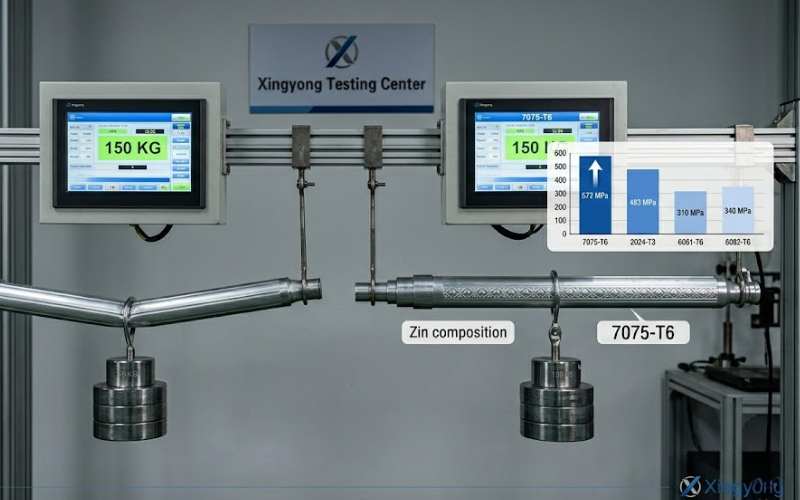
7075-T6 is the strongest commercial aluminum alloyboasting an Ultimate Tensile Strength (UTS) of up to 572 MPa (83,000 psi). It offers a higher strength-to-weight ratio than many structural steels. However, for B2B distributors, “strength” must be balanced against Stress Corrosion Cracking (SCC) and weldability. While 7075 wins on pure force, specialized 2xxx series alloys lead in fatigue resistance, and modified 6xxx series (like 6082-T6) offer the best ROI for structural stability in humid environments like swimming pools.

1. The Power Hierarchy: Comparing 7xxx, 2xxx, and 6xxx Series
To dominate your market, you must match the alloy’s molecular strengths to your customer’s pain points. Not all “strength” is created equal.
7xxx Series (The Heavy Hitters)
Alloyed primarily with Zincthis series represents the pinnacle of aluminum strength.
- 7075-T6: The “Aerospace Grade.” We use this at Xingyong for high-end telescopic poles that must withstand extreme leverage without permanent deformation.
- 7005: A weldable alternative often used in high-performance bicycle frames.
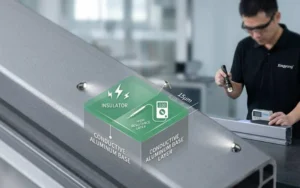
- The Downside: High copper content makes 7075 prone to corrosion. Without a minimum 15-micron anodizing filmthese parts will degrade in outdoor settings.
2xxx Series (The Fatigue Specialists)
Alloyed with Copperthese are the masters of cyclical loading.
- 2024-T3: Exceptional fatigue strength. If your product vibrates or undergoes repetitive stress, 2024 is superior to 7075.
- Critical Fact: It has poor corrosion resistance and requires professional coating.
6xxx Series (The ROI Champions)
Alloyed with Magnesium and Siliconthese offer the best balance for mass-market distribution.
- 6061-T6: The industry standard. High versatility and excellent corrosion resistance.
- 6082-T6: Known as the “Structural Alloy” in Europe, offering 10-15% higher yield strength than 6061.
2. Technical Comparison: Mechanical Properties at a Glance
| Alloy & Temper | Tensile Strength (MPa) | Yield Strength (MPa) | Fatigue Strength (MPa) | Corrosion Resistance |
|---|---|---|---|---|
| 7075-T6 | 572 | 503 | 159 | Low |
| 2024-T3 | 483 | 345 | 138 | Very Low |
| 6061-T6 | 310 | 276 | 96 | High |
| 6082-T6 | 340 | 280 | 110 | High |
3. The Xingyong Insight: Why “Temper” Dictates Your Claim Rate
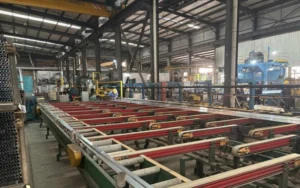
In our 14-press extrusion workshop, we’ve found that the billet chemistry is only 40% of the story. The remaining 60% lies in the T6 Thermal Treatment.
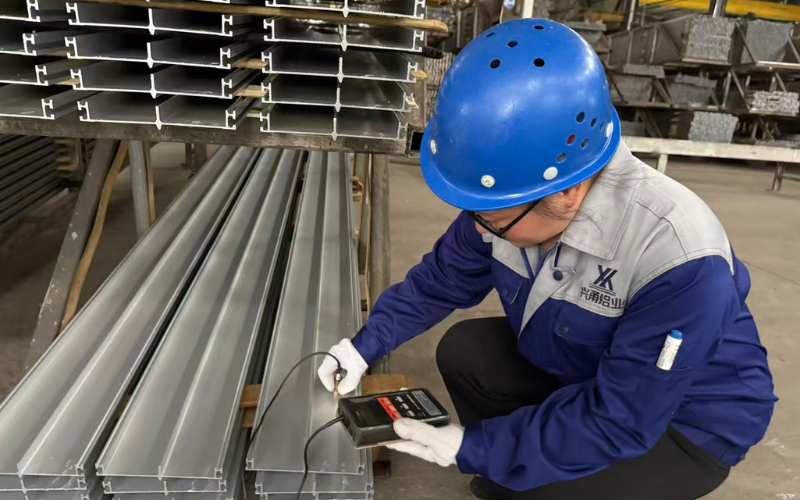
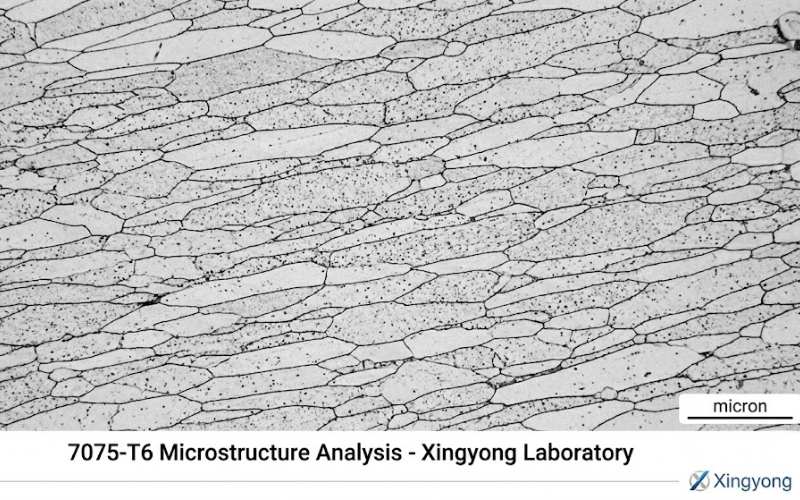
Most low-cost suppliers rush the aging process to increase throughput. At Xingyong, we utilize Israeli Romidot scanners and Oxford Spectrometers to monitor the precipitation hardening of the Mg₂Si or MgZn₂ phases. If the quenching speed isn’t precise, the “strong” 7075 alloy becomes brittle. True T6 tempering ensures the alloy reaches its peak Vickers Hardness without sacrificing elongation.
4. Distributor Profit Logic: The “Down-Gauging” Strategy
For buyers at Walmart, Home Depot, or Rossthe goal isn’t just a strong pole—it’s a profitable one.
- Weight Reduction: By switching from a 6063-T5 to a 7075-T6 alloy, you can reduce the wall thickness by 30% while maintaining the same rigidity.
- Shipping Savings: A 30% reduction in weight directly translates to lower ocean freight costs per unit. In a high-freight era, this is how you undercut competitors on landed cost.
- Marketing Premium: Labelling your product as “Aerospace Grade 7075 Aluminum” allows for a 20-35% retail price premium over standard “Heavy Duty” generic poles.
5. Critical Failures: When “Strongest” Is a Mistake
As an engineer, I must warn you: Do not use 7075-T6 for products requiring complex welding. The heat-affected zone (HAZ) will lose up to 50% of its strength, leading to catastrophic failure at the joints. Furthermore, in high-acidity environments (like poorly maintained commercial pools), 7075 can suffer from Exfoliation Corrosion. This is why our ISO 9001 certified quality process is vital—we help you choose the alloy that survives the application, not just the lab test.
6. Sourcing Strategy for 2026
When vetting a manufacturer, look beyond the price per ton. High-strength alloys require:
- High Extrusion Pressure: Our 2000T presses ensure dense grain structures.
- Verified Certification: Demand ISO 9001:2015 and chemical analysis reports for every batch.
- Traceability: At Xingyong, every pool cover reel can be traced back to the original aluminum billet lot.
Beyond the Metal: Your Engineering Partner
Choosing the strongest aluminum alloy is a calculation of mechanical limits, environmental factors, and bottom-line profit. Whether you are an OEM brand or a global distributor, the “strongest” alloy is the one that delivers zero defects and maximum perceived value to your end-user.
Secure Your High-Performance Supply Chain
Stop guessing and start engineering. At Xingyongwe combine 16 years of manufacturing heritage with the precision of ISO 9001 standards to deliver world-class extrusions.
Contact our Technical Consultants today to request a material optimization audit for your product line.
Related products: Explore related products and review matching solutions.
Strongest Aluminum Alloy: Strength Is Not a Single Number
For commonly available wrought aluminum, 7xxx-series alloys such as 7075-T6 are among the strongest widely used choices, and specialty alloys such as 7068 can reach still higher tensile strength. That does not make them the best choice for every product. Yield strength, fatigue, corrosion resistance, weldability, extrusion availability, temper and cost all affect the real engineering decision.
| Alloy family | Relative strength | Key advantage | Main trade-off | Typical decision |
|---|---|---|---|---|
| 7068 / high-strength 7xxx | Very high | Maximum strength-to-weight potential | Cost, availability and process control | Specialized high-performance parts |
| 7075-T6 | High | Proven high-strength machining alloy | Lower corrosion resistance and weldability than 6xxx | Highly loaded machined components |
| 2024-T3/T4 | High | Good fatigue performance | Corrosion protection usually required | Aerospace-style sheet and machined parts |
| 6061-T6 | Medium | Balanced strength, corrosion resistance and machinability | Not the maximum-strength option | Structural tubes and general engineering |
| 6063-T5/T6 | Moderate | Excellent extrudability and surface finish | Lower structural strength | Complex profiles and appearance-led products |
How to choose without over-specifying
First define the load case and failure mode. Then compare certified mechanical-property requirements in the applicable material standard and confirm the delivered temper. A lower-strength alloy with a better tube diameter, wall thickness and section overlap can outperform a stronger alloy used in a poor geometry. Prototype testing remains essential when deflection, impact or repeated cycling controls the product.
For tubular products, continue with our guide to aluminum tube selection and the load-capacity calculation process.

 English
  Español
  Français
  Deutsch
  Português