
“Extruded per ASTM B221” is one of the most common notes on an aluminum drawing, and it settles less than most buyers think.
The standard is real and useful: it fixes chemistry, minimum tensile properties and how both are tested. But a tube can meet ASTM B221 and still arrive with walls at the thin edge of tolerance, a finish nobody approved, or telescoping sections that bind. The gap between “compliant” and “right” is where the rejected container comes from.
This guide explains what ASTM B221 covers, how it differs from B211, B209 and B241, and what to add to your purchase order.
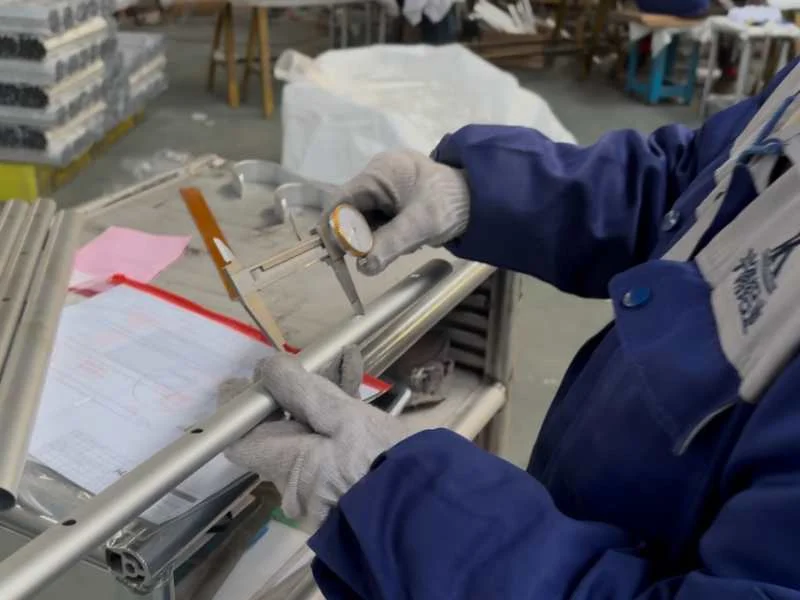
What ASTM B221 Is: The Short Answer
ASTM B221 is the ASTM material specification for aluminum and aluminum-alloy extruded bars, rods, wire, profiles and tubes; the current editions are B221-21 in inch-pound units and B221M-21 in metric. It is maintained by ASTM Committee B07 on light metals and alloys, and it applies to products made by hot extrusion.
The official scope, published on the ASTM B221-21 standard page, lists what the specification governs: the alloys and tempers it recognizes, chemical composition and the test methods used to check it, and the tensile strength, yield strength and elongation each alloy-temper must reach. Alloy and temper names follow ANSI H35.1, which is why “6063-T5” means the same thing on a B221 order as in any other aluminum document.
Two scope notes matter for buyers. First, pipe and tube under B221 are intended for general-purpose use; the standard says it may not address the processes and integrity testing needed for fluid-carrying pressure applications, and points to other specifications for those. Second, B221M is a complete metric companion rather than a translation, so an order should name one or the other, not mix units from both.
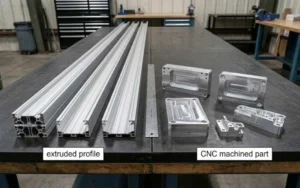
In practice, B221 is the baseline callout for the extruded aluminum most manufacturers buy: architectural and industrial profiles, general-purpose round, square and rectangular tube, and the tube used in telescopic, pool and cleaning poles. It answers the question “is this the metal I paid for, and is it as strong as that alloy should be?” It does not, on its own, answer “will this part fit, look right and survive my use?”
The rest of this guide separates those two questions, because most extrusion disputes start when a buyer assumes the first answer covers the second.
What B221 Controls on an Order — and What a Bare Callout Leaves Open
A B221 callout reliably fixes the material: registered chemistry, minimum tensile properties for the alloy-temper and size, and the methods used to verify both. Everything that makes a part work in its application — tolerance class, finish, fit and functional performance — needs its own line on the drawing or purchase order.
The table below splits the two. The first rows follow the standard’s published scope; the rest are the part-specific requirements a material specification is not written to cover.
| Requirement | Settled by “per ASTM B221”? | What to add |
|---|---|---|
| Alloy chemistry | Yes — registered composition limits | Name alloy and temper, e.g. 6063-T5 |
| Tensile, yield, elongation | Yes — minimums by alloy, temper and size | Design margin above the minimum, not the typical value |
| Test methods and sampling | Yes | Which lot documents you want with each shipment |
| Dimensional tolerance class | Not by the callout alone | Tolerance source (e.g. ANSI H35.2) and standard or precision class |
| Critical dimensions for your part | No | Dimensions that must be controlled tighter, with their tolerances |
| Surface finish and color | No | Anodize or coating system, thickness, color reference, cosmetic standard |
| Fit between mating parts | No | Functional fit test on matched parts |
| Application performance | No | Load, drop, lock-hold or deflection acceptance test |
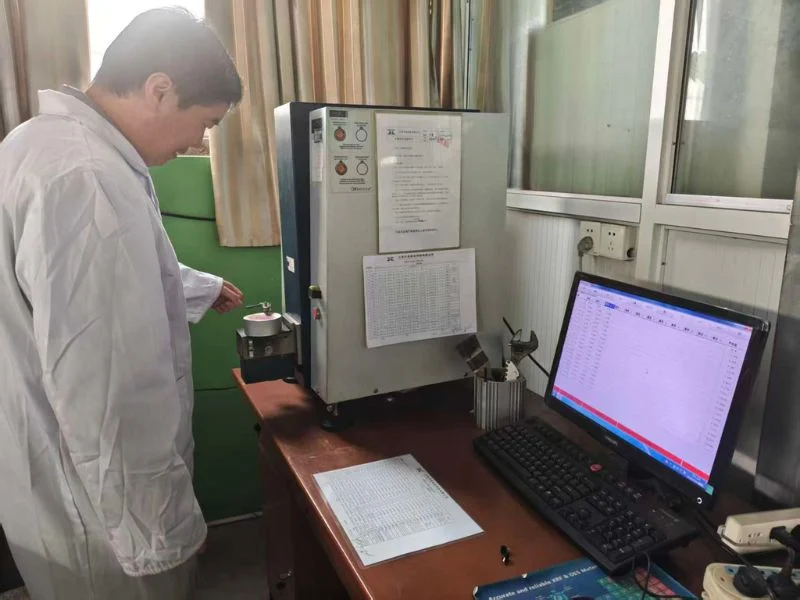
The chemistry line is the one B221 does best. Composition is checked with chemical or spectrochemical methods, on samples taken when the metal is poured or cut from finished or semi-finished product. That is what lets a buyer hold a supplier to “6063” rather than “some 6000-series scrap blend.”
The mechanical line comes with a caveat the standard itself flags: elongation requirements do not apply below certain sizes. For very thin-wall tube, the property check that remains is strength, and your part’s real-world toughness has to be proven another way.
The open lines at the bottom of the table are not a flaw in the standard. B221 is a material specification, and it is written to serve a very wide range of parts. Your drawing is where the part-specific requirements belong.
ASTM B221 vs B211, B209, B241 and B429: Which Spec Fits Which Product
B221 covers extruded products for general use; B211 covers rolled or cold-finished bar, rod and wire; B209 covers sheet and plate; and B241, B210 and B429 cover pipe and tube for pressure or structural piping service. Picking the wrong one does not just add paperwork — it can put a general-purpose tube into a job it was never tested for.
B221’s own scope notes point buyers to its neighbors, which is the most reliable way to draw the lines.
| ASTM specification | Covers | Use it when |
|---|---|---|
| B221 / B221M | Extruded bars, rods, wire, profiles and tubes | General-purpose extrusions and tube: frames, profiles, poles, handles |
| B211 / B211M | Rolled or cold-finished bar, rod and wire | Bar stock drawn or rolled to tighter size and finish, often for machining |
| B209 / B209M | Sheet and plate | Flat-rolled product rather than extrusions |
| B241 / B241M | Seamless pipe and seamless extruded tube | Fluid-carrying pressure applications |
| B210 / B210M | Drawn seamless tube | Pressure applications using drawn seamless tube |
| B429 / B429M | Structural pipe and tube | Structural piping applications |
Source: product scopes as referenced in ASTM B221-21 Section 1 notes; B209 by its ASTM title.
The practical difference between B221 and B241 is how the hollow is made. Much general-purpose tube is extruded through a porthole or bridge die: the metal splits around a mandrel and re-joins inside the die, leaving longitudinal seam welds along the tube. That tube is entirely suitable for poles, frames and handles. B241 exists for seamless product where the tube carries fluid under pressure and an integrity test matters.
The B211 question comes up most with machined parts. B211 bar is rolled or cold-finished after forming, which generally means closer size control and a better surface for automatic machining. If you are turning fittings from bar, B211 may be the right callout; if you are buying the extruded shape itself, it is B221.
The failure boundary: do not use B221 tube for compressed air, hydraulic or other pressurized fluid lines on the strength of its tensile properties. The standard’s own scope note says it may not cover the testing those applications need; specify B241 or B210 instead.
Minimum vs Typical: How to Read B221 Mechanical Properties
B221 lists minimum mechanical properties, and they are lower than the typical values printed in most material datasheets — design to the minimum, or your margin is smaller than you think. The minimums also change with the temper and with the thickness or size range of the product, so one alloy name can carry several different guaranteed values.
Here is how the numbers people quote usually originate. A datasheet for 6061-T6 lists a typical yield strength of about 270 MPa and ultimate tensile strength of about 310 MPa (see the MakeItFrom 6061-T6 datasheet). Those are averages of what the alloy normally achieves. The B221 table gives the value every compliant lot must reach, which sits below the average by design.
That difference is not academic on a thin-wall part. If a pole or bracket is calculated with typical yield, and the delivered lot sits just above the specified minimum, the real safety factor shrinks by the gap between the two. Nothing is out of specification, yet the part bends in service.
Three reading habits prevent most mistakes. Match the temper exactly: 6063-T5 and 6063-T6 have different minimums, and a drawing that says only “6063” lets the supplier choose. Match the size range: the applicable row depends on wall or section thickness. Check which properties apply: elongation minimums do not apply to the smallest sizes, so don’t count on them for very thin walls.
For how the common extrusion alloys compare before you pick one, see aluminum alloy grades explained, or for the two most common tube alloys side by side, 6061 vs 6063 aluminum. For the exact B221 minimums, use the current edition of the standard itself — we deliberately do not reproduce its tables here.
Tolerances: Where They Live and Why “Per B221” Is Not Enough
The dimensional tolerance tables that extruders and buyers work from are published by the Aluminum Association — in ANSI H35.2 and in Aluminum Standards & Data — so a drawing should name the tolerance source and class explicitly rather than assume a B221 callout settles them. Leaving it implicit is how two suppliers quote the same drawing to two different wall ranges.
The Aluminum Association’s ANSI H35.2 Dimensional Tolerances for Aluminum Mill Products (2024 edition) covers tube and pipe along with rod, bar, wire and other mill products. The Aluminum Extruders Council’s extrusion tolerances guide adds the point buyers most often miss: the tables include both industry-standard and precision tolerances, and many extruders can hold tighter values than either when the part requires it, by agreement.
Why wall tolerance deserves a line of its own becomes clear in numbers. For a thin-wall round tube, stiffness and strength scale almost directly with wall thickness, so a wall delivered at the low edge of its range costs capacity roughly in proportion.
| Actual wall (nominal 1.20 mm) | Wall deviation | Bending stiffness (I) | Load to first yield | Mass per meter |
|---|---|---|---|---|
| 1.32 mm | +10 % | +8.8 % | +8.8 % | 344 g (+9.6 %) |
| 1.20 mm | 0 | 13,790 mm⁴ | 80 N | 314 g |
| 1.14 mm | −5 % | −4.5 % | −4.5 % | 298 g (−4.8 %) |
| 1.08 mm | −10 % | −9.0 % | −9.0 % | 283 g (−9.6 %) |
| 1.02 mm | −15 % | −13.5 % | −13.5 % | 268 g (−14.5 %) |
Calculated, not measured. Inputs: 32 mm OD 6063-T5 tube, 1.5 m cantilever, typical yield 140 MPa, density 2.70 g/cm³. I = π(D⁴ − d⁴)/64; first-yield load = yield × I ÷ (D/2) ÷ L; mass = π(D² − d²)/4 × density. Wall deviations are illustrative, not values from any tolerance table.
The mass column is the useful one at the receiving dock. Because weight falls almost exactly as fast as capacity, weighing a counted bundle of tube against its nominal mass per meter is a quick screen for a lot running thin — no micrometer required. A bundle that weighs close to the −10 % row above is worth cutting and measuring before it goes into production.
Tolerance Stack-Up on a Telescoping Pole: A Worked Example
On any part where one tube slides inside another, the outside-diameter and wall tolerances of both tubes add up, and at commercial tolerances the total can consume the entire design clearance. Each tube can be individually within tolerance while the pair binds or rattles.
Take a common pairing: a 35 mm OD × 1.2 mm wall outer section over a 32 mm OD inner section. The outer tube’s inside diameter is 35 − 2 × 1.2 = 32.6 mm, leaving a nominal diametral clearance of 0.6 mm. Now let each dimension move within a tolerance band.
| Illustrative tolerance on each tube | Tightest fit | Loosest fit | Clearance spread | What the user feels |
|---|---|---|---|---|
| OD ±0.15 mm, wall ±0.10 mm | 0.10 mm | 1.10 mm | 1.00 mm | Some pairs bind, others wobble and slip at the lock |
| OD ±0.10 mm, wall ±0.06 mm | 0.28 mm | 0.92 mm | 0.64 mm | Usable, but lock feel varies pole to pole |
| OD ±0.05 mm, wall ±0.03 mm | 0.44 mm | 0.76 mm | 0.32 mm | Consistent slide and lock |
Calculated worst case. Clearance = (outer OD − 2 × outer wall) − inner OD; the tightest fit takes the outer OD low, outer wall high and inner OD high, the loosest the reverse. Tolerance values are illustrative inputs chosen to show the effect, not figures from ANSI H35.2 or any customer drawing.
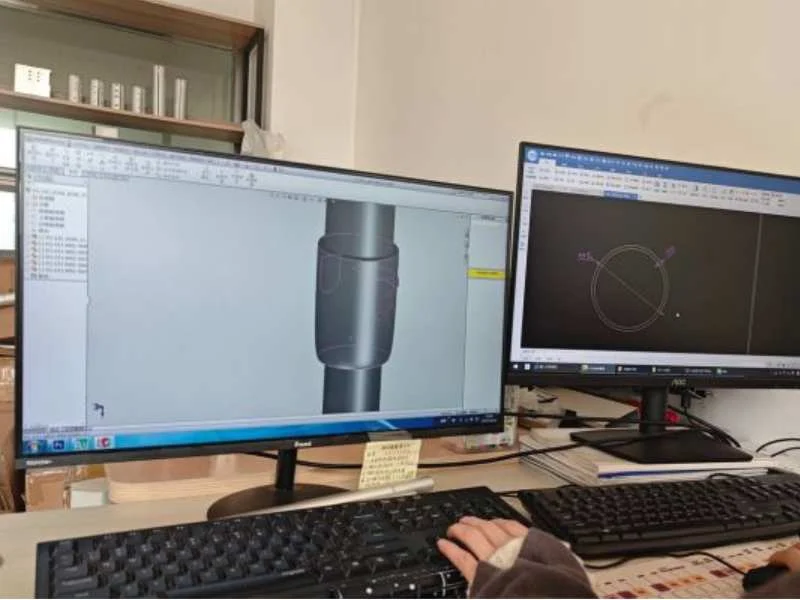
The lesson is not “always buy precision tolerance,” which costs die time and scrap. It is that fit should be specified as fit. A drawing that states “sections shall slide freely and the lock shall hold X kg without slip, tested on randomly matched pairs” controls the outcome directly, and lets the extruder and assembler decide which dimensions to tighten.
That is also why fit is easier to hold when one plant makes both parts. When the tube and the lock come from the same factory, the lock’s inner sleeve can be tuned to the tube lot actually produced, rather than to a nominal size on paper. A German pool-equipment distributor’s program is an example: 620,000 three-section twist-lock poles across six reorders, with tube and lock tolerances managed as one system (German distributor case study).
What a B221-Compliant Tube Can Still Get Wrong
A tube can pass every B221 requirement and still fail your product: the finish can be uneven, the wall can sit at the thin edge, the fit can vary, and the part can dent in a drop test the standard never asks for. Compliance is a floor for the material, not an acceptance test for the product.
The drop test is the clearest example. A US home-improvement retailer required a bare 6 ft pool pole to survive nine drops with no permanent deformation — a requirement that appears nowhere in a material specification, and one a previous supplier’s poles had failed. The correction was engineering, not paperwork: the tube wall and temper process were reworked until the pole passed (Home Depot private-label case study).
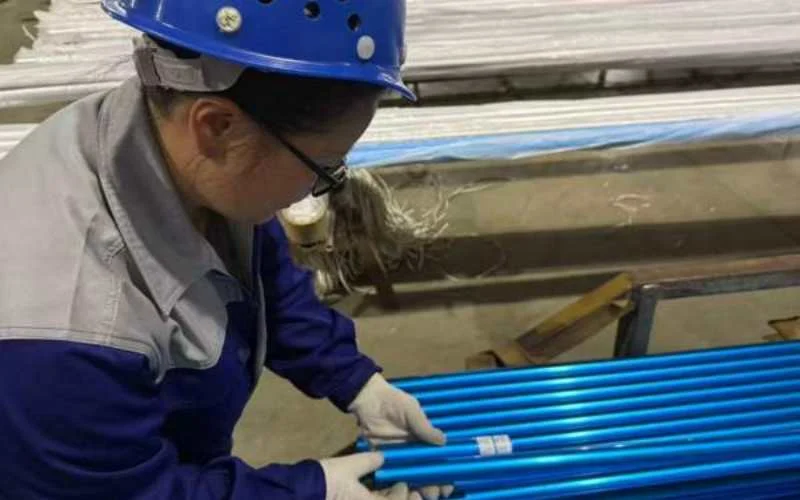
Finish is the second gap. Anodizing thickness, color consistency across lots and cosmetic defects are outside B221’s scope, and on a retail pole or visible profile they drive more complaints than strength ever does. Specify the finish system and a color approval rule separately; our anodizing and surface finishes page lists the options.
Straightness and twist are the third. They matter enormously for long telescoping sections and for profiles that must assemble into frames, and they belong in the tolerance callout with a stated class and measuring method.
The failure boundary: never accept “meets ASTM B221” as the only acceptance criterion for a finished product. If a failure mode would cause a return — slip, dent, bind, color mismatch — it needs a written test on the drawing, run at sample approval and on production lots.
How to Write ASTM B221 Into a Purchase Order
Name the edition, the alloy-temper, the tolerance source and class, the finish, the lot documents and the functional test — six lines that turn a material callout into an enforceable part specification. Quotes built on those six lines are comparable; quotes built on “per B221” are not.
A purchase order or drawing note that holds up in volume includes:
- Standard and edition — for example “ASTM B221M-21,” or the inch-pound B221-21, not both.
- Alloy and temper per part — “6063-T5 tube,” “6061-T6 fitting.” Never “6000 series.”
- Tolerance source and class — e.g. ANSI H35.2 standard tolerances, plus tighter tolerances on named critical dimensions.
- Finish — anodize or coating system, minimum thickness, color reference and cosmetic acceptance.
- Lot documents — chemistry and tensile results traceable to each production lot.
- Functional acceptance — the fit, lock-hold, drop or deflection test, sample size and pass criteria.
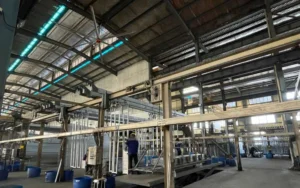
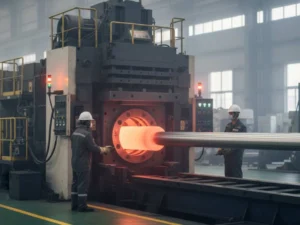
Xingyong extrudes aluminum tube and profiles on our own 2000-tonne press in Huai’an, anodizes in-house, and molds the plastic locks, grips and end caps in our own injection shop, so tube, finish and assembly are held to one drawing by one supplier. We have been a direct manufacturer since 2010, not a trading company, with ISO 9001, IATF 16949 and amfori BSCI audits in place.
Send your drawing and we quote within 24 hours, with samples in 25 to 35 days. Our aluminum extrusion profiles page covers custom shapes, and the aluminum tube page lists round, square and rectangular tube options.
Frequently Asked Questions
What is ASTM B221?
ASTM B221 is the standard specification for aluminum and aluminum-alloy extruded bars, rods, wire, profiles and tubes. It sets the recognized alloys and tempers, chemical composition, minimum tensile properties and the test methods for verifying them. It is the default material callout for general-purpose aluminum extrusions.
What is the latest revision of ASTM B221?
The active editions listed by ASTM are B221-21 (inch-pound) and B221M-21 (metric). Check the ASTM store before issuing a new drawing, because a revision can change the recognized alloy-temper list, and name the edition on the purchase order so both sides quote to the same text.
What is the difference between ASTM B221 and B221M?
Units. B221 uses inch-pound units and B221M is a complete metric companion with its own values, not a unit conversion printed alongside. Specify one of them. Pairing a metric drawing with the inch-pound specification invites disputes over which rounded value applies.
What is the difference between ASTM B221 and ASTM B211?
Process. B221 covers extruded bars, rods, wire, profiles and tubes; B211 covers bar, rod and wire that are rolled or cold-finished. Cold-finished bar generally gives closer size control and surface finish for machining, while B221 is the callout for the extruded shape itself.
Can ASTM B221 aluminum tube be used for pressure or fluid lines?
Not on B221 alone. The standard describes its pipe and tube as intended for general-purpose applications and notes it may not address the integrity testing needed for pressurized fluid service. Specify B241 for seamless pipe and tube, or B210 for drawn seamless tube, in those applications.
Is ASTM B221 equivalent to EN 755 or GB/T 5237?
They cover overlapping product families, but they are not one-to-one equivalents. Alloy registrations, property minimums and tolerance tables differ in detail. If an order is made to one standard and checked against another, list the specific requirements that must be met rather than relying on “equivalent.”
What documents should an OEM buyer request with B221 extrusions?
Lot-traceable chemistry and tensile results showing the alloy-temper meets the specification, plus dimensional and finish inspection records against the drawing. For assembled products, add the results of the functional acceptance test. Ask for these at sample approval so the format is agreed before production starts.
Keep reading. For how the metal becomes a profile in the first place, see what the aluminum extrusion process is; for turning a drawing into a die, our custom aluminum extrusion guide; and for vetting the supplier behind the paperwork, how to choose an aluminum extrusion manufacturer.

 English
  Español
  Français
  Deutsch
  Português