
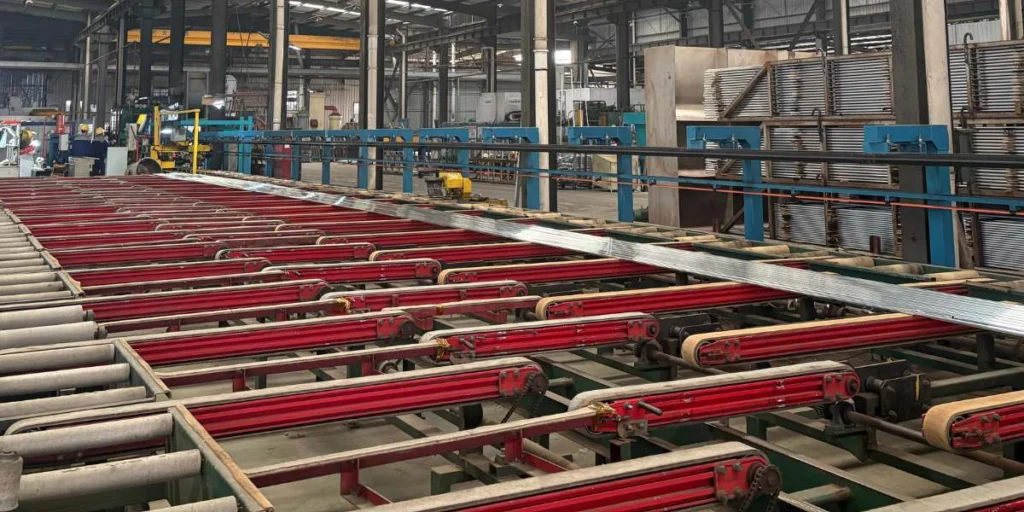
Aluminum extrusion shapes a heated billet by pushing it through a steel die. The profile leaving the die has a continuous cross-section that can be cooled, straightened, aged, cut, machined and surface-finished.
For a telescopic pole buyer, the important result is not simply “an extruded aluminum tube.” The process must deliver several nested tubes with controlled diameter, wall thickness, roundness, straightness and surface condition so that the sections slide smoothly, overlap correctly and work with the selected locks and connectors.
Why Extrusion Works for Telescopic Pole Tubes
Telescopic poles need long, hollow sections with repeatable geometry and a useful strength-to-weight balance. Extrusion can produce round and shaped tubes in scalable lengths, while allowing the profile to be developed around the application.
- Consistent cross-section: supports repeatable tube diameter and wall design.
- Nested sizes: allows multiple sections to telescope into one another.
- Design flexibility: supports standard tubes or custom internal and external features.
- Low weight: helps users control longer poles from the ground.
- Surface-finishing compatibility: supports anodizing, coating, brushing or other agreed finishes.
- Production scalability: suits repeat OEM programs once the die and process are approved.
Extrusion is only the first part of the product route. Deep processing, locks, connectors, assembly and inspection determine whether the tube becomes a reliable finished pole.
Aluminum Tube Extrusion Process: Step by Step
1. Define the Tube and Telescoping System
Development starts before metal enters the press. The manufacturer reviews the application, required reach, collapsed length, number of sections, tool attachment, working force, lock type, finish and packaging.
For nested tubes, each section must be considered as part of a set. Increasing one outside diameter can change the clearance, wall, lock size, grip and connector throughout the pole. The drawing should identify critical dimensions and the inspection method rather than leaving the product as a nominal tube size.
2. Select Alloy, Temper and Billet
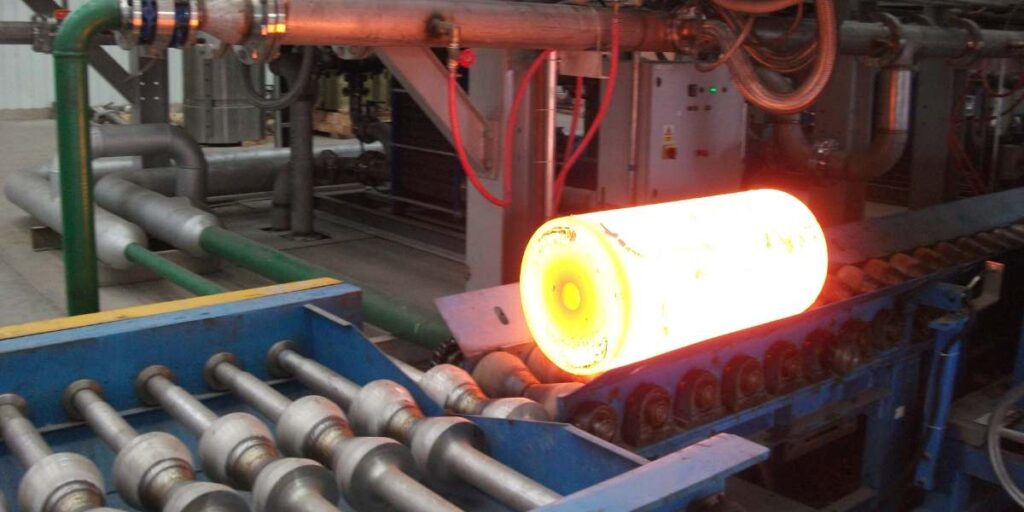
The alloy is selected around extrusion behavior, mechanical requirements, surface finish and cost. 6063-series material is commonly used for pole tubes, but the final alloy and temper should be recorded on the approved specification.
ASTM B221 for aluminum and aluminum-alloy extruded tubes and profiles is a recognized reference for material, temper and mechanical-property requirements. A material standard does not replace the dimensional, fit and finished-pole tests required for a telescopic product; our ASTM B221 guide walks through where that boundary sits.
Billet identity and batch information should remain traceable where the buyer requires material records.
3. Design and Prepare the Extrusion Die
The die determines the profile cross-section and influences metal flow. A simple round tube still requires correct die geometry to control wall distribution, diameter and surface quality.
Before production, review:
- profile drawing and tolerances;
- alloy and expected extrusion behavior;
- wall balance around the tube;
- allowance for cooling, straightening and finishing;
- inspection gauges and mating telescopic sections;
- die correction and sample-approval process.
A custom die should not be approved from one isolated dimension. The produced tube must be checked against its adjoining sections and lock components.
4. Heat and Extrude the Billet
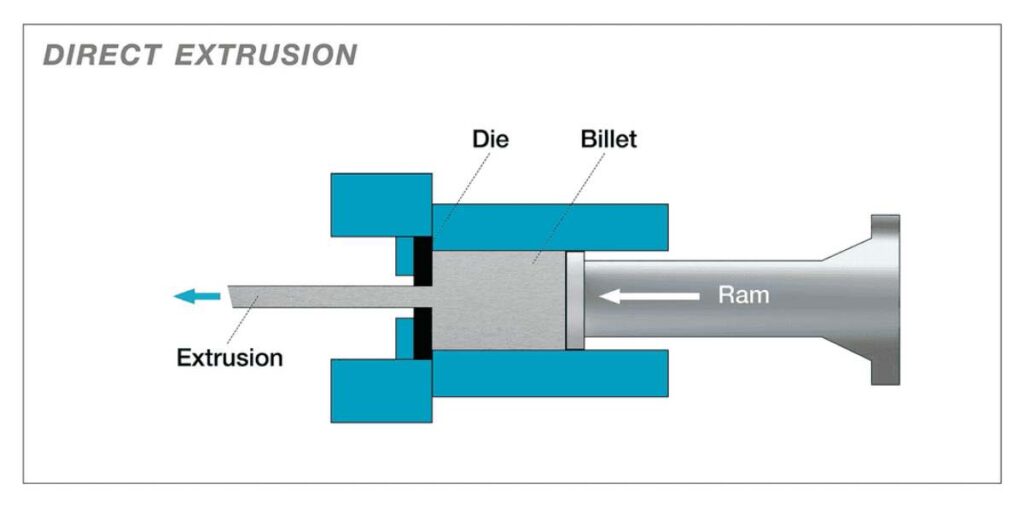
The billet and tooling are prepared to the process window established for the alloy and profile. A ram then forces the billet through the die, producing a continuous tube on the run-out table.
Temperature, extrusion speed, pressure and die condition affect metal flow and surface quality. These values are process-specific; they should be controlled by the extrusion team rather than copied as universal numbers from another profile.
Operators monitor the emerging profile for visible tearing, pickup, distortion and other abnormalities before allowing a run to continue.
5. Cool or Quench the Extrusion
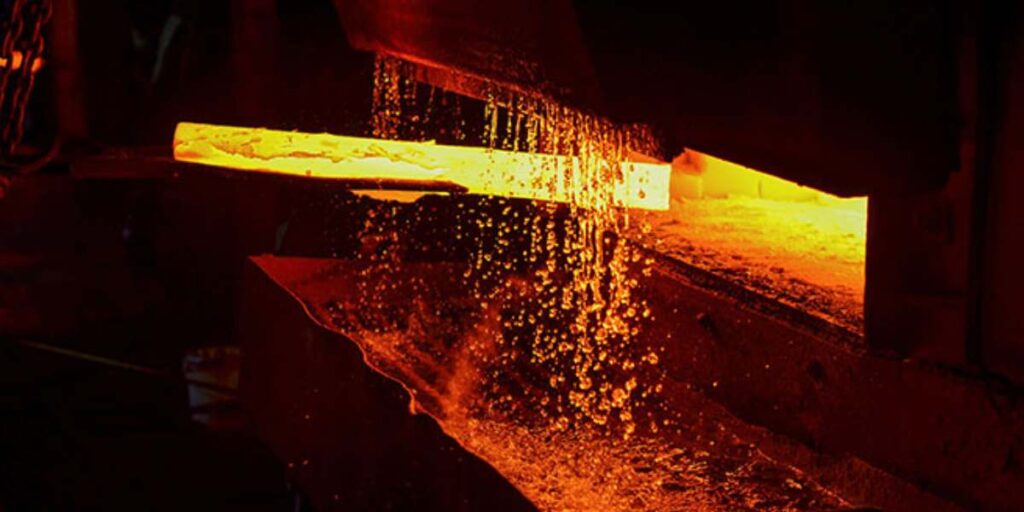
The profile is cooled using the route established for the alloy, temper and section. Cooling influences final properties, dimensional stability and downstream straightening.
Uneven handling or cooling can contribute to twist, bow or dimensional variation. Long pole tubes need support along the run-out system so that the hot profile is not damaged before it has sufficient stability.
6. Stretch, Straighten and Cut
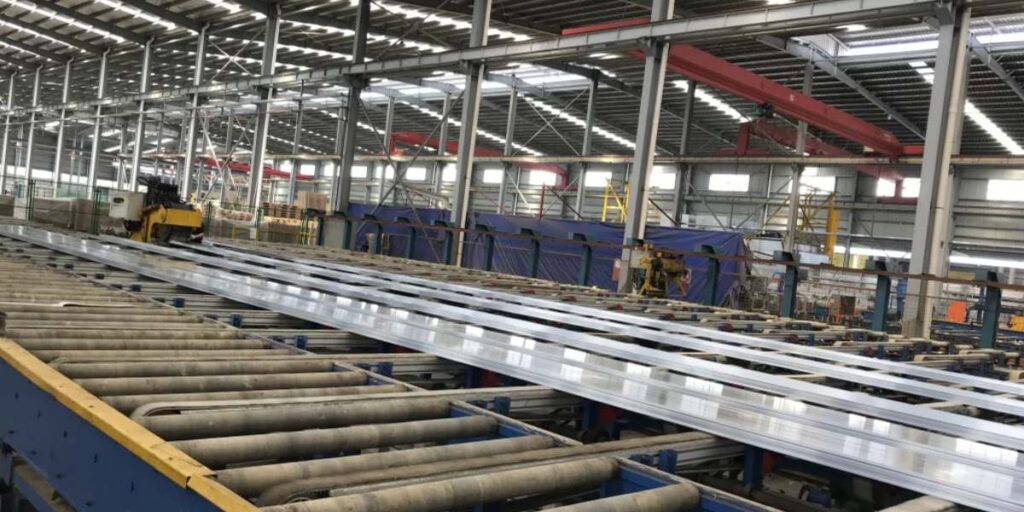
After cooling, the extrusion can be stretched to improve straightness and relieve residual distortion. It is then cut to lengths suitable for heat treatment, storage or later pole processing.
For telescopic tubes, straightness matters directly to user experience. A tube may meet an individual diameter measurement yet still bind when nested if it is bowed, twisted or locally distorted.
7. Age the Aluminum to the Specified Temper
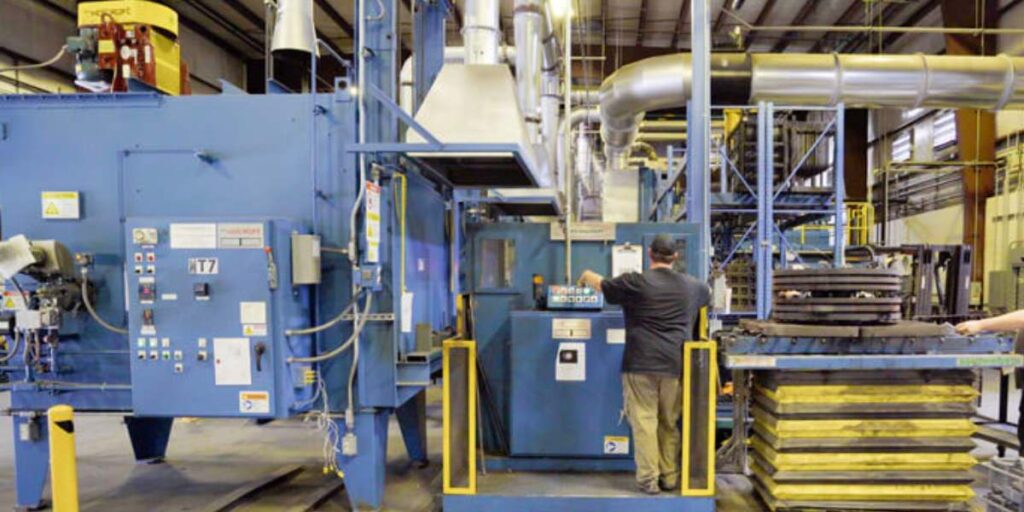
Natural or artificial aging is used to develop the specified temper and mechanical properties. The route depends on the selected alloy and product requirement.
The temper should be verified against the order specification. “Heat treated” is not sufficiently precise for a buyer comparing tubes, because different tempers can have different mechanical and processing behavior.
8. Inspect the Extruded Tube
Inspection turns the drawing into a repeatable production requirement. Typical checkpoints include:
- alloy and batch identification;
- outside and inside diameter where applicable;
- wall thickness and wall distribution;
- roundness, straightness and twist;
- cut length and end condition;
- surface lines, pickup, scratches and dents;
- mechanical properties required by the specification;
- fit with mating telescopic sections.
The appropriate sampling frequency and acceptance limits depend on the product and order. Critical pole dimensions should be identified before mass production rather than discovered during final assembly.
9. Machine, Finish and Assemble the Tube
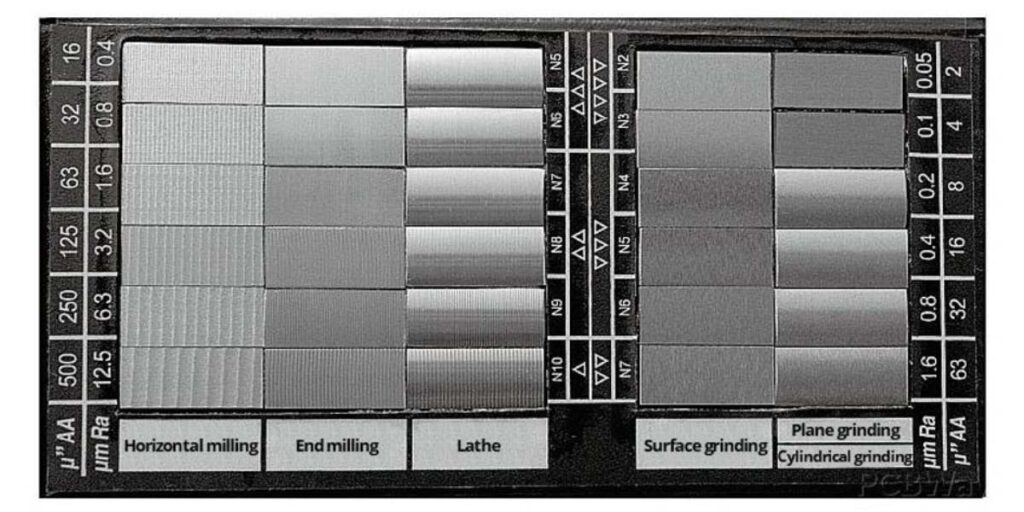
Extruded tubes can be cut to final section length, drilled, punched, threaded, deburred and prepared for locks or connectors. They may then be anodized, coated, brushed or otherwise finished.
Process order matters. Machining after anodizing can expose cut surfaces, while machining before anodizing requires allowances for the finished dimensions and contact areas. See the anodizing and surface-finish options and CNC machining capability.
Final assembly checks section movement, overlap, lock engagement and attachment fit. A good extrusion that is damaged by poor drilling, burrs or assembly is not an acceptable finished product.
Critical Dimensions for Telescopic Pole Tubes
| Characteristic | Why it matters | How it affects the pole |
|---|---|---|
| Outside diameter | Defines fit with locks and adjacent tubes | Too large can bind; too small can create looseness |
| Inside diameter | Defines clearance for the nested section | Changes sliding fit and available wall |
| Wall thickness | Affects stiffness, weight and dent resistance | Must match reach and working load |
| Roundness | Controls consistent radial clearance | Poor roundness can cause tight and loose positions |
| Straightness | Controls alignment along the tube length | Bow can cause binding and uneven loading |
| Surface condition | Affects appearance, sliding and finishing | Defects may remain visible after anodizing |
| Section overlap | Transfers load through the telescoping joint | Insufficient overlap reduces stability |
Common Extrusion Defects and Their Effect on Pole Production
| Observed issue | Possible process source | Potential pole impact |
|---|---|---|
| Uneven wall | Metal flow or die condition | Inconsistent stiffness and nesting clearance |
| Bow or twist | Cooling, handling or straightening | Binding during extension |
| Die or pickup lines | Die surface or transferred material | Visible finish defects and sliding marks |
| Surface tearing | Unsuitable process window or die condition | Poor appearance and rejected finishing |
| Dents and handling marks | Run-out, cutting or storage contact | Local binding or cosmetic rejection |
| Diameter variation | Process, temperature or die variation | Lock and section-fit inconsistency |
A defect should be evaluated against the intended product. A cosmetic line on a concealed industrial profile and the same line on a visible anodized retail pole may require different acceptance decisions.
How Buyers Should Approve an Extruded Pole Tube
A practical approval sequence is:
- Confirm the application, attachment, reach and working force.
- Approve the tube-set drawing, alloy, temper and critical dimensions.
- Review the die sample and dimensional report.
- Test the nested sections with production-representative locks.
- Approve machining, surface finish and color.
- Evaluate the assembled pole under the defined functional or load test.
- Freeze the approved sample, inspection method and packaging standard.
This avoids approving an extrusion in isolation and discovering later that it does not fit the lock, connector or neighboring tube.
For repeat orders, the approval package should also identify the drawing revision, die reference, alloy batch documentation, finish sample and measurement equipment used for critical characteristics. If a supplier changes the die, alloy source or manufacturing route, the affected dimensions and assembled-pole behavior should be reviewed again before the change enters bulk production.
What to Include in an Aluminum Tube RFQ
- application and finished-pole drawing;
- alloy and temper;
- tube cross-section and critical tolerances;
- working and collapsed pole length;
- number of telescoping sections and required overlap;
- lock, connector and tool-head samples;
- machining and deburring requirements;
- surface finish, color and appearance standard;
- dimensional and mechanical-property reports;
- sample quantity, order quantity and packaging.
When a drawing is incomplete, send the existing product and intended application. Xingyong can review the extrusion and downstream assembly through its precision aluminum tube manufacturing and custom telescopic pole services.
Frequently Asked Questions
Is every aluminum tube made by extrusion?
No. Aluminum tubes can be produced by different routes. The suitable method depends on profile, dimensions, properties, volume and application.
Is 6063 always the best alloy for a telescopic pole?
No. 6063 is common, but alloy and temper should be chosen with strength, finish, processing, weight and cost requirements.
Why can two tubes with the same nominal diameter fit differently?
Actual diameter, roundness, straightness, wall distribution, finish and local variation all affect telescoping clearance.
Does anodizing correct extrusion defects?
No. Surface finishing may make some defects more visible. The extruded and processed tube should meet the appearance standard before final approval.
When is a custom extrusion die required?
A custom die may be needed when standard tube sizes cannot provide the required cross-section, fit or functional features. Tooling should be approved with a production sample.
What should be tested after extrusion?
Check specified material properties and dimensions, then verify nesting, locks, connectors, finish and finished-pole function.
From Extruded Tube to Finished Pole
Develop a Repeatable Telescopic Tube System
Share the application, tube drawing, mating sections, locks, finish and order plan. Xingyong can review extrusion and assembly requirements before tooling or sampling.

 English
  Español
  Français
  Deutsch
  Português