Aluminum Tent Poles: Complete Buyer’s Guide (2026)
Aluminum tent poles are the backbone of modern camping and outdoor shelter equipment. Whether you are a gear brand specifying poles for a new tent line, a distributor sourcing for the camping market, or a product manager evaluating OEM suppliers, this guide covers everything you need to make the right decision — alloy selection, diameter, wall thickness, finish, and manufacturing options.
When the discussion moves from research to sourcing, connect the points in this guide with telescopic pole manufacturing and precision aluminum tube manufacturing. That makes the RFQ clearer, especially if the buyer also aligns terms with Aluminum Association material resources.
Types of Aluminum Tent Poles
Sectional Tent Poles (Shock-Corded)
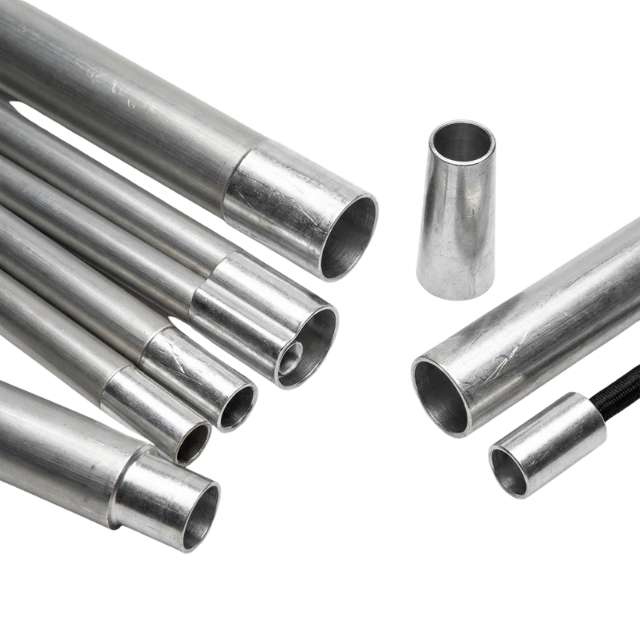
The most common type for backpacking and camping tents. Multiple short aluminum tube sections (typically 30–50 cm each) are connected by an internal elastic bungee cord. They fold compactly for transport and snap together quickly during setup.
- Best for: 3-season backpacking tents, dome tents, tunnel tents
- Typical section length: 35–48 cm
- Pole diameter: 7.9 mm – 12.7 mm (5/16 in to 1/2 in)
- Wall thickness: 0.4 mm – 1.0 mm
Telescopic / Adjustable Tent Poles
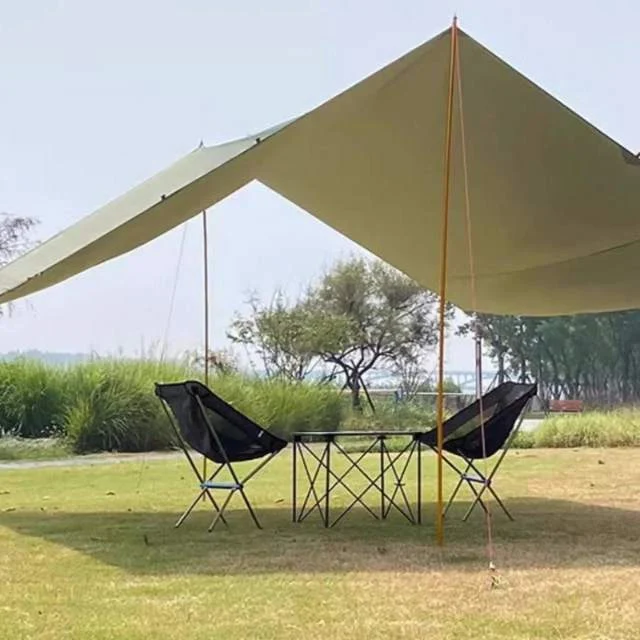
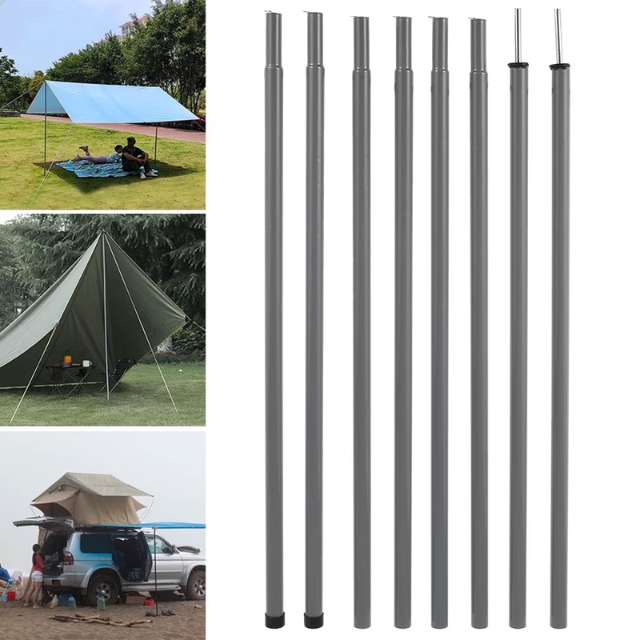
Telescopic poles allow height adjustment and are used in trekking poles that double as tent supports, tarp shelters, vestibule poles, and canopy systems. They use twist-lock or button-lock mechanisms to hold extended length.
- Best for: Tarps, vestibules, ultralight shelters, beach canopies
- Extended length: 90 cm – 250 cm typical
- Pole diameter: 16 mm – 32 mm outer tube
Rigid / Fixed-Length Poles
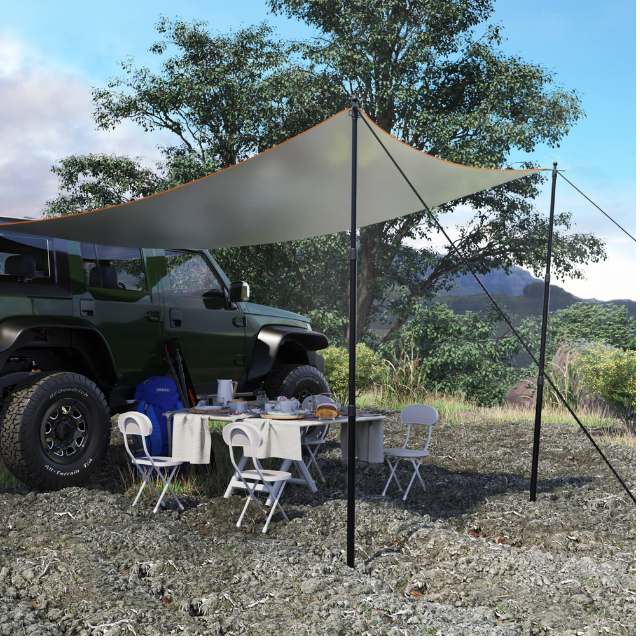
Single-piece or two-section rigid poles used in large event tents, military shelters, canvas wall tents, and pop-up canopies. Higher load capacity than shock-corded designs.
- Best for: Canvas camping tents, wall tents, event shelters, military spec tents
- Pole diameter: 25 mm – 50 mm
- Wall thickness: 1.5 mm – 3.0 mm
Inflatable Frame vs Aluminum — A Note
Inflatable tent poles have grown in popularity for family camping, but aluminum remains dominant in performance, weight-sensitive, and commercial applications due to its superior stiffness-to-weight ratio and repairability in the field.
Aluminum Alloy Grades for Tent Poles: 6061 vs 6063 vs 7075
| Alloy | Tensile Strength | Weight | Cost | Best For |
|---|---|---|---|---|
| 6061-T6 | 310 MPa | Medium | Low | General camping, OEM mid-range tents |
| 6063-T5 | 185 MPa | Medium | Lowest | Budget camping gear, large event tents |
| 7001-T6 | 503 MPa | Medium | High | Ultralight backpacking, mountaineering |
| 7075-T6 | 572 MPa | Medium | Highest | High-end performance tents, alpine use |
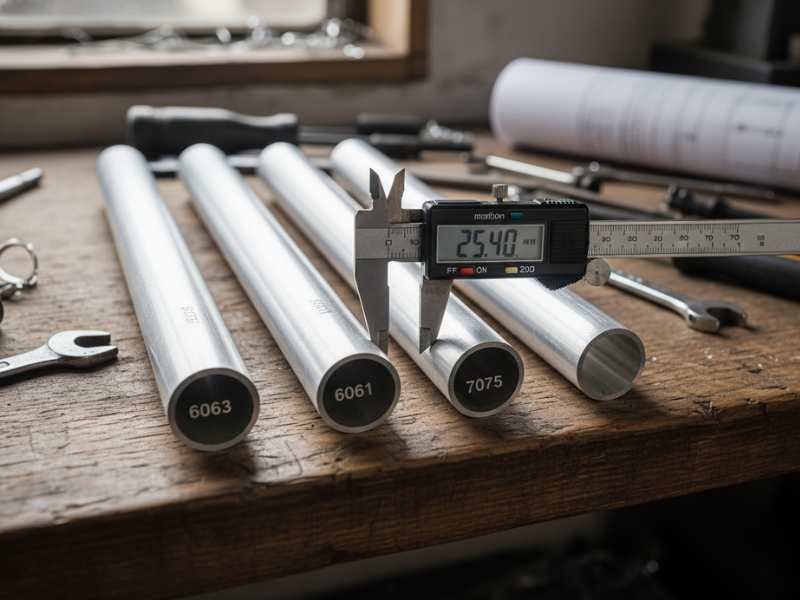
Most OEM tent brands use 6061-T6 or 7001-T6 (also known as DAC or equivalent). 6061 offers a good balance of strength, cost, and availability. 7075 is reserved for premium ultralight poles where every gram matters and price is secondary.
6063 is softer and more prone to bending but is cost-effective for large-diameter event tent poles that are not subject to repeated flexing stress.
How to Choose Tent Pole Diameter and Wall Thickness
Pole diameter and wall thickness determine the stiffness (resistance to deflection) and strength (resistance to breakage) of the pole. Thicker walls and larger diameters increase both — but also increase weight and cost.
Diameter Guidelines
- 7.9 mm (5/16 in): Ultra-light backpacking tents, inner tent poles
- 8.5 mm – 9.0 mm: Standard 3-season backpacking and trekking tents
- 9.5 mm – 10 mm: 4-season and expedition tents, higher wind resistance
- 11 mm – 12.7 mm: Large family domes, semi-permanent shelters
- 16 mm – 32 mm: Telescopic poles for tarps and vestibules
- 32 mm – 50 mm: Canvas wall tents, large event structures
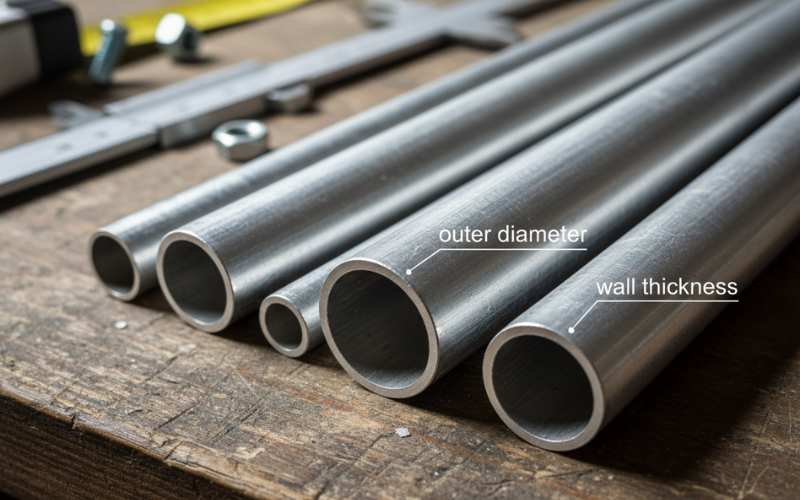
Wall Thickness Guidelines
- 0.4 mm – 0.5 mm: Ultralight (fragile; for weight-critical applications only)
- 0.6 mm – 0.8 mm: Standard backpacking (good balance of weight and durability)
- 1.0 mm – 1.2 mm: Heavy-duty camping (recommended for 4-season or high-wind use)
- 1.5 mm+: Event, canvas, and commercial tent structures
Why Aluminum vs Fiberglass vs Carbon Fiber for Tent Poles
| Material | Weight | Strength | Repairability | Cost | Best for |
|---|---|---|---|---|---|
| Aluminum (6061) | Medium | High | Excellent (field-repairable) | Low-Medium | Most camping and OEM applications |
| Fiberglass | Heavy | Medium | Poor (shatters, splinters) | Lowest | Budget tents, short-term use |
| Carbon fiber | Lightest | Very high | Poor (difficult to repair) | Highest | Ultralight premium backpacking |
For the vast majority of OEM tent production and outdoor retail, aluminum is the material of choice. It bends rather than shatters under overload, can be splinted in the field with a repair sleeve, and is recyclable. Fiberglass is only competitive on raw material cost; carbon fiber makes sense only when weight savings justify a 3–5x price premium.
Finishes for Aluminum Tent Poles
- Mill finish: No surface treatment. Lowest cost; suitable where poles are not exposed (inside sleeves).
- Anodised: Electrochemical oxide layer. Improves corrosion resistance and reduces surface friction inside pole sleeves. Clear anodise is standard; color anodising available for branding.
- Powder coated: Thicker coating; used for large-diameter event poles where color and UV resistance matter more than weight.
OEM vs Retail Tent Poles: What Buyers Need to Know
Retail / Branded Pole Sets
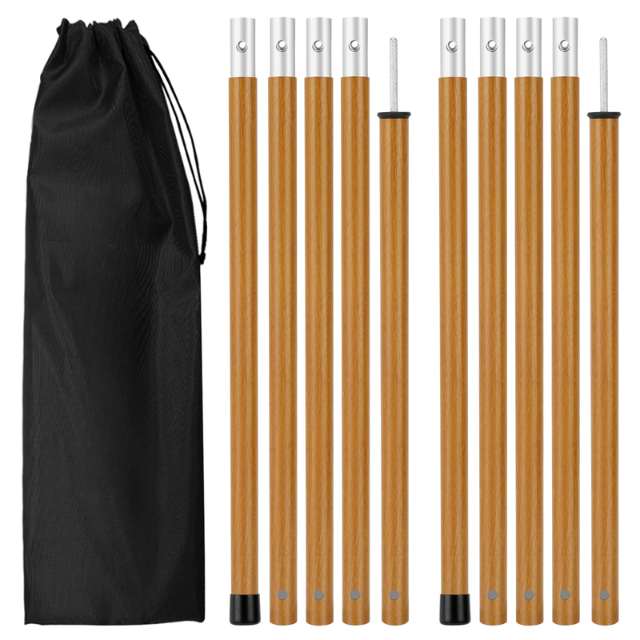
Pole kits for retail packaging include cut sections, shock cord, ferrules, and end plugs, assembled and bagged to spec. Custom length configurations, section counts, and branding labels are standard in OEM production.
OEM Bulk Tube Supply
Tent manufacturers and assembly factories often source bulk cut-to-length aluminum tube and complete assembly in-house. We supply cut lengths from 10 cm with tight tolerance (±0.5 mm) and consistent wall thickness for automated assembly lines.
MOQ and Lead Times
- Standard profiles: MOQ 1,000 pcs per SKU; 15–20 day production lead time
- Custom diameter or wall thickness: MOQ 500 kg; tooling lead time 10–15 days
- Samples: 10–50 pcs; 7–15 day lead time
Common Questions from OEM Tent Brands
Can you match DAC or Easton pole specifications?
Yes. We can produce poles to equivalent diameter, wall thickness, alloy grade, and temper specifications. We recommend ordering samples and conducting your own break-strength and flex-fatigue testing before committing to a production run.
What tolerance do you hold on wall thickness?
Standard tolerance is ±10% on wall thickness per EN 755. For tight-spec applications (e.g. 0.6 mm ± 0.03 mm), we can run process capability studies and supply Cpk data with each batch.
Do you supply complete shock-corded pole kits?
Yes. We supply fully assembled shock-corded pole kits including end plugs, ferrules, and bungee cord to your specified tension. Kits are available in retail poly bags with your branding or in bulk for your own assembly.
Request Samples or a Quote
Ready to spec aluminum tent poles for your next product line? Visit our aluminum tent poles product page for the full range, or contact our OEM team with your specifications. We respond to all enquiries within 24 hours and can ship samples within 5 business days.
- Alloy: 6061-T6 or 7001-T6 recommended for performance tent poles
- Custom diameter, wall thickness, length, and finish
- Shock-corded kits or bulk tube supply
- ISO 9001:2015 certified; CE available
Related Guides & Resources
Keep Reading
Telescopic Pole · Pool Pole · Extension Pole · Aluminum Vs Steel Strength · Best Heavy Duty Aluminum Pool Pole Sourcing · Best Window Cleaning Pole Buying · Do It Yourself Pool Cover Reel DIY Vs Aluminum OEM · How Deep Is A Water Polo Pool · How To Choose Extension Pole For Dusting · How To Choose Pool Pole · How To Use A Snow Rake On Your Roof Safely
Discuss an OEM Aluminum Tent Poles Buyer Guide Project
For an OEM project based on Aluminum Tent Poles Buyer Guide, send the target length, tube diameter, wall thickness, section count, lock or connector, working load and annual quantity. Xingyong can review the structure and prepare an OEM quotation based on the intended tool and market.
Related products: Explore related products and review matching solutions.


 English
  Español
  Français
  Deutsch
  Português