
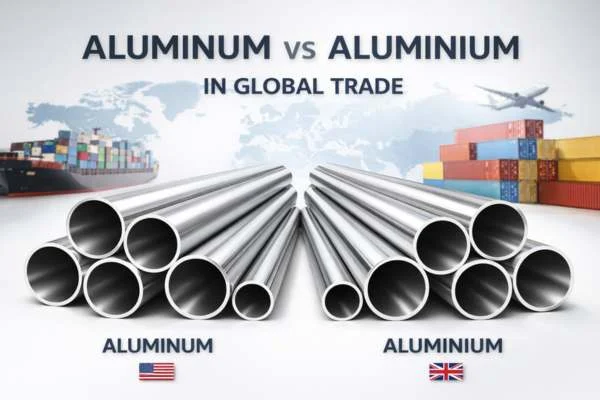
“Aluminum” and “aluminium” refer to the same chemical element, Al. “Aluminum” is standard in American English; “aluminium” is standard in British English and many international markets. The spelling does not define a different alloy, grade, temper, or quality level.
In international procurement, inconsistent spelling is usually a minor editorial issue. Ambiguous material designations are not. A reliable RFQ, drawing, purchase order, inspection report, and label must agree on the alloy, temper, governing standard, product form, dimensions, finish, test requirements, and revision.
Aluminum vs Aluminium: The Practical Answer
| Term | Common usage | Material meaning |
|---|---|---|
| Aluminum | United States and much American-English documentation | Element Al; alloy details still need specification |
| Aluminium | United Kingdom and much international/British-English documentation | The same element Al; spelling does not change properties |
| Al | Chemical symbol used internationally | Identifies the element, not a finished alloy or temper |
IUPAC’s Periodic Table of the Elements uses “aluminium,” while also recognizing “aluminum” as a common alternative spelling in its published tables. Both commercial spellings can be understood; neither is a complete material specification.
Why Spelling Should Match the Destination Market
Use the spelling expected by the intended reader. American catalogs, marketplace listings, warnings, and user manuals usually read more naturally with “aluminum.” British and many Commonwealth-facing documents usually use “aluminium.” A global brand may maintain separate language versions.
Consistency improves professionalism and search relevance, but do not revise controlled technical identifiers to “correct” regional English. Standard titles, customer part numbers, certificates, test reports, and quoted clauses should remain faithful to their source.
The Alloy and Temper Matter More Than the Spelling
“Aluminum tube” or “aluminium tube” leaves the alloy and temper open. For a telescopic pole, that ambiguity can affect strength, extrusion quality, bending, anodized appearance, machinability, corrosion behavior, availability, and cost.
A designation such as 6063-T5 communicates far more: 6063 is the alloy designation and T5 is the temper designation. The Aluminum Association’s ANSI H35.1/H35.1M describes the American alloy and temper designation systems. A buyer should cite the applicable edition and product requirements instead of relying on a bare number copied from a catalog.
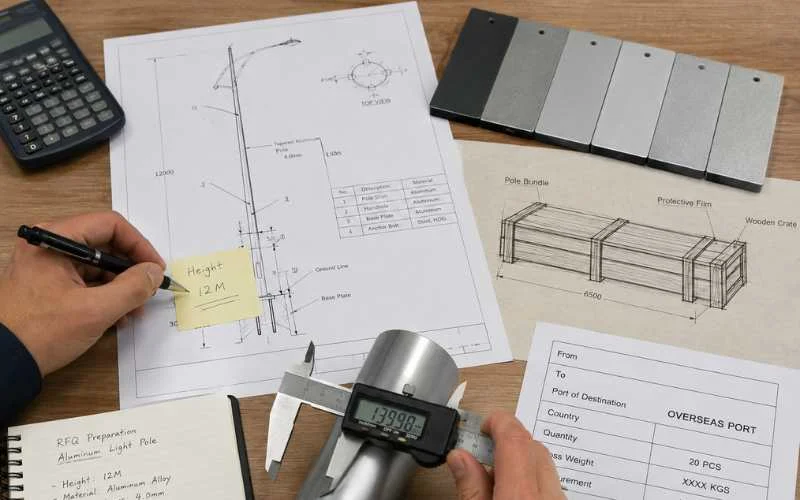
AA, EN, GB, and Other Standards Are Not Just Translations
International teams often work with Aluminum Association/ANSI, EN, GB/T, JIS, ASTM, ISO, or customer-specific requirements. Similar-looking alloy numbers or descriptions may not be perfectly equivalent. Chemical limits, temper definitions, dimensional tolerances, sampling, test methods, and certification can differ.
Do not approve a substitution because two web charts call alloys “equivalent.” The responsible engineering or quality team should compare the governing documents and decide which properties and limits matter to the product. Record the approved substitution and its evidence in the drawing or deviation process.
What a Complete Material Callout Looks Like
A useful callout may include:
- Product form: extruded seamless or structural tube, as applicable
- Alloy and temper: for example, the project-approved 6063-T5 designation
- Governing material and dimensional standard, including edition when required
- Outside diameter, wall thickness, straightness, length, and tolerances
- Surface preparation, anodizing or coating, color, gloss, and cosmetic zones
- Required inspection, test method, sampling, and certificate
- Approved alternatives and who may authorize a deviation
The word “aluminum” can appear in the title while the controlled callout carries the exact technical requirements. Align the material callout with the aluminum tube extrusion process and the finished-pole performance specification.
Keep RFQ, Drawing, PO, and Inspection Documents Aligned
| Document | Critical information | Common mismatch |
|---|---|---|
| RFQ | Application, quantity, drawing, standard, tests, finish, and packaging | Commercial request uses a generic material name |
| Drawing | Alloy, temper, dimensions, tolerances, finish, and revision | Old alloy or superseded standard remains in notes |
| Quotation | Included scope, assumptions, alternatives, tooling, and Incoterm | Supplier prices an unstated substitution |
| Purchase order | Approved revision, quantity, delivery, and referenced specification | PO description conflicts with attached drawing |
| Certificate/report | Lot identity, actual material, results, method, and acceptance | Certificate nomenclature cannot be traced to the PO |
| Packaging/label | Customer-facing language, SKU, warnings, country, and barcode | Regional spelling or product name differs from approved artwork |
Use One Source of Truth and Revision
Choose the drawing and its referenced specifications as the technical source of truth, then state which document prevails if conflicts occur. Every quotation and PO should identify the drawing number and revision. File names such as “final-new-2” are not revision control.
When a supplier raises a conflict, resolve it in writing before production. Do not allow an email phrase such as “standard aluminium” to overwrite a controlled alloy and temper callout. Record approved deviations with the affected quantity, duration, and responsible approver.
Units and Decimal Conventions Can Cause Bigger Errors
Global trade documents may mix millimeters and inches, kilograms and pounds, commas and decimal points, or nominal and actual sizes. A spelling difference is harmless compared with a wall-thickness conversion error.
- State units on every dimension and test value.
- Do not rely on scale when reading drawings.
- Define rounding rules and dual-dimension precedence.
- Use a leading zero for values below one.
- Confirm whether tolerances are unilateral, bilateral, or limit dimensions.
- Keep the same decimal convention in data exchange and inspection reports.
Trade Names and Brand Language Are Not Standards
Words such as aircraft-grade, marine-grade, premium aluminum, rustproof, or heavy duty do not replace a material and performance specification. Some may be useful marketing descriptions only when substantiated for the product and destination market.
Similarly, “anodized silver” does not define alloy, pretreatment, coating, color range, or acceptance method. Use the aluminum color and finish-control guide to build a physical-sample approval process.
International Packaging and Export Documents
Commercial invoice, packing list, carton mark, origin documentation, product label, instruction manual, and customs description should identify the same product without making conflicting claims. The preferred regional spelling can change, but SKU, quantity, material description, model, and country information must stay traceable.
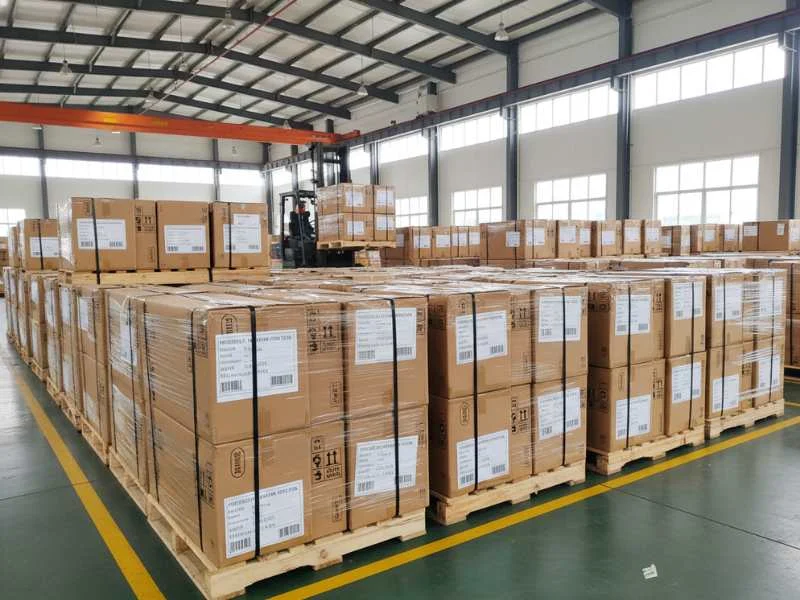
Approve export packaging artwork and terminology before mass production. Review how cartons protect the product in the shipping-damage prevention guide.
RFQ Terminology Checklist
- Select American or British English for customer-facing text.
- State alloy, temper, product form, governing standard, and edition.
- Attach the controlled drawing and identify its revision.
- Define dimensions, units, tolerances, finish, color, and cosmetic zones.
- Define loads, test methods, sampling, acceptance, and certificates.
- List approved alternatives and the deviation-approval process.
- Align quotation, PO, report, labels, instructions, and export documents.
- Confirm Incoterm, destination, language versions, packaging, and marking.
Send the controlled package through the engineering inquiry form. A clear document set is more valuable than debating one regional spelling.
Frequently Asked Questions
Are aluminum and aluminium different metals?
No. They are regional English spellings for the same element, Al.
Which spelling should an exporter use?
Use the target market’s preferred spelling in customer-facing content and keep each document internally consistent. Preserve official standard titles and customer-controlled terminology.
Does 6063 mean the same thing in every standard system?
Do not assume so from the number alone. Cite the governing designation system and compare chemical, temper, property, tolerance, and testing requirements before claiming equivalence.
Is “6063 aluminum tube” a complete specification?
No. Add temper, product form, standard, dimensions, tolerances, finish, tests, and acceptance requirements.
Should drawings show both metric and imperial units?
Only when needed and when one system is clearly defined as controlling. Uncontrolled dual dimensions can create rounding conflicts.
What should happen when the PO and drawing conflict?
Stop and resolve the conflict in writing before production, using the contract’s stated document precedence and revision-control process.



 English
  Español
  Français
  Deutsch
  Português