
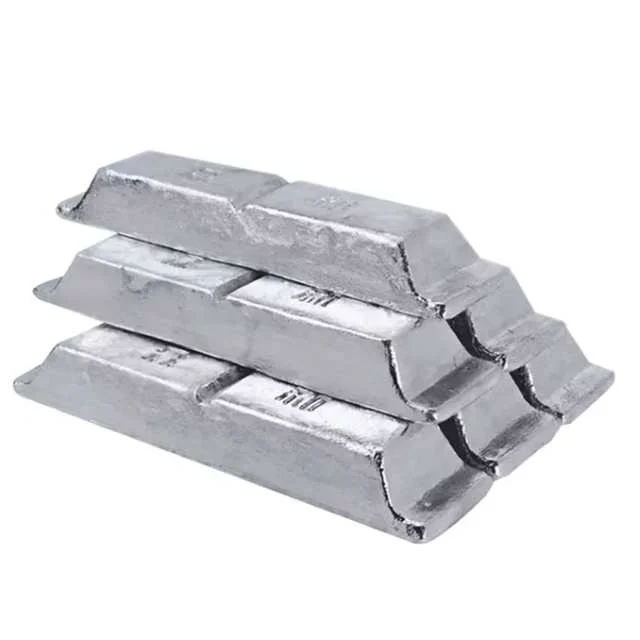
Yes. An aluminum telescopic pole conducts electricity. A standard aluminum pole must never be treated as an insulated electrical tool. A plastic grip, anodized finish, powder coating, dry surface, or rubber end cap does not establish a tested electrical rating for the complete product.
This distinction matters because a telescopic pole becomes a long conductive object when extended. It may reach an overhead power line before the user realizes how close the tip or attachment has moved. Around pools, wet hands, wet ground, metal accessories, and splashing water add further hazards.
Why Aluminum Telescopic Poles Conduct Electricity
Aluminum contains mobile electrons that allow electrical current to flow. Its exact conductivity changes with alloy composition and temperature, but this does not change the practical safety conclusion: structural aluminum alloys used for telescopic tubes remain conductive.
Pool and cleaning poles are usually selected for low weight, stiffness, corrosion resistance, extrudability, and cost—not for carrying electrical current. The alloy does not need to be an electrical-conductor grade to create a shock or electrocution hazard. Treat every ordinary aluminum tube and assembled aluminum pole as conductive unless the complete tool has a documented electrical rating for the intended work.
Why an Extended Pole Creates a Special Hazard
A compact pole may be easy to control indoors, but its risk changes when sections are extended, rotated, lifted, or carried upright. The user may watch the working end and lose awareness of lines above or behind them. Wind, an uneven deck, a slipping lock, or an attached brush can change the pole’s path.
Electrical contact does not have to occur at the hand. If any conductive part or attachment contacts an energized source, current can travel through the tube, fittings, moisture, the user, and the ground. Electricity may also arc across air under some conditions, so “I did not touch the wire” is not a reliable safety plan.
NIOSH’s electrical safety guidance emphasizes recognizing energized power-line hazards, observing applicable approach distances, de-energizing when required, and limiting electrical work to qualified people. A consumer telescopic pole is not a substitute for those controls.
Plastic Grips Do Not Make an Aluminum Pole Insulated
A grip is designed mainly for comfort, handling, or branding. It may be short, thin, worn, wet, punctured, contaminated, or bypassed by exposed metal and hardware. The user may also touch another tube section while extending or collapsing the pole.
Electrical insulation is a system property, not a conclusion based on one visible plastic component. A defensible rating requires the intended materials, wall construction, joints, attachments, manufacturing controls, inspection, marking, and complete-product testing to an applicable standard. Without that evidence, describe the grip as a grip—not an electrical safety feature.
Does Anodizing or Powder Coating Prevent Electric Shock?
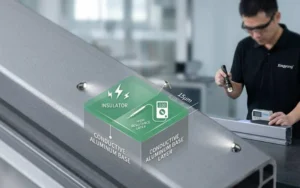
No ordinary decorative finish should be relied upon for shock protection. Anodizing forms an oxide layer on the aluminum surface, and powder coating adds a polymer film. Either may increase surface resistance under controlled conditions, but a finished pole still contains conductive aluminum beneath the coating.
Real products have cut ends, drilled holes, rivets, threaded parts, locks, scratches, wear points, thin areas, and attached tools. A coating may be damaged during assembly or service. Moisture and contamination can also change the available current path. A statement such as “the anodized surface is electrically insulating” must not be converted into “the pole is safe near electricity.”
| Product feature | Normal purpose | Why it is not an electrical rating |
|---|---|---|
| Plastic or foam grip | Comfort and handling | Limited coverage; wear, moisture, and exposed hardware remain |
| Anodized finish | Appearance and surface protection | Thin surface layer can be interrupted or damaged |
| Powder coating | Color and surface protection | Film continuity and dielectric performance are not established for the assembly |
| Rubber end cap | Impact and surface protection | Does not isolate the tube, attachment, joints, or user |
| Fiberglass section | Weight, stiffness, or product design | A mixed-material product is not automatically an electrically rated tool |
Pool and Wet-Environment Risks
Pool maintenance combines a long tool with water, wet decks, pumps, lighting, outlets, extension cords, and nearby buildings. Water chemistry and dissolved substances affect conductivity, while wet skin generally reduces the body’s resistance. The safest approach is hazard avoidance, not an assumption that a coated handle provides protection.
Before extending a pool pole, inspect the complete work area: above the pool, around the deck, near equipment, and along the path used to carry the pole. Do not work during storms. Do not retrieve electrical equipment from water with an aluminum pole. If an electrical device or line may be energized, keep people away and contact the appropriate qualified service provider or utility.
Overhead Power Lines: Plan for the Full Extended Length
Overhead lines may be difficult to judge from the ground and should be presumed energized unless the responsible utility confirms otherwise and the site is controlled accordingly. Before work starts, consider the pole’s full extended length, the attachment, the user’s reach, movement during handling, and possible loss of control.
OSHA’s rule for work near overhead lines states that unqualified people must keep themselves and the longest conductive object they may contact outside the applicable approach distance. Its requirements vary with voltage and work conditions. See OSHA 29 CFR 1910.333 for the U.S. workplace rule. Those distances are not a universal consumer instruction or a replacement for local law, utility coordination, and a site-specific risk assessment.
For product documentation, a simple and visible prohibition is usually safer than asking a consumer to identify line voltage. The warning should tell users to look for overhead lines before extending, carrying, or moving the pole and to keep the product away from all electrical sources.
Standard Aluminum Pole vs Electrically Rated Tool
| Question | Standard aluminum telescopic pole | Electrically rated professional tool |
|---|---|---|
| Intended use | Pool cleaning, painting, dusting, or general maintenance | Defined tasks under a specific electrical-safety program |
| Conductive structure | Yes | Designed around the applicable insulating requirements |
| Evidence | No voltage rating should be assumed | Applicable standard, rating, test records, and controlled markings |
| User requirements | Keep away from electrical hazards | Qualified users, inspection, care, and procedures may be required |
| Interchangeable accessories | May add exposed metal and uncontrolled configurations | Only approved configurations within the rating |
Changing an aluminum section to fiberglass does not, by itself, convert a consumer pole into a live-line tool. Connectors, moisture, surface contamination, damage, accessories, and the complete construction still matter. If a buyer needs an electrically rated product, that requirement changes the product category, design process, validation plan, labeling, and supplier qualification. It should not be added as a casual claim to an existing pool-pole specification.
OEM Warning Labels and Instructions
A safety message must be visible before and during foreseeable use. Depending on the product and market, useful locations may include the pole near the hand area, the retail package, the instruction sheet, and the online listing. Final wording, symbols, format, durability, and language coverage should be reviewed for the destination market and the product’s risk assessment.
A practical starting message is:
DANGER—ELECTROCUTION HAZARD. Aluminum pole conducts electricity. Keep away from overhead power lines and all electrical sources. Inspect the work area before extending or moving the pole.
This is example copy, not a certification or a substitute for legal and standards review. Avoid weak statements such as “use caution around electricity” when the product presents a foreseeable severe hazard. Also avoid unsupported claims including “shockproof,” “non-conductive handle,” or “electrically safe.”
Safety Information to Put in the Product Specification
- Intended applications and expressly prohibited uses
- Destination countries, languages, sales channels, and user groups
- Maximum extended length and all compatible attachments
- Warning text, symbols, placement, size, contrast, and permanence requirements
- Package and instruction-manual warnings
- Requirements for online product pages and distributor documentation
- Inspection instructions for bent tubes, cracked grips, damaged locks, and missing labels
- Conditions requiring removal from service
- Approval responsibility for safety content and regulatory review
The specification should align with the real assembly. Review the tube, lock, grip, end cap, and attachment together through the telescopic pole product platform. If custom labels, printing, or packaging are required, include them in the approved sample rather than adding them after mass production.
Pre-Use Electrical Hazard Checklist
- Look up and around: identify overhead lines and electrical equipment before unloading or extending the pole.
- Assume lines are energized: do not rely on appearance, line covering, weather, or inactivity.
- Plan the full movement envelope: include the pole’s maximum length, attachment, carrying angle, and possible fall direction.
- Keep the task away from electrical sources: reposition, delay the work, or obtain qualified assistance.
- Check environmental conditions: stop for storms and address wet surfaces, cords, pumps, and lighting around pools.
- Inspect the product: confirm locks operate, tubes are not bent, warnings are readable, and attachments are secure.
- Do not improvise insulation: tape, gloves, a plastic sleeve, or a coated grip does not create a rated system.
Buyer Checklist for a Safer Aluminum Pole Program
For an ordinary aluminum pole, the correct sourcing goal is not to make an electrical claim. It is to prevent foreseeable misuse through product definition, warnings, instructions, and consistent execution.
- State that the product is conductive and not intended for electrical work.
- Review whether its length and applications create foreseeable overhead-line exposure.
- Approve warnings in every required language and sales format.
- Verify label adhesion, legibility, position, and resistance to expected handling.
- Keep unsupported insulation or voltage language out of catalogs and marketplace listings.
- Control accessory compatibility so distributors do not create unreviewed configurations.
- Maintain approved artwork and revision control across product, packaging, and instructions.
Electrical safety should sit alongside mechanical and finish requirements. Buyers can review telescopic-pole durability and corrosion resistance, but neither strength nor corrosion protection makes an aluminum pole safe around energized equipment.
Frequently Asked Questions
Can an aluminum pool pole electrocute someone?
Yes. Contact with an energized source can allow current to travel through the conductive pole and the user. Keep the pole away from power lines and electrical equipment.
Does a plastic handle make the pole safe?
No. A consumer grip is not evidence that the complete pole has an electrical insulation rating. Exposed metal, wear, water, accessories, and the user’s hand position can bypass it.
Is anodized aluminum non-conductive?
The oxide surface may have higher electrical resistance than bare metal, but the aluminum beneath remains conductive. Real finishes have edges, holes, wear, and damage. Do not rely on anodizing for shock protection.
Is a fiberglass pole automatically safe near power lines?
No. Material name alone does not establish a voltage rating for a complete tool. Construction, contamination, moisture, fittings, testing, markings, maintenance, and approved use all matter.
How far should a pole stay from an overhead line?
The applicable distance depends on jurisdiction, voltage, work type, and whether the person is qualified. Follow local requirements and utility/site controls; do not use this article to calculate a working clearance.
Can a pool pole be used to retrieve a cord or electrical device from water?
No. Keep people away, do not enter the water, and contact the appropriate qualified service provider. The energy source must be safely controlled by someone qualified to do so.
What should an OEM buyer send for review?
Send the intended applications, destination markets, maximum length, compatible attachments, packaging format, languages, and proposed warnings through the engineering inquiry form. Electrical rating requests require a separate product and compliance discussion.

 English
  Español
  Français
  Deutsch
  Português