
A mill test certificate (MTC) records material test results for an identified metal lot. For aluminum tubes, read it against your purchase order, the reported chemistry and mechanical results, and the identification on the delivered material. A certificate with the right alloy but no link to your shipment cannot release that shipment. The five checks below show what to compare and when to hold the lot for clarification.
1. Match the Order Before You Read the Numbers
The alloy, temper, tube form, and standard on the MTC must match the purchase order. Start with the part number and drawing revision. For an extruded tube ordered to ASTM B221, check the named standard and edition; ASTM’s published scope covers extruded aluminum tubes, but B221 is not the right standard for every tube form or application.
Do not approve a different temper just because the alloy number matches: 6063-T5 and 6063-T6 are different ordered conditions, even though both are 6063. This is an illustrative mismatch, not a test result from a Xingyong order. If the drawing calls for a wall thickness or tube size, agree on a separate dimensional check; the MTC may not record every finished dimension.
2. Tie the Certificate to the Delivered Lot
Follow the MTC’s lot identifier to the material you actually received. Find the issuing producer, certificate number, issue date, and heat, cast, batch, or extrusion lot reference used by that supplier. Compare the identifier with the bundle tag, packing list, and tube marking, where used. Those labels need not use identical words, but they must support one clear traceable match.
If one shipment contains several lots, request the report for each lot and identify which bundles each report covers. A certificate copied from a previous order, or one with no matching lot reference, cannot establish traceability for the tubes in front of you.
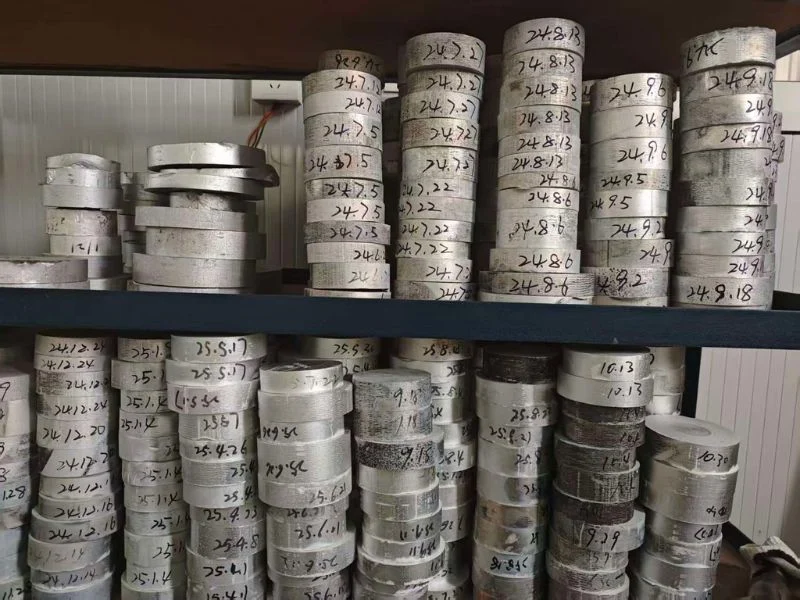
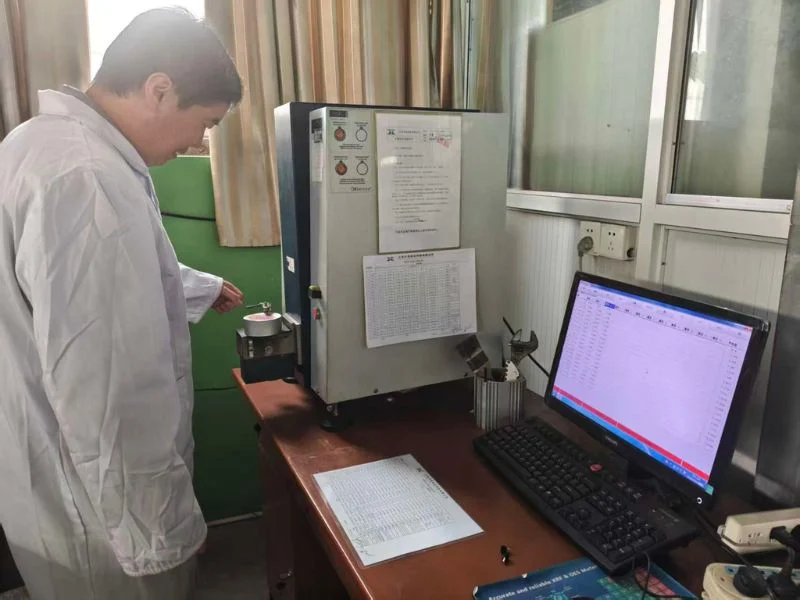
Xingyong’s published batch quality and traceability process describes incoming-billet sampling, optical-emission spectrometer chemistry checks, and retained samples. The photo shows labeled retained metal samples. These are factory-process examples, not a certificate or test result for your order; ask for the actual report and shipment-to-lot mapping.
3. Compare Actual Results with the Required Limits
Compare measured values and units with the limits for the ordered alloy, temper, and tube specification. Check each reported chemical element against its permitted range. Then check the required tensile properties, such as tensile strength, yield strength, and elongation where the specification applies them. A “pass” stamp without the required values does not let you repeat the acceptance check.
Check the sample or test-unit reference where the report supplies one. If a result or limit is missing, ask whether that characteristic was outside the ordered test scope or omitted from the document. Do not substitute a value from a different lot or assume every standard requires the same tests. The required properties can vary with alloy, temper, product form, dimensions, and order terms.
| Certificate field | Compare it with | Hold for clarification if |
|---|---|---|
| Alloy, temper, product form | PO and drawing | Any designation differs |
| Standard and edition | Ordered specification | Wrong or unstated basis |
| Lot or batch ID | Bundle tag and packing list | No traceable match |
| Chemistry and tensile results | Specified limits and units | Results are missing or out of limit |
| Issuer and authorization | Document type required by PO | Issuer or validation is unclear |
4. Check Which Document You Ordered
Specify the inspection-document type in the PO, not just the nickname “mill cert.” “Mill test certificate,” “material test report,” and “certificate of conformance” are often used loosely. If you require an EN 10204 inspection document, state its type and required traceability and test data before production. A generic conformity statement does not automatically contain lot-specific results.
Review who issued and validated the document. If a document is revised, keep the corrected version and the explanation linked to the same material lot. Never edit a supplier’s test values yourself to make an order appear compliant.
5. Separate Material Evidence from Finished-Tube Acceptance
The MTC addresses material evidence for its identified lot; it cannot approve the finished tube on its own. Check outside diameter, wall thickness, straightness, finish, and transit damage against the drawing and receiving plan. A telescopic assembly also needs lock and fit checks; the first article inspection guide covers that separate pre-production decision.
When sourcing custom aluminum tubes, send the supplier your required alloy, temper, tube form, applicable standard, lot identification method, and document type with the RFQ. Ask for a sample certificate format if your team must approve the paperwork before the first shipment.
Frequently Asked Questions
Is a mill test certificate proof that every tube was tested?
No. It reports results for the test unit identified under the applicable specification and inspection plan. Check how the reported lot maps to the tubes you receive.
What if the certificate alloy matches but the lot number does not?
Hold the lot and ask the supplier to reconcile the certificate, packing list, and bundle identification. The alloy name alone does not establish that the report belongs to your shipment.
Does the certificate replace dimensional inspection?
No. Unless the ordered document explicitly includes those measurements, inspect tube dimensions and surface requirements under the drawing and receiving plan.
How do I request the right certificate?
Name the document type, product standard and edition, alloy and temper, and lot-identification requirements in the PO. Ask to review the proposed format before the first shipment.




 English
 Español
 Français
 Deutsch
 Português