Choosing between a twist lock and flip lock telescopic pole may seem like a small design detail, but in real use, it determines stability, safety, and product lifespan. Many buyers only discover the difference after complaints about slipping poles or broken locks start coming in. This is especially critical for distributors and OEM brands supplying pool cleaning, window cleaning, or industrial tools. In this guide, you will see exactly how each locking system works, where it fails, and which one fits your product line best.
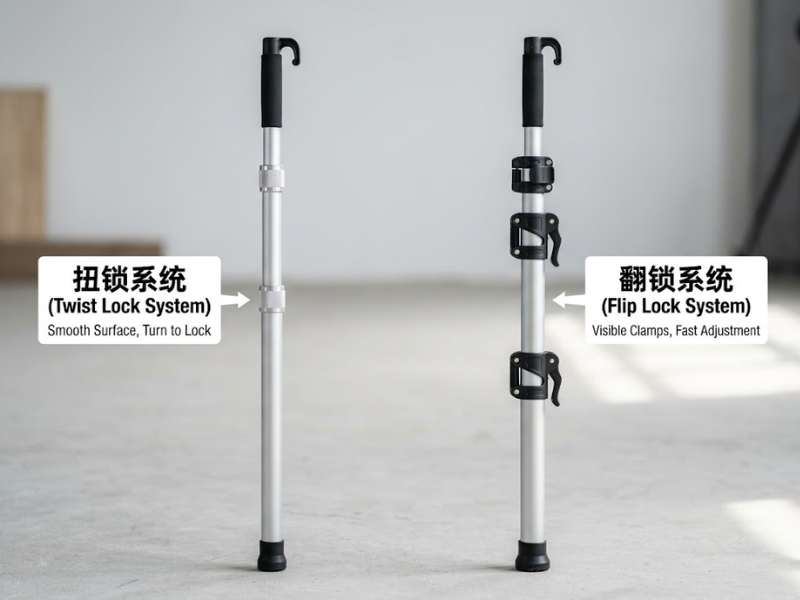
Twist Lock vs Flip Lock Telescopic Pole — Quick Answer
For most professional and industrial applications, flip lock telescopic poles perform better due to stronger and more consistent locking force. Twist lock telescopic poles are better suited for cost-sensitive, light-duty, or retail-focused products.
Best Choice Summary
- High load / frequent use → Flip lock telescopic pole
- Wet environments → Flip lock telescopic pole
- Budget retail market → Twist lock telescopic pole
- Light-duty / short poles → Twist lock telescopic pole
Quick Comparison Table
| Feature | Twist Lock Telescopic Pole | Flip Lock Telescopic Pole |
|---|---|---|
| Locking Mechanism | Internal friction expansion | External mechanical clamp |
| Locking Force | Medium | High |
| Adjustment Speed | Moderate | Fast |
| Durability | Medium | High |
| Cost | Lower | Higher |
| Best Use | Light-duty / retail | Professional / industrial |
What Is a Twist Lock Telescopic Pole and How It Works
A twist lock telescopic pole uses an internal expansion mechanism to create friction between two aluminum tubes. When the user rotates the pole, an inner sleeve expands outward and presses against the outer tube wall.
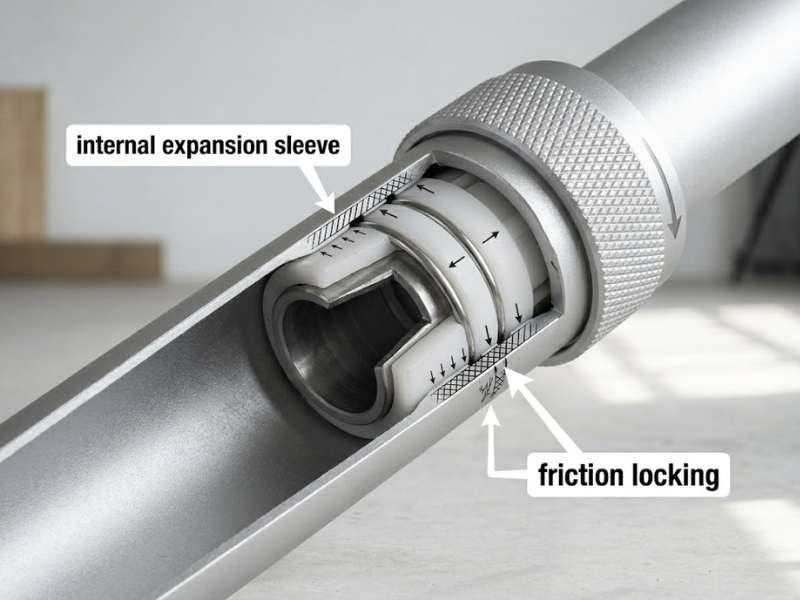
Locking Force Mechanism
- Radial expansion creates friction
- Force depends on surface contact and torque
- No external locking components
Key Advantages
- Clean structure with no exposed parts
- Lower production cost and fewer components
- Suitable for large-volume OEM production
Real Limitations
- Friction decreases with wear and moisture
- Locking consistency varies between batches
- Requires more effort to adjust under load
What Is a Flip Lock Telescopic Pole and How It Works
A flip lock telescopic pole uses an external lever clamp system. When the lever is closed, it compresses the outer tube against the inner tube, creating a mechanical locking force.
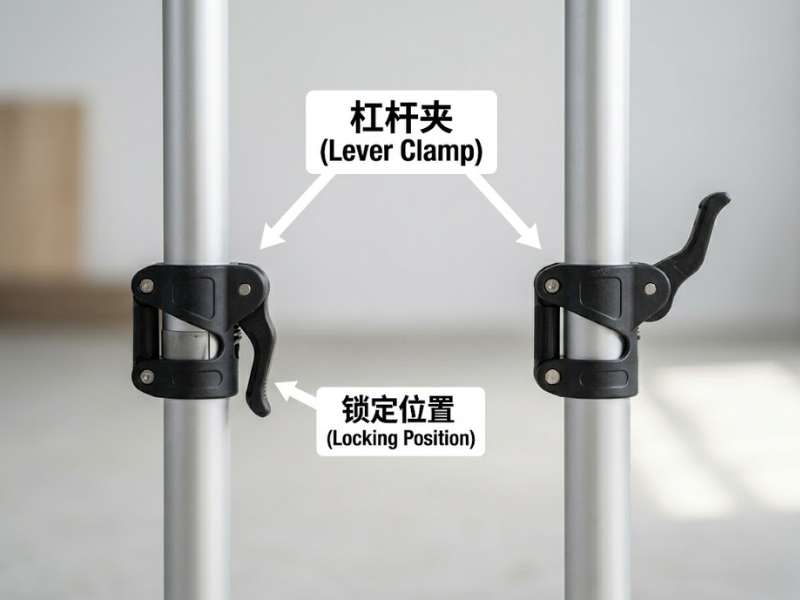
Locking Force Mechanism
- Mechanical compression via lever action
- Adjustable clamp pressure
- Independent of internal friction
Key Advantages
- Stable and repeatable locking performance
- Fast adjustment with clear lock status
- Performs reliably in wet or dusty conditions
Real Limitations
- More components increase production cost
- External clamps may require maintenance
- Slightly heavier structure
Twist Lock vs Flip Lock — Structural Difference That Affects Performance
The key difference is not just design—it is how force is applied.
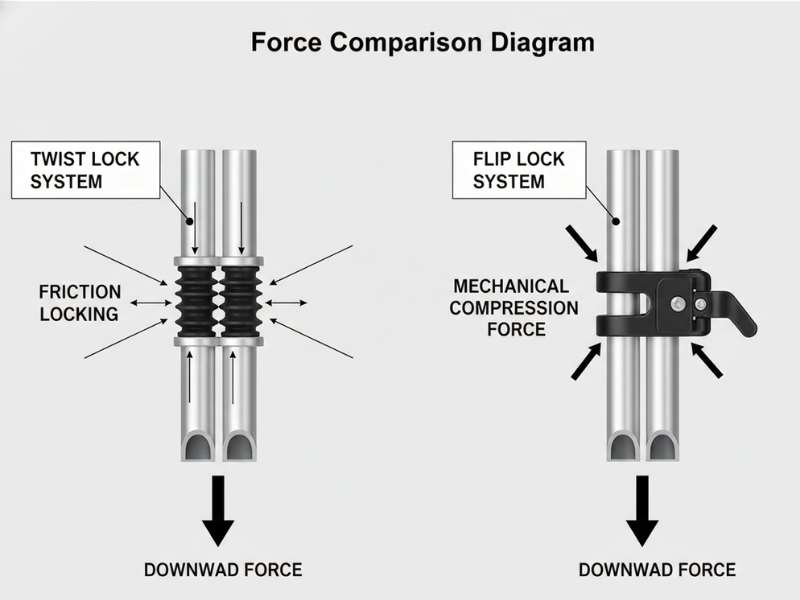
Locking Force Comparison
- Twist lock: friction-based radial pressure
- Flip lock: direct mechanical compression
Why This Matters
- Friction systems lose performance over time
- Mechanical systems maintain consistent force
- Environmental conditions affect twist lock more
According to mechanical friction principles explained by
https://www.engineeringtoolbox.com/friction-coefficients-d_778.html,
friction-based systems are sensitive to surface condition changes, which explains why twist locks may slip in wet environments.
Which Locking System Performs Better in Real Applications
Pool Cleaning Telescopic Poles
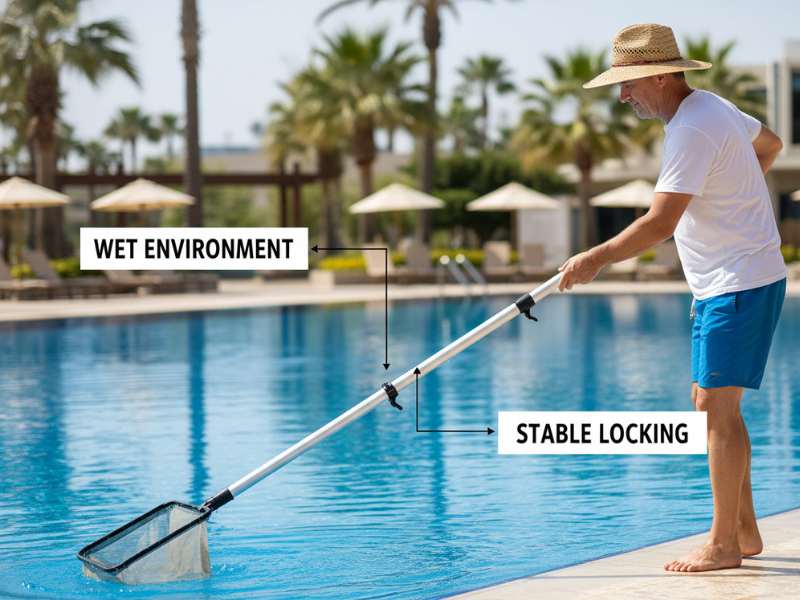
- Constant exposure to water
- Frequent length adjustment
Best choice: Flip lock telescopic pole
Window Cleaning Telescopic Poles
- Short poles (<3m): twist lock is acceptable
- Long poles (>5m): stability becomes critical
Best choice: depends on pole length
Industrial and Construction Telescopic Poles
- Heavy-duty usage
- Safety-critical applications
Best choice: Flip lock telescopic pole
Retail and Consumer Market
- Price-sensitive buyers
- Low usage frequency
Best choice: Twist lock telescopic pole
Durability and Failure Patterns You Should Know
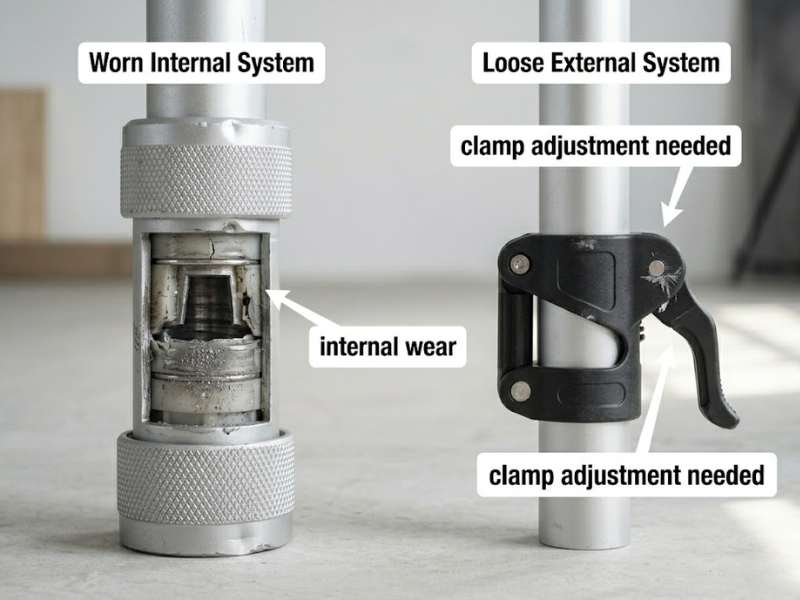
Twist Lock Failure Patterns
- Internal sleeve wear after repeated cycles
- Reduced friction in humid environments
- Inconsistent locking between production batches
Flip Lock Failure Patterns
- Clamp loosening due to vibration
- Plastic lever fatigue over time
- Occasional screw adjustment required
Testing Standards in Manufacturing
- Cycle testing (10,000+ extensions)
- Load-bearing tests
- Surface wear analysis
Safety guidelines from
https://www.osha.gov
highlight the importance of stable tool extension systems in elevated work environments, reinforcing the advantage of mechanical locking systems.
OEM Telescopic Pole Lock Selection for Bulk Orders
For OEM buyers, the locking system affects more than performance—it affects your entire supply chain.
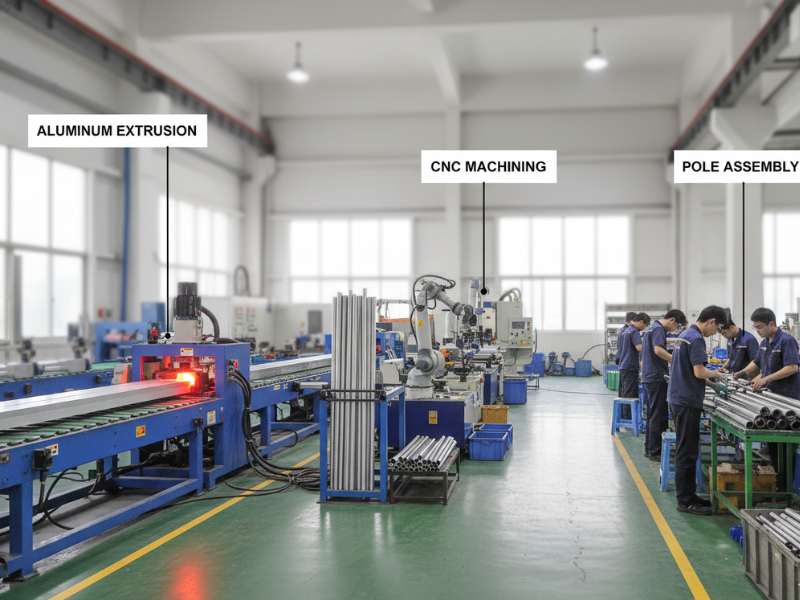
Key Procurement Factors
- Tolerance control: critical for twist lock consistency
- Assembly complexity: higher for flip lock systems
- Batch consistency: flip lock performs more uniformly
- Shipping durability: external clamps need protection
MOQ and Production Considerations
| Factor | Twist Lock | Flip Lock |
|---|---|---|
| MOQ | Lower | Higher |
| Assembly | Simple | Complex |
| Production Speed | Faster | Slower |
| Quality Consistency | Medium | High |
Real Use Case: Distributor Feedback Comparison
A pool equipment distributor reported:
- Twist lock poles showed increased return rates due to slipping in wet conditions
- Switching to flip lock reduced complaints and improved user confidence
A window cleaning brand observed:
- Twist lock poles performed well in entry-level product lines
- Flip lock poles were preferred in professional-grade products
How to Choose the Right Telescopic Pole Lock for Your Product Line
Step-by-Step Selection Model
Step 1: Define your target market
- Retail → twist lock
- Professional → flip lock
Step 2: Evaluate working conditions
- Wet / heavy load → flip lock
- Dry / light use → twist lock
Step 3: Align with price strategy
- Low-cost → twist lock
- Premium → flip lock
Key Insight:
The locking system should match your customer expectations, not just your cost target.
FAQ — Telescopic Pole Locking Mechanisms
Which telescopic pole lock is stronger?
Flip lock systems provide stronger and more stable locking due to mechanical clamping.
Which locking system lasts longer?
Flip lock systems typically last longer under heavy use, while twist lock systems wear faster internally.
Are twist lock telescopic poles reliable?
Yes, but mainly for light-duty applications. Performance may drop under heavy or wet conditions.
Is flip lock worth the higher cost?
Yes, especially for professional tools where stability and durability reduce long-term costs.
The Decision That Defines Your Product Positioning
If your goal is to compete on price and volume, twist lock telescopic poles offer a simple and efficient solution.
If your goal is to build a reliable, professional-grade product line, flip lock telescopic poles provide the performance your customers expect.
In B2B markets, this choice directly affects product returns, brand trust, and long-term margins.
Get OEM Telescopic Pole Quote in 24 Hours
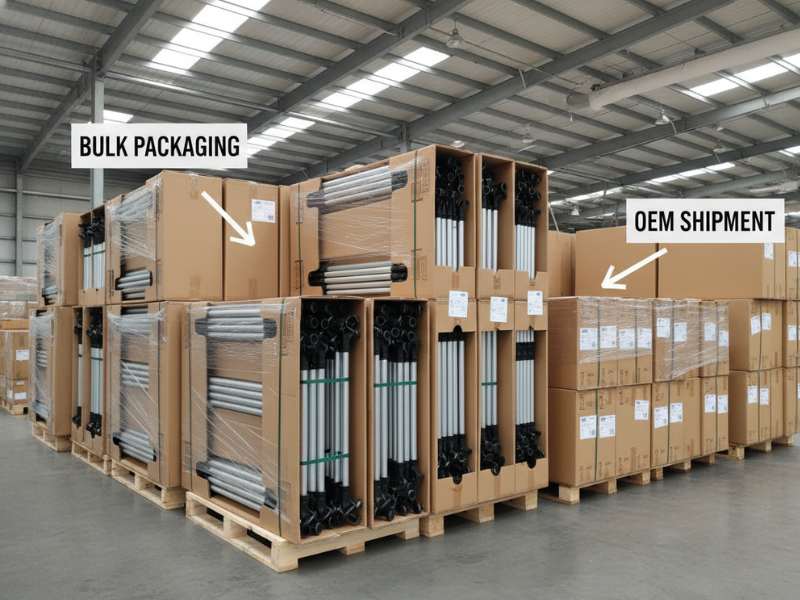
Tell us your required pole length, locking system, and application scenario. Our engineering team will provide:
- MOQ and pricing breakdown
- Lead time and production schedule
- Customization options (diameter, thickness, surface finish)
Explore more technical details here:
/aluminum-extrusion-process
/anodized-aluminum-benefits
/pool-cleaning-pole-guide
Start your next telescopic pole project with a manufacturing partner that understands both structure and supply chain.