
Choosing the wrong aluminum alloy for a high-load structural project is an expensive gamble that most procurement managers can’t afford to lose. If the yield strength is too low, the structure fails; if the corrosion resistance is insufficient, your brand’s reputation erodes alongside the metal. In the 2026 global market, where shipping costs and material efficiency dictate your margins, selecting an alloy is no longer just a technical task—it is a critical financial decision. At Xingyong, we’ve spent 16 years refining the balance between metallurgical integrity and manufacturing ROI to help our partners dominate their niche.
If this topic is being reviewed for an OEM project, use the guidance here alongside standard aluminum extrusion capabilities. Then check precision aluminum tube manufacturing and send the specification for a factory RFQ, while keeping Aluminum Association material resources available for neutral terminology and standards context.
What is the Best Aluminum Alloy for Structural Applications?
For most industrial and commercial structural applications, 6061-T6 aluminum alloy is the industry standard due to its exceptional strength-to-weight ratio, excellent weldability, and high resistance to atmospheric corrosion. While 6061 serves as the “all-rounder,” 6063-T6 is the superior choice for architectural structures requiring intricate shapes and superior surface finishes. For high-stress aerospace or specialized sporting equipment, 7075-T6 offers the highest strength, though it sacrifices weldability and increases the total cost of ownership.
The Engineer’s Comparison: Structural Alloy Selection Matrix
| Alloy Grade | Tensile Strength (MPa) | Yield Strength (MPa) | Machinability | Cost Index (Base: 6063) | Ideal Application |
|---|---|---|---|---|---|
| 6061-T6 | 310 | 276 | High | 1.15 | Heavy-duty frames, marine parts |
| 6063-T6 | 240 | 214 | Moderate | 1.00 | Pool safety poles, door frames |
| 5052-H32 | 230 | 193 | Medium | 1.10 | Chemical tanks, marine decking |
| 7075-T6 | 570 | 503 | Low | 1.85 | Aerospace, high-end telescopes |
Why the 6000 Series is the “Sweet Spot” for B2B Profitability
In my 16 years overseeing the Xingyong extrusion workshop—currently running 14 forward and backward presses—I’ve seen the 6000 series (Al-Mg-Si) save more projects than any other material. It is the only series that truly balances the T6 tempering process with cost-effective mass production.
One hard lesson I learned back in 2014: a client insisted on 7075 for a high-volume structural bracket to “be safe.” The result? Their CNC machining costs tripled due to tool wear, and the lead time skyrocketed. We eventually pivoted them to a customized 6061-T6 with a precision quench, which met the load requirements at 40% less cost. In the B2B world, over-engineering is a profit killer.
The “Distributor’s Margin” Logic: Wall Thickness and Freight
As a supply chain manager, you aren’t just buying metal; you are buying weight. Aluminum is priced by the ton, but you sell it by the unit.
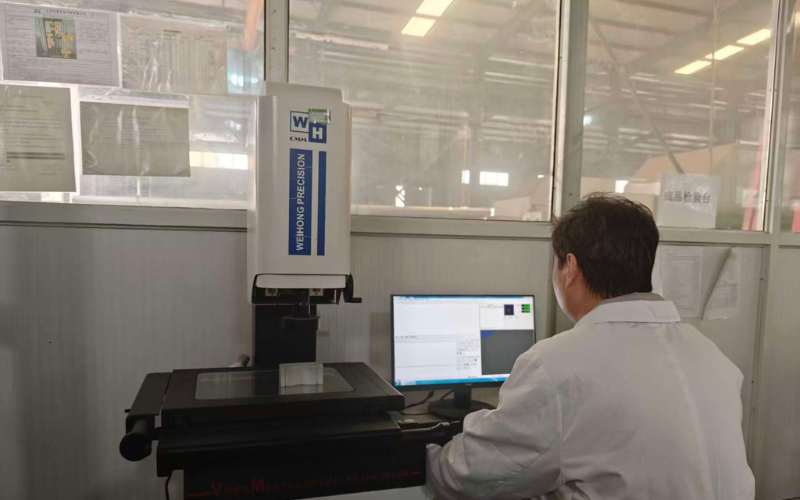
- Weight Optimization: By utilizing our Israel Romidot Section Scanners, we help clients optimize wall thickness. Reducing a profile’s wall from 2.0mm to 1.8mm—while maintaining structural integrity via 6061-T6—can reduce your shipping costs by up to 10% per container.
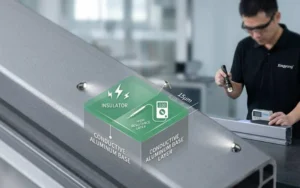
- Surface Finish ROI: For structural items sold in retailers like Walmart or Home Depot, aesthetics matter. Our two automatic anodizing lines allow 6063 to achieve a “Mirror-like” finish that 6061 simply cannot match due to its higher silicon and magnesium impurities.
- Inventory Turn: Because we produce 3,000 tons monthly, 6061 and 6063 are always in our rotation. This slashes your Lead Time from the industry average of 45 days down to 25-30 days at Xingyong.
Quality Control: Beyond the Data Sheet
A data sheet is just a piece of paper. To ensure Structural Integrity, we employ a multi-stage verification process that I personally audit:
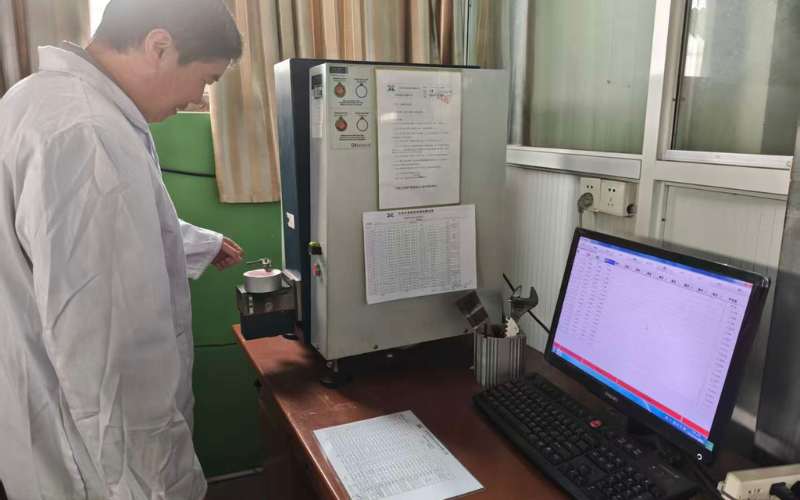
- Chemical Consistency: Every ingot is checked via our Oxford Instruments Spectrometer to prevent “scrap-heavy” batches that cause brittle fractures.
- Hardness Mapping: We don’t just test the ends of a 6-meter profile. We use Webster and Rockwell hardness testers across the batch to ensure uniform T5/T6 aging.
- Mechanical Testing: Our in-house tensile machines verify that your batch meets ASTM B221 standards before it ever hits a shipping container.
Compliance as a Competitive Moat
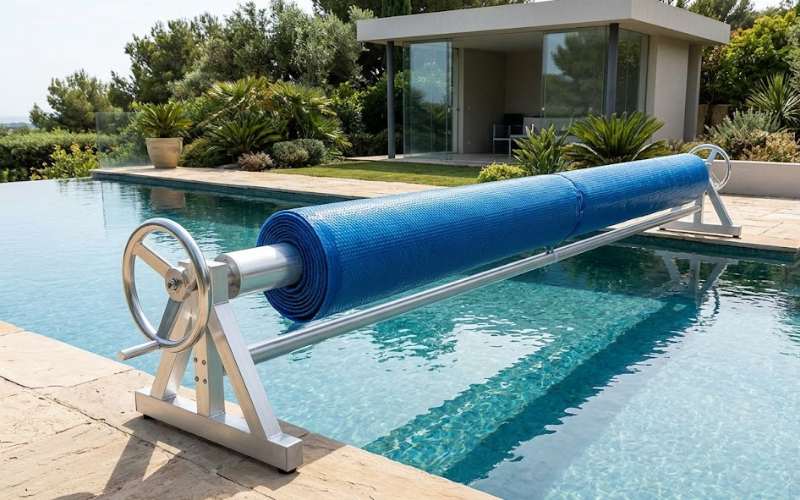
In 2026, global buyers face stricter ESG and Quality Audits. Our facility isn’t just a factory; it’s a certified ecosystem (ISO 9001, 14001, 45001, 50001). When you source structural components for a Pool Cover Reel, you are protected by a traceable supply chain that satisfies the most stringent legal requirements in the EU and North America.
Critical Checklist for Your Next Bulk Order
Before you sign off on a P.O., verify these three metallurgical factors with your engineer:
- Does the design involve tight-radius bending? (Choose 6063 or 5052; 6061 may crack).
- Is it a marine or high-salt environment? (Prioritize 5000 series or 6000 with a minimum 15-micron Anodized Coating).
- Is welding required? (6061 is excellent; 7075 is a nightmare for structural welds).
Mastering Your Metal Supply Chain
Navigating the nuances of aluminum alloy selection requires more than just a textbook; it requires 20+ years of floor-level experience. My goal for every Xingyong client is to bridge the gap between “technical specs” and “marketable products.” By involving our engineering team at the “Design for Manufacturing” (DFM) stage, we often find 5-8% in hidden savings that your competitors are leaving on the table.
Secure Your Structural Advantage
Don’t leave your structural integrity to chance. Whether you need high-precision CNC machining or high-volume 6000-series extrusions, our team is ready to deliver.
Contact Xingyong’s Engineering Department for a technical consultation and a transparent quote.
Related products: Explore related products and review matching solutions.

 English
  Español
  Français
  Deutsch
  Português