
Aluminum Extrusion Machining Manufacturer
Xingyong extrudes the profile and machines it in the same plant — so the drilling, slotting and cut lengths are held against the section we just pressed, not against someone else’s tolerance stack.
- One supplier, one tolerance chain — press, age, cut, machine, anodize and pack without a second factory in the middle.
- Fixtures built to the section — a thin-wall extrusion clamps nothing like a billet, and that is where most machining programs lose the part.
- OEM terms that hold — drawings under NDA, free samples in 25–35 days, quotes in 24 hours.
Why Machining an Extrusion Is Not Machining a Billet
Aluminum extrusion machining is the secondary work that turns a pressed section into a finished part — cut to length, drilled, slotted, tapped, milled, deburred.
The trap is treating it as ordinary CNC work. An extrusion arrives with press tolerance, a temper that is still settling and walls thin enough to deflect under clamp pressure. Hold it like a solid block and the hole moves, the slot walks and the part measures fine in the fixture but not on the bench. The fixture, not the cutter, is the hidden cost driver.
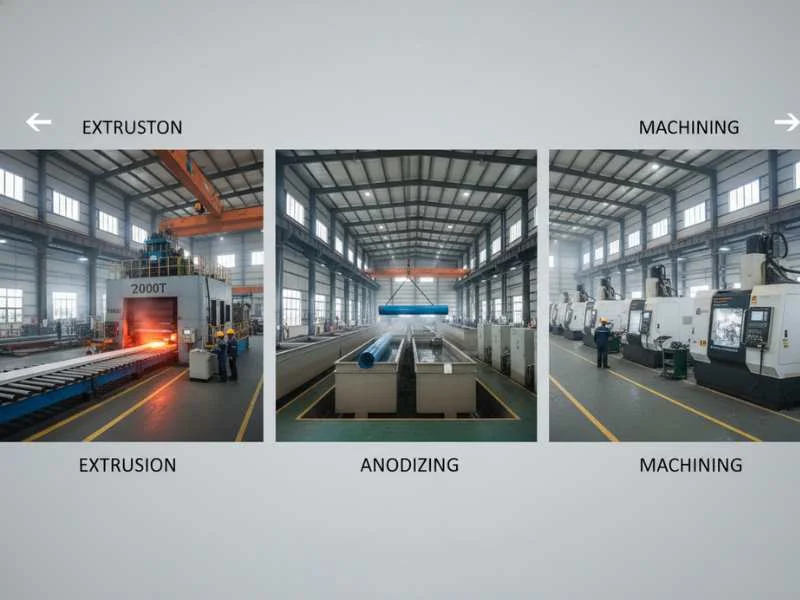
Xingyong runs both halves on one floor: a 2,000-tonne press, aging, sawing, CNC, anodizing and assembly. When the same plant owns the section and the fixture, the tolerance chain has one owner — and there is no second factory to blame when a hole lands 0.3 mm out.
Buyers reach this work under several names — extrusion machining, cnc extrusion, aluminum profile machining or simply extruded aluminum fabrication. One capability, four vocabularies. The aluminum industry ships the alloy; what happens after the press is what this page is about.
Need the section itself designed and pressed? That program lives at custom aluminum extrusion. This page is the machining side.
Aluminum Extrusion Machining OEM Options — Line by Line
Send the section drawing and the machined-feature print together — quoting them apart is how the fixture cost gets discovered late.
| Specification | OEM Options | Confirm Before Sampling |
|---|---|---|
| Incoming section | Our extrusion, or your profile supplied free-issue | Who owns the die and the section tolerance |
| Alloy & temper | 6061, 6063, 6005 in T5 or T6 | Temper at the time of machining, not at delivery |
| Cut to length | Saw and CNC cut, square or mitered ends | Length tolerance and burr spec |
| Hole work | Drilling, punching, tapping, counterbores | Datum face and hole-position tolerance |
| Milling | Slots, pockets, end forming, necking and flaring | Wall thickness at the cut |
| Fixturing | Dedicated fixtures built to the section | Annual volume — it decides fixture amortization |
| Finish | Deburr, anodize or powder coat after machining | Whether cut faces must be coated |
| Inspection | First-article plus in-process checks, lots traced 3 years | Which dimensions are critical-to-function |
| MOQ & lead time | Per configuration; sampling 25–35 days | Volumes and target dates |
Three Ways Buyers Order Machined Extrusions
Same press, three different scopes — the choice is really about who owns the section and who owns the fixture.
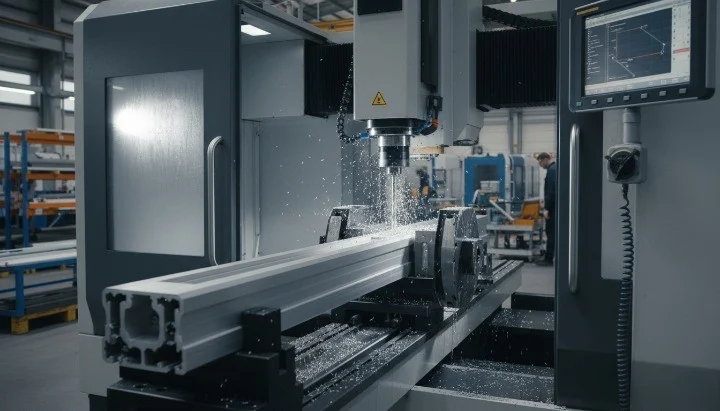
CNC Extrusion
Section and machining from one plant: we press it, then drill, slot and tap it against the tolerance we just produced.
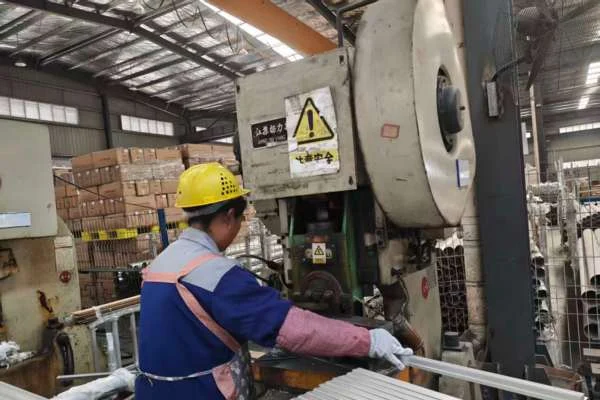
Custom Cut Aluminum Extrusion
Cut-to-length work at volume — square or mitered ends, burr spec agreed up front, packed so the ends survive the container.
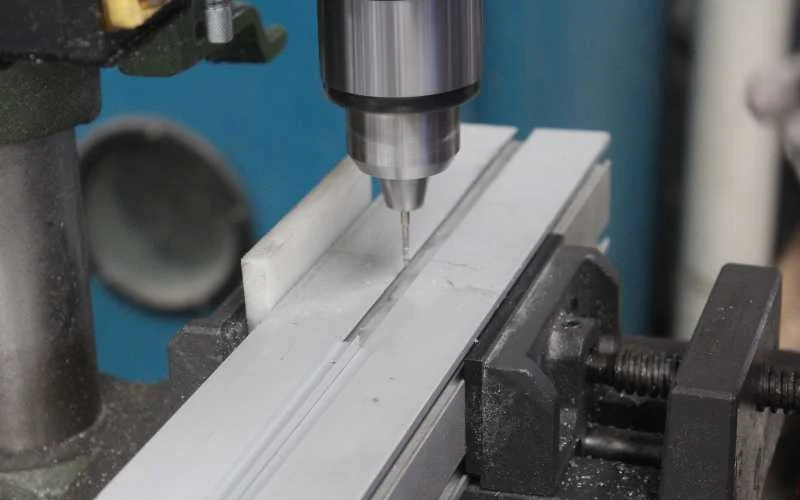
Aluminum Extrusion Fabrication
Full fabrication on free-issue or our own profile: machining, forming, finishing and sub-assembly shipped as a finished part.
Machining specs reflect work run at Jiangsu Xingyong (ISO 9001 + IATF 16949, since 2010); critical dimensions agreed per print before sampling.
One Plant vs Extruder Plus Job Shop vs Buying the Machine
Three ways this work gets sourced — and what each one actually costs you:
| Point | Extrusion + machining in one plant | Extruder plus separate job shop | Buying the machining equipment |
|---|---|---|---|
| Tolerance chain | One owner, section and feature quoted together | Two tolerance stacks meeting at your part | Yours entirely |
| When a hole is out | One factory fixes it | Each side blames the other’s tolerance | Your problem |
| Fixture cost | Amortized across the same program | Charged again by the job shop | Capital, not piece price |
| Freight & handling | None between steps | Profile ships twice, arrives dinged | Only inbound stock |
| Who this suits | OEM buyers wanting a finished part | Buyers with an existing extruder they cannot move | Volume manufacturers running their own line |
Why OEM Buyers Choose Xingyong for Aluminum Extrusion Machining
A machining quote is easy to win and easy to lose money on. Four reasons buyers keep the program here after the first article.
If you are an importer or trading company placing the order, see how Xingyong works with importers and trading companies.
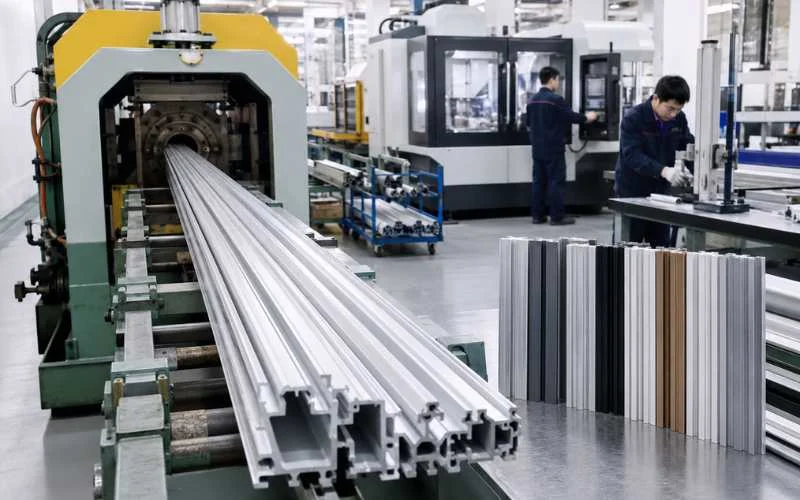
The Press and the Machine Are in the Same Building
Extrusion, aging, sawing, CNC, anodizing and assembly on one floor. Nobody hands a tolerance problem across a fence, and the profile never ships twice to get finished.
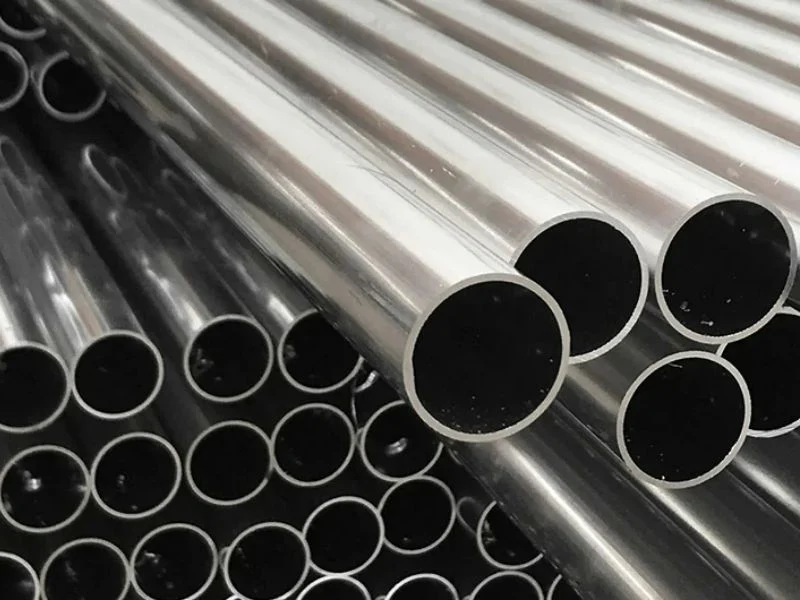
Fixtures Built to the Section, Not to the Block
Thin-wall sections deflect under clamp pressure — that is where holes move and slots walk. Fixtures here are cut to the profile geometry, and first articles are measured out of the fixture, not in it.
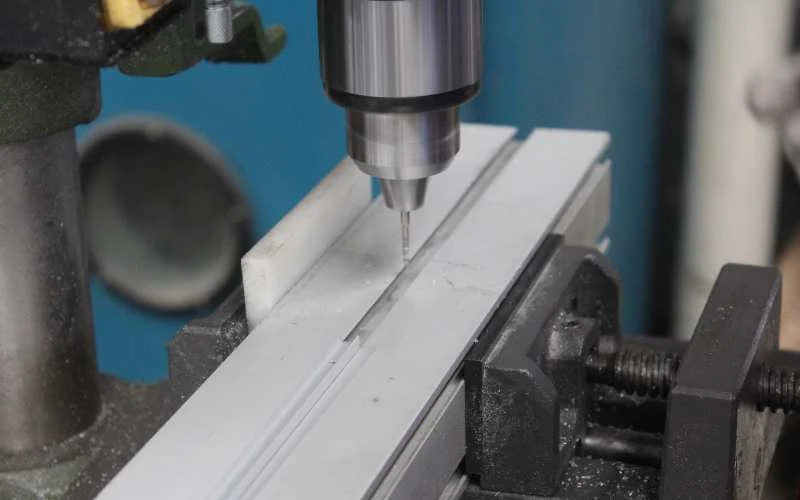
A 2,000-Tonne Press Behind the Machining Cell
Most machining suppliers buy their sections in. When the press is ours, section tolerance, temper and delivery date are all inside one plan instead of three.
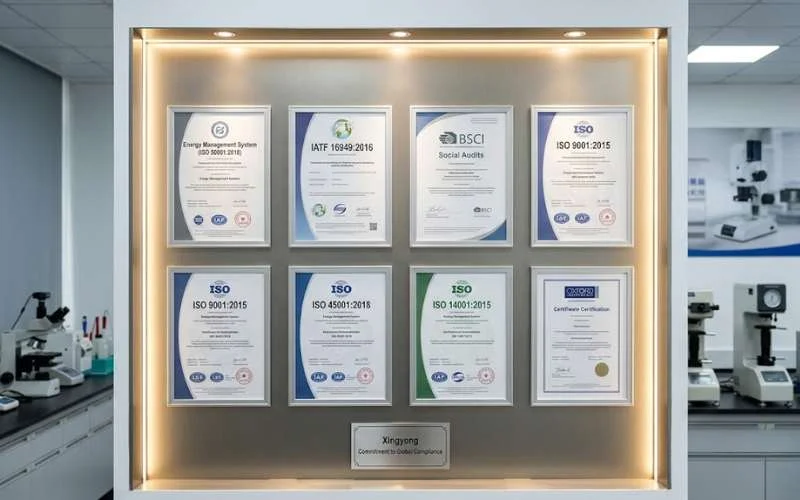
ISO + IATF — Send a Print, Get a First Article
ISO 9001, IATF 16949 and BSCI audited, with lot traceability held three years. Send the print and a free first article is machined to it in 25-35 days.
Press capacity and certifications verified at Jiangsu Xingyong Aluminum Technology Co., Ltd (Huai'an, since 2010); machining lots traced 3 years.
Machining Programs Already Running Here
Machining buyers qualify a plant on parts it already ships. Three from this floor: a molded-and-machined push-button program where the button hole position decided the whole assembly; an Israeli four-section build whose nesting tolerance is pure machining discipline; and a US distributor replenishment run showing what a machined SKU looks like after launch.
Frequently Asked Questions
Six answers for the people who own the part — engineers, procurement managers and importers. Machining one prototype? A local shop is faster; this desk is for programs.
Can you machine profiles we already have extruded elsewhere?
Yes — free-issue sections are accepted, but the incoming tolerance becomes the limiting factor and we say so before quoting. Send the section drawing with its actual measured tolerance, not the nominal print, so the fixture is designed against reality.
Why is the fixture quoted separately?
Because it is the real cost driver on thin-wall work. A section that deflects under clamp pressure moves holes and walks slots, so fixtures are cut to the profile geometry rather than adapted. Fixture cost is quoted openly against annual volume and amortized, which is what keeps the piece price stable after sampling.
What tolerance can you actually hold on an extrusion?
It depends on the wall and the datum, not on the machine. Tell us which dimensions are critical-to-function and they are agreed on the first-article report; nominal blanket figures are how machining programs get mis-sold. First articles are measured out of the fixture, not in it.
Do you anodize before or after machining?
After, in most programs, so cut faces and tapped holes carry the same finish as the section. If a machined face must stay bare for conductivity or a press fit, it is masked — confirm that on the print before sampling.
How is machined extrusion priced at volume?
By cycle time per part, fixture amortization, section cost and finishing, not by a flat per-kilo rate. Factory-direct pricing follows aluminum billet plus machine hours, and quotes return within 24 hours of a complete print.
What is the MOQ for a machined extrusion program?
Set per configuration, because one fixture usually serves a family of lengths and hole patterns. That keeps entry volume workable across a part family rather than a single SKU. Free first articles ship against a confirmed print.
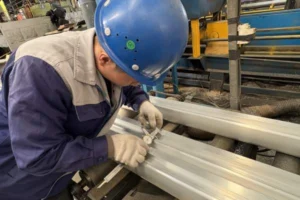
Technical Guides for Machining Buyers
A machining program is decided before the first chip — on whether the feature belongs in the die, and on what the fixture will cost.
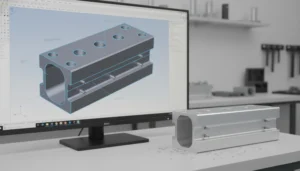
How to CNC Aluminum Extrusions
The shop-floor process: fixturing, tolerances, tooling and the steps a part actually passes through.
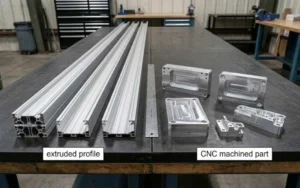
Aluminum Extrusion vs CNC Machining Cost
Where the break-even sits between pressing a feature in and machining it after.
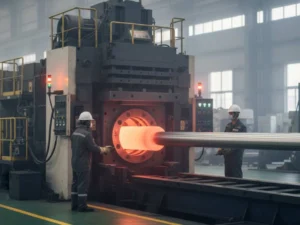
Custom Aluminum Extrusion Guide
Design rules before you send the drawing — wall thickness, tolerance and die cost.
Start Your Machined Extrusion Program
One email starts it: the section drawing, the machined-feature print, critical dimensions, finish and annual volumes. Engineering reads it the same day and the quote is back within 24 hours.
 English
  Español
  Français
  Deutsch
  Português