
Light Bulb Changer Pole Manufacturer
Xingyong manufactures aluminum light bulb changer poles for reach-tool brands, hardware distributors and facility suppliers — a direct factory in Huai’an running extrusion, injection molding and assembly under one roof since 2010.
- 2-4 sections, 11 ft to 20 ft-class reach — stepped 6063/6061 tube keeps the head steady at the far end, where the thinnest section is doing the work.
- Takes the heads your line already sells — a specified threaded tip accepts suction cups, spring-cage grippers and recessed-can cups, so one pole carries a whole head range.
- From tube to packed kit — most custom tube factories stop at the cut tube; we mold the grips, collars and caps, assemble the pole and pack the carton, private-label, ISO 9001 + IATF 16949, sampling in 25-35 days.
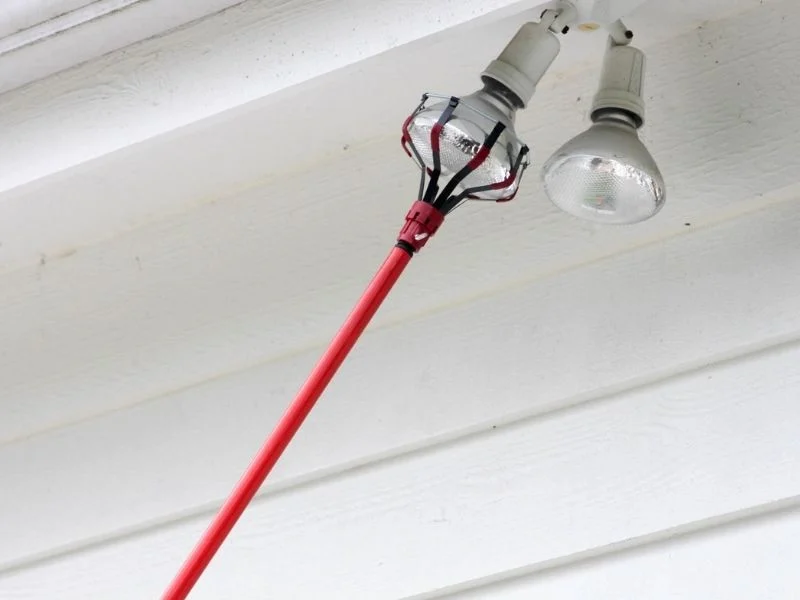
What a Light Bulb Changer Pole Is — and Why the Tip Decides the Kit
A light bulb changer pole is a telescoping aluminum pole with a threaded tip that carries a changer head — a suction cup, a spring-cage gripper or a recessed-can cup — so a lamp comes out of a high fixture without a ladder.
Kits sell by reach class and by how many heads come in the box. Everything rides on the shaft under the head: it is the component the customer blames when a bulb drops or a head will not thread on.
The tip is the whole compatibility story. In North America most heads screw onto a tapered threaded tip, so a pole that holds that standard sells into a head range the customer already owns instead of stranding it.
Material sets one hard boundary. Aluminum is stiff per gram, which is why it carries the volume segment, but it conducts — and long conductive objects handled near exposed live parts are regulated work under OSHA 29 CFR 1910.333(c)(6). Relamping on a de-energized circuit is the aluminum case; energized duty belongs to fiberglass, and a kit sold for both is a kit sold wrong. The tube itself is stepped 6063/6061 aluminum tube from the same press that feeds our other reach lines, an alloy family the Aluminum Association classes for exactly this kind of structural extrusion.
Jiangsu Xingyong Aluminum Technology Co., Ltd — the factory behind poolpole.com — supplies this platform to the brands that assemble complete light bulb changer kits around it. A changer pole is a head-specific build of our general-purpose aluminum extension pole line: same tube platform, different tip program and head range. Plain painting and cleaning poles live on that page; this page is the relamping line.
Light Bulb Changer Pole OEM Options — What You Can Spec, Line by Line
Every line below is set per order, from alloy to the head that ships in the box. One factory owns the tube, the molded parts and the packing — so a kit has one quality owner instead of three vendors to referee.
| Specification | OEM Options | Confirm Before Sampling |
|---|---|---|
| Tube | 6063 / 6061, stepped sections | Reach classes your line sells |
| Sections & reach | 2-4 sections, 11 ft to 20 ft-class working reach | Ceiling heights your customers quote |
| Tip & thread | Tapered threaded tip, quick-release or your own interface | Head range the tip must accept |
| Head program | Suction cup, spring cage, recessed-can cup, pin adapter | Lamp types and can diameters |
| Locking | Twist, flip or push-button collars | Grip needed under a loaded head |
| Grips, collars & caps (in-house) | Molded on site in brand colors; poles shipped assembled | Assembly level: bare pole, part-fitted, or retail-ready |
| Finish | Anodized or mill finish, custom colors | Color code |
| Packaging & branding | Bulk, kit carton, clamshell, private label | Barcodes, inserts, head count per box |
| MOQ & lead time | Per configuration; sampling 25-35 days | Volumes and dates |
Light Bulb Changer Builds for How Your Line Sells
Most changer ranges are assembled from whatever a trading desk could source that month — a pole from one vendor, heads from another, a carton from a third. Mismatched kits are where the returns start.
These four builds cover how the category actually sells: by reach class, by fixture type, and by whether the customer buys a pole or a complete kit.
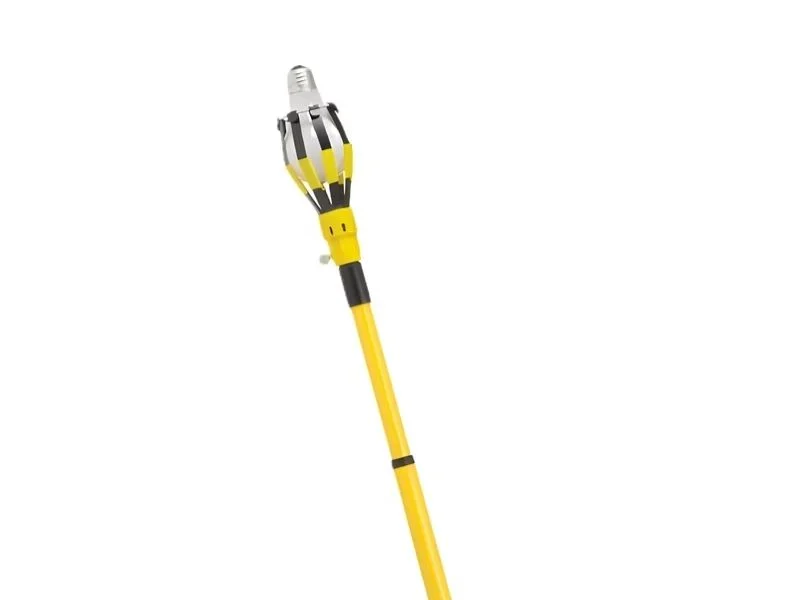
Telescoping Light Bulb Changer
Stepped 6063 sections lock at any working length, so a single SKU covers a customer’s 10 ft hallway and their 18 ft stairwell.
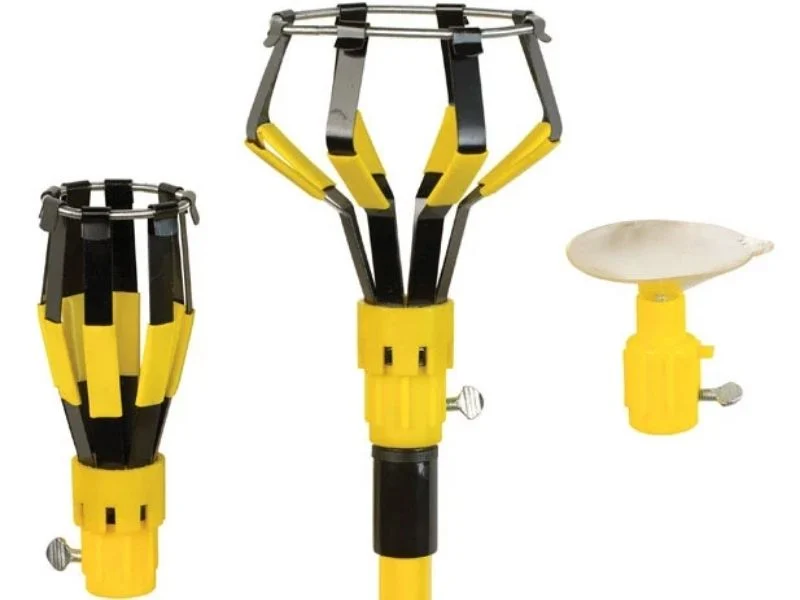
Recessed Light Bulb Changer
Cup heads sized to common can diameters, so the pole turns the lamp instead of spinning inside the can and stripping the grip.
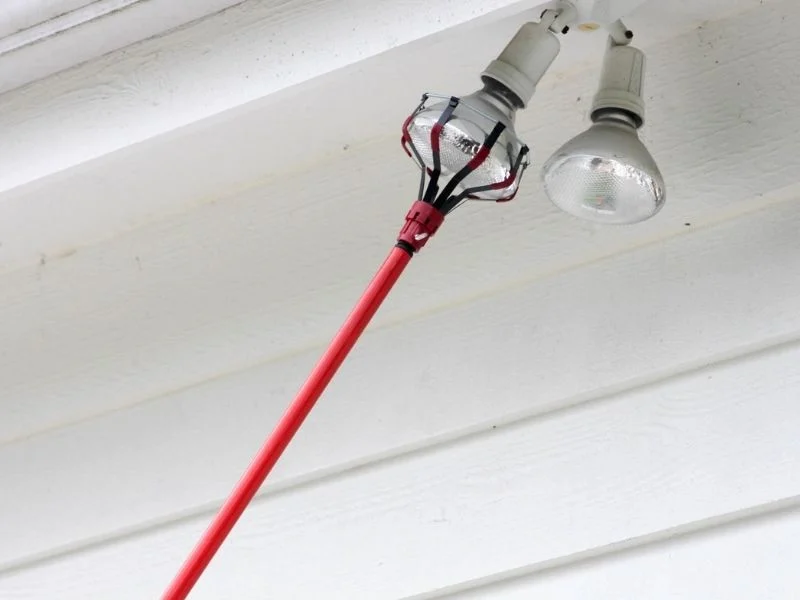
High Ceiling Light Bulb Changer
Long-reach builds add a section rather than thinning the top tube, so the head stays controllable where cheap poles start to whip.
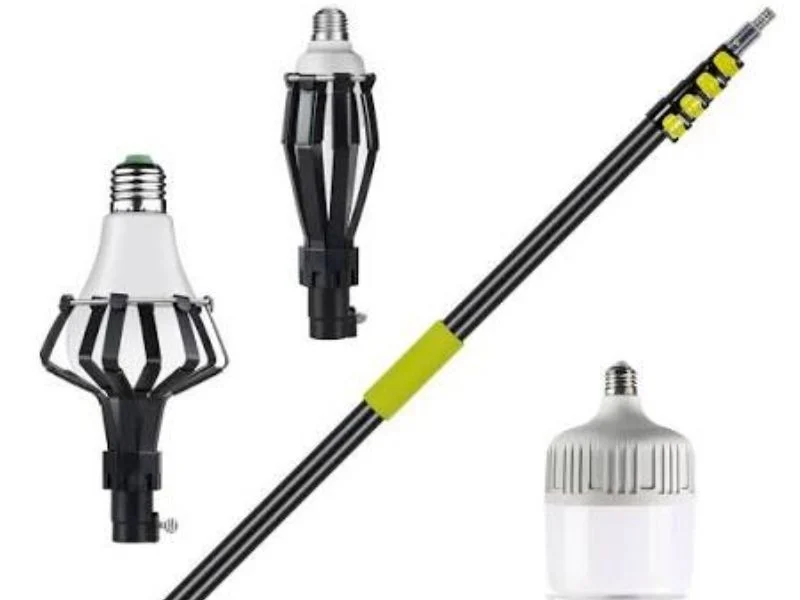
Light Bulb Changer Kit
Pole, head set and retail carton leave as one packed kit, so a retail order lands ready to shelf instead of being built up in your warehouse.
Builds use stepped 6063/6061 tube from Jiangsu Xingyong (ISO 9001 + IATF 16949, since 2010); reach and tip standard confirmed per program.
Purpose-Built Changer Pole vs Repurposed Paint Pole vs Fiberglass
This product gets judged the first time a customer loads a head onto it off-axis at full extension. The table splits what a purpose-built aluminum pole does at that moment from the two things buyers reach for instead.
| What decides it | Purpose-built aluminum changer pole | Repurposed paint pole with a head on it | Fiberglass changer pole |
|---|---|---|---|
| Tip interface | Thread standard specified and held across the range | Whatever the paint line used; heads fit or they don’t | Specified, same as aluminum |
| Top-section stiffness | Section taper set so the last tube out still carries the head | Thin top section chosen for roller weight, not a gripper | Excellent stiffness-to-weight at premium wall thickness |
| Lock under an off-axis head | Collar and grip specified together with the tube | Lock rated for a light roller; slips under a loaded cage | Strong, typically heavier collars |
| Work near live fixtures | Not suitable – aluminum conducts | Not suitable – aluminum conducts | Non-conductive; the right choice for energized work |
| Weight at full extension | Light enough for one-handed placement | Similar, but flex makes it feel heavier | Heavier at equal reach |
| Where it belongs | Retail and facility relamping kits at volume | Nowhere it was sold as a changer pole | Electrical and utility duty, at a premium price |
The middle column is the one that generates returns. The right-hand column is a genuinely better tool for one job – anything near energized parts – and a more expensive one everywhere else.
Why Tool Brands and Distributors Choose Xingyong for Light Bulb Changer Poles
This category is bought by a kit builder on one side and used by a maintenance tech on the other, and this section answers both questions at once — whether the pole holds up on a route, and whether the line holds margin on a shelf.
Working on a private-label or distribution program? The commercial terms live on our partner page for brands and distributors.
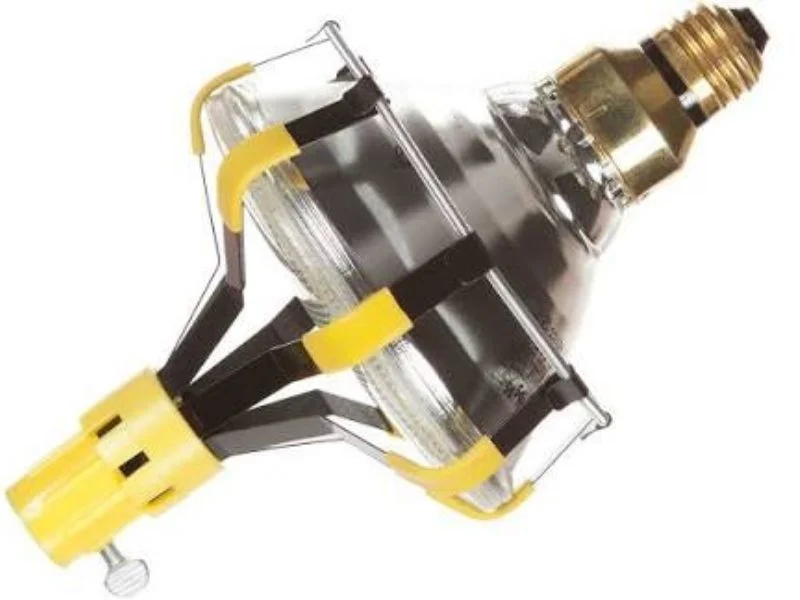
An Aluminum Platform Built Around the Head, Not Just the Length
- Section taper, count and wall thickness set per order, so the top tube still carries a loaded head at the reach printed on your box.
- Collars specified against the head weight they will actually see, not against a paint roller.
- For distributors: heads are the consumable and the pole is the anchor — a customer who buys one changer pole comes back for cups, cages and can adapters, which is a repeat line most reach-tool ranges never build in.
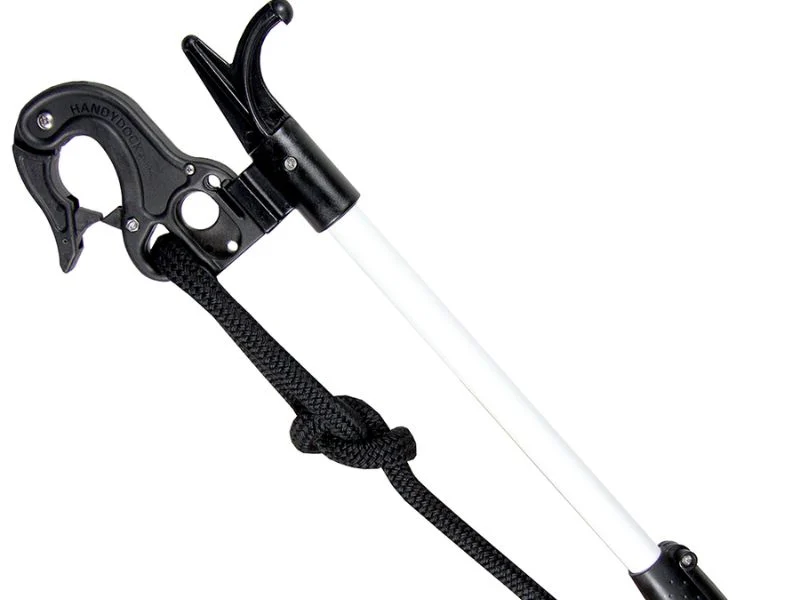
Tips, Heads and Molded Parts Matched to One Kit
- Tip tooling is cut in house, so accepting a new head range is a tooling change rather than a supplier hunt.
- Molded parts arrive color-matched to the tube, instead of approximately matched by a second vendor.
- For distributors: private-label terms, MOQ structure and territory questions are answered on our partner page.
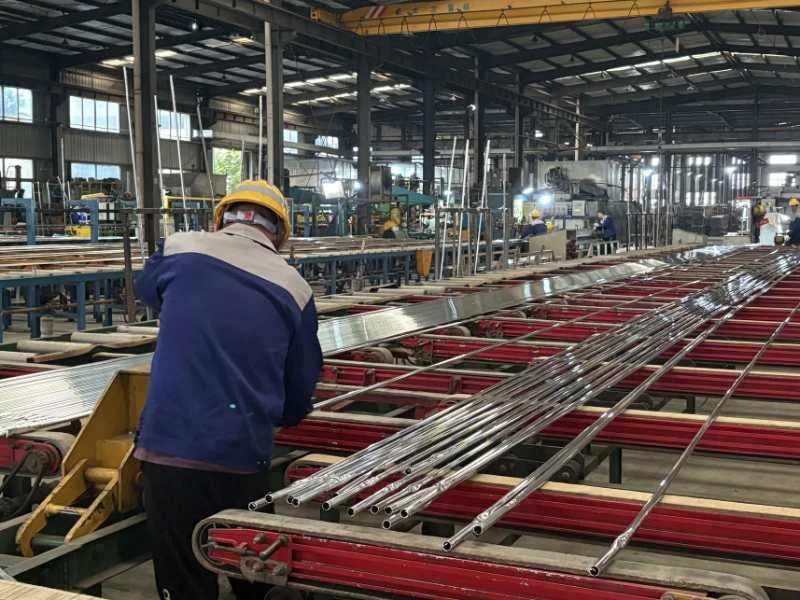
The Factory That Extrudes and Assembles Your Changer Pole
- A 2,000-ton extrusion press, in-house anodizing and CNC machining.
- Injection molding and pole assembly in the same plant, so tube and plastic are matched before packing.
- Single programs from 120,000 to 1.6 million pieces, run on one production plan.
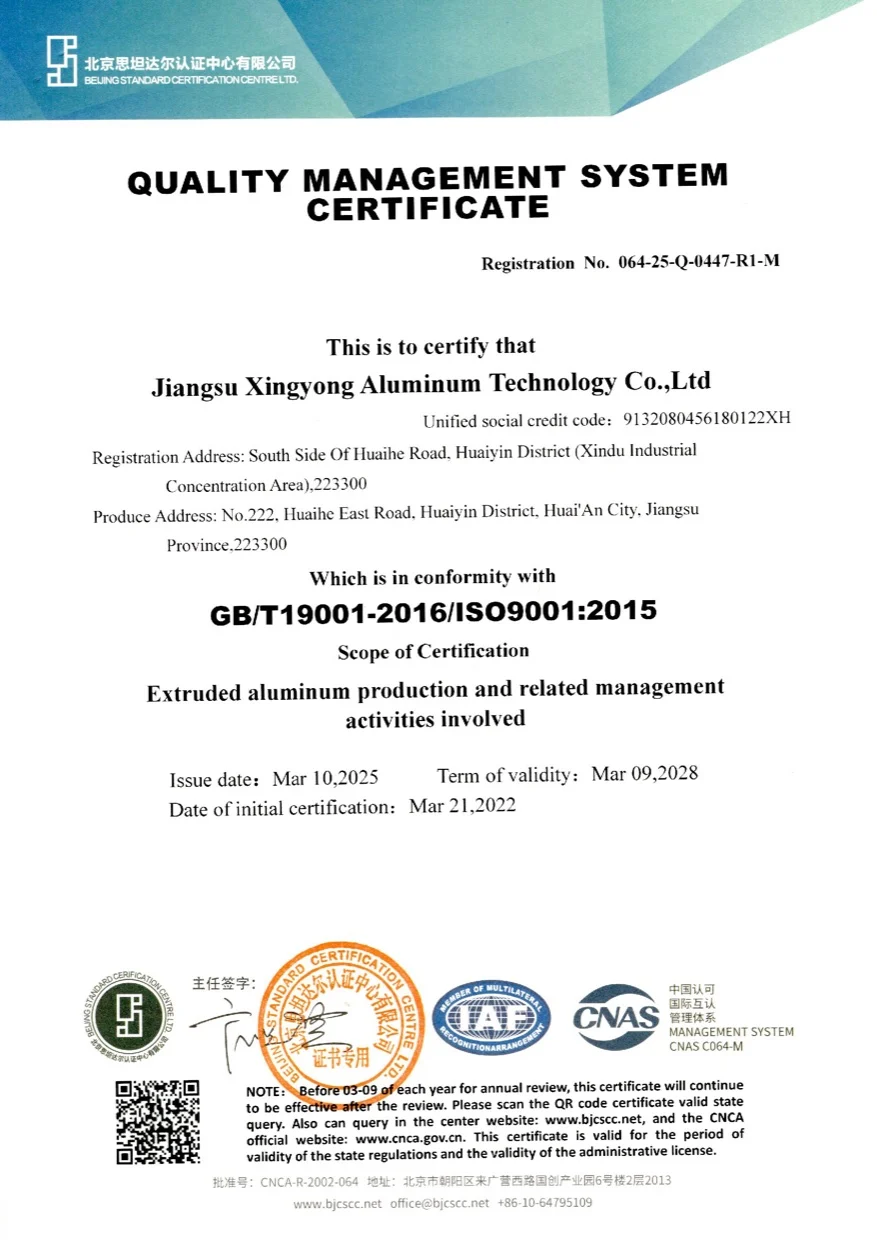
ISO 9001 + IATF 16949 — Send a Kit Spec for a Free Sample Pole
- ISO 9001/14001/45001/50001 and IATF 16949; amfori BSCI A-rated.
- Batch traceability on tube and molded parts.
- Audit reports available before you commit a program, and a sample pole cut to your spec before any tooling is committed.
Claims map to 6063/6061 poles from Jiangsu Xingyong (ISO 9001 + IATF 16949, since 2010); tip and head fit confirmed per kit before tooling.
Shipped Programs From the Same Reach-Tool Line
A changer program is judged by what a factory has already put on shelves. These three ran on the same press, the same molding shop and the same packing line as a changer pole.
Frequently Asked Questions
These six answers are written for the people who sign off a program — brand managers, importers, distributors and QA — not for a homeowner comparing two kits on a shelf. If you need one pole shipped to one address, we are the wrong supplier and will say so.
Can you clone the changer pole in our current kit so the shelf SKU doesn't change?
Yes — send a sample pole and your target price; we reverse the spec and return a like-for-like quote, with every difference listed line by line before you commit. Tip thread, section steps and collar type are matched first, because those are what an existing head range depends on.
What can carry our branding on a private-label changer pole line?
Tube color via anodizing, printed or laser marking on the sections, molded grips and caps in your colors, and retail cartons or clamshells carrying your codes. Because the plastic parts are molded here, brand-colored grips do not need a second supplier or a second MOQ.
How is an OEM light bulb changer pole priced at volume?
By reach class, section count, lock type and how many heads ship in the box — the same four lines that appear on the quote sheet. Direct-from-factory pricing carries no trading-desk margin, so the number you compare is the number that builds the pole.
We already sell extension poles — does a changer line cannibalize them?
No, it attaches to them. An extension pole is bought once for a job; a changer kit is bought for a fixture problem and pulls head replacements behind it. Most brands run both, with the changer kit carrying the higher ticket because the heads are in the box.
What is the MOQ for a private-label changer pole program?
MOQ is set per configuration and color, and one tip tooling can serve several reach SKUs — which is how the entry point stays workable for a first program. Send volumes, reach classes and target dates and we will structure it around your line.
Do your poles ship rated for electrical work?
No — we supply the hardware layer only. Aluminum conducts, so these poles are specified for relamping on de-energized circuits; any duty near live parts needs a non-conductive pole, and the electrical rating, testing and labeling belong to the brand that puts its name on the finished tool. We will say this on a spec sheet rather than let a kit be sold into the wrong job.
Technical Guides for Reach-Tool Buyers
A changer spec locks tip tooling, collar type and head range months before the first carton lands, and those are expensive places to guess wrong. These three cover the decisions buyers most often get backwards.
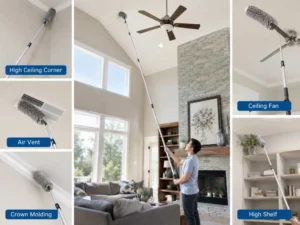
How to Change a Light Bulb in a High Ceiling
The reach math your customers use — and the section stiffness behind a pole that feels steady.
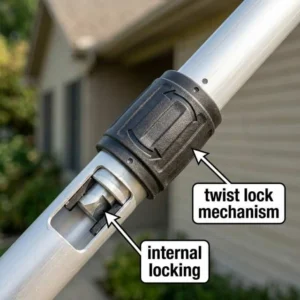
Telescoping Pole Lock Guide
How each collar type behaves once a loaded head is hanging off the end.
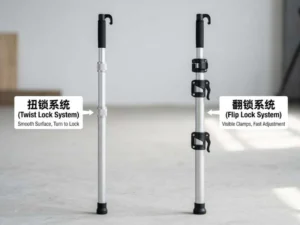
Twist Lock vs Flip Lock Poles
Twist versus flip — which one survives daily route handling.
Start Your Light Bulb Changer Pole Program
One email starts it: reach classes, head types the tip must accept, lock preference, target volumes and packaging format. The quote comes back within 24 hours — sections, tip standard, molded parts and packing, priced line by line.
 English
  Español
  Français
  Deutsch
  Português