
Camera Pole Manufacturer — Telescoping Aluminum Masts
Xingyong extrudes and assembles the pole that carries someone else’s camera: telescoping aluminum masts, machined camera plates and bases for security brands, integrators and hardware distributors.
- Spec range: two- to five-section telescoping masts in 6063 or 6061, twist, pin or clamp locks, clear or black anodized, powder coated to your color.
- Interfaces: 1/4-20 and M6 camera plates, flange and clamp bases, guy rings and cable exits — all cut in-house, so a housing change is a tooling tweak rather than a new supplier.
- From tube to assembled mast: we extrude the sections, mold the plastic parts and assemble under one roof, with quotes back within 24 hours and samples in 25–35 days.
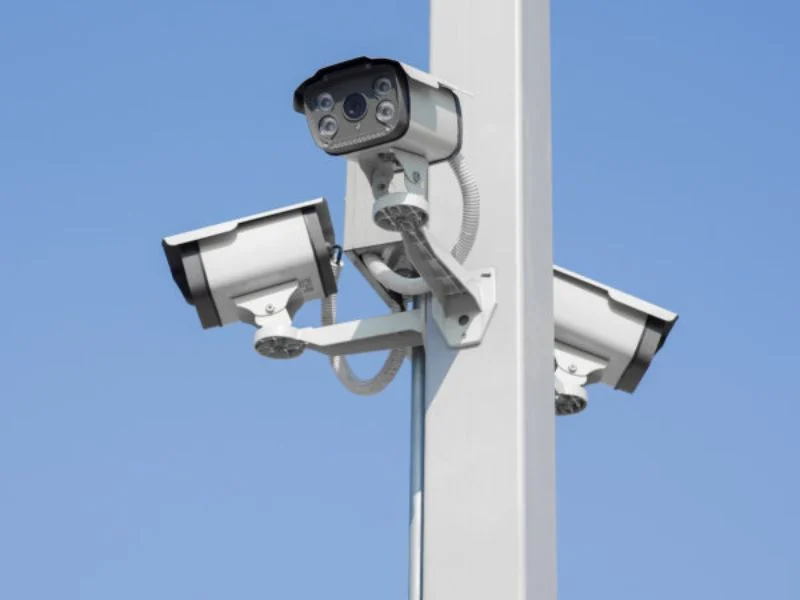
What a Camera Pole Is — and Where Our Aluminum Stops
A camera pole is the mast and mount that hold a surveillance camera at working height. It is hardware, not electronics.
Two different buyers use the same words. One is specifying a fixed steel column concreted into a parking lot, engineered to a structural code. The other needs a mast that travels: raised on a trailer, a tripod or a wall bracket, deployed for a shift or a season, then collapsed again.
We build the second. Aluminum telescoping sections, locks that hold a set height under wind and vibration, and the machined interface between your camera housing and our tube. If your program needs an in-ground structural pole, we are the wrong factory and will say so on the first call.
The camera, lens, PoE run, enclosure, surge protection and grounding design stay with you or your integrator — the same hardware-layer line we hold on IV poles et telescoping light poles. Buyers are usually security brands putting their own label on mounting hardware, integrators standardizing a deployment kit, and distributors who already carry antenna masts and want a second line from the same container.
Alloy and temper follow ASTM B221; if your end customers sit inside the integrator channel that ASIS International serves, their spec sheets are the ones we build to.
Camera Pole OEM Options — What You Can Spec, Line by Line
Every line below is set per order. One factory owns the extrusion, the machining, the molded parts and the final assembly, so there is one drawing and one supplier behind the finished mast.
- Alliage et trempe : 6063 for finish-critical sections, 6061 for load-critical ones, tempers per ASTM B221.
- Section plan: two to five sections, collapsed and deployed lengths set by how the kit travels.
- Lock: twist collet, spring pin or external clamp — chosen against vibration and how often the mast is cycled.
- Camera interface: 1/4-20, M6 or your own bolt pattern, machined plate or welded boss.
- Base: flange, clamp, tripod adapter, trailer socket or wall bracket.
- Cable route: internal run with molded exits, or external clips.
- Finition: clear or black anodizing, powder coat to a brand color, mill finish for painted assemblies.
- Marking and pack: laser or printed marking, your carton codes, retail or bulk packing.
Camera Pole Builds Buyers Actually Order
Three shapes cover almost every inquiry that reaches us. They differ less in tube than in what has to stay rigid: a fixed install forgives a slower lock, a redeployed mast does not, and a mount lives or dies on the bolt pattern.
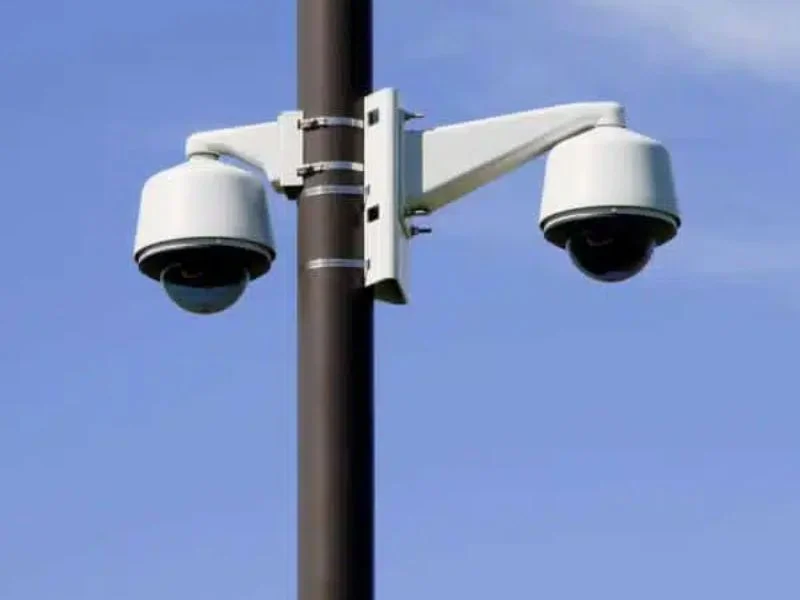
Security Camera Pole
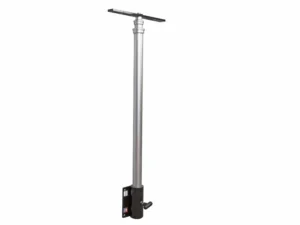
Anodized sections with a machined top plate and a flange or clamp base, so an installer lands the housing square and the mast stops being the variable on site.
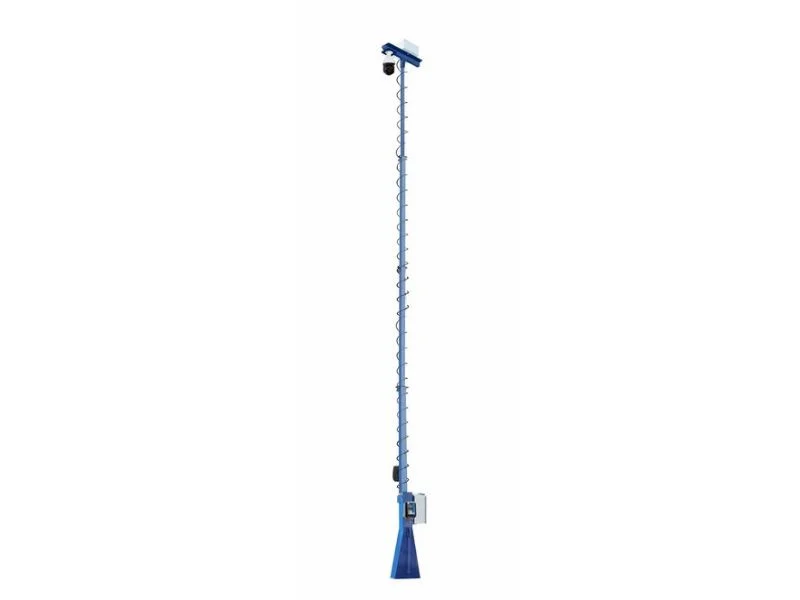
Telescoping Camera Pole
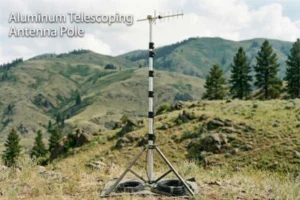
Two to five nesting sections with the lock chosen for repeat deployment, so a kit that is raised and struck every shift still holds its set height in wind.
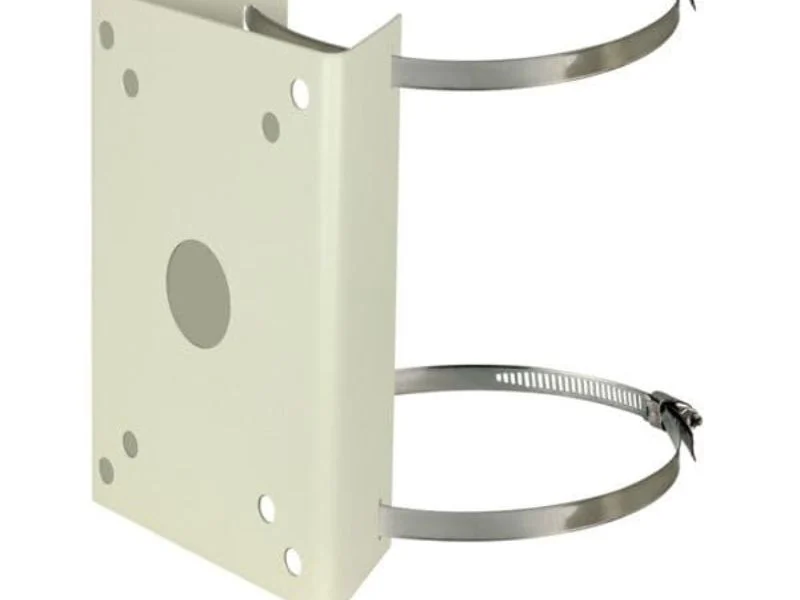
Camera Pole Mount
Plates, clamps and brackets cut to your housing’s bolt pattern, so the mount ships in the same carton as the pole instead of arriving from a second vendor.
Configurations reflect 6063/6061 telescoping masts from Jiangsu Xingyong (ISO 9001 + IATF 16949, extruding since 2010); alloy per ASTM B221.
Telescoping Aluminum Mast vs In-Ground Steel Pole vs Repurposed Antenna Mast
Most disappointing camera installs are a sourcing mismatch, not a quality problem: the wrong pole type was bought for how the camera actually gets deployed. The table is honest about where our aluminum is the wrong answer.
| Indiquer | Telescoping aluminum mast (ours) | In-ground steel pole | Repurposed antenna mast |
|---|---|---|---|
| Utilisation optimale | Portable, trailer, tripod and wall-mounted deployments | Permanent parking-lot and street installs | Light temporary use where the kit already exists |
| Who engineers the load case | You give wind and payload; we set section, wall and lock | A structural engineer, to local code | Nobody — it was designed for an antenna, not a camera head |
| Redeployment | Collapses and travels; lock is specified for cycles | Non applicable | Locks wear early when cycled daily |
| Camera interface | Machined to your bolt pattern in the same plant | Usually an adapter bought separately | Adapters stacked on adapters; alignment drifts |
| Corrosion | Anodized or powder coated aluminum, no galvanizing needed | Galvanized or painted, touch-up over life | Varies with what the mast was built for |
| Honest limit | Not a structural column — we will not sign off code-bearing heights | The right call above our envelope | Fine as a stopgap, poor as a shipped SKU |
Why Brands and Distributors Choose Xingyong for Camera Poles
Mounting hardware is bought by two people at once: a product manager who needs a repeatable SKU, and an installer who blames the pole when the picture shakes. We build for both. If you are sizing a private-label program, the terms live on our importer and trading company page.
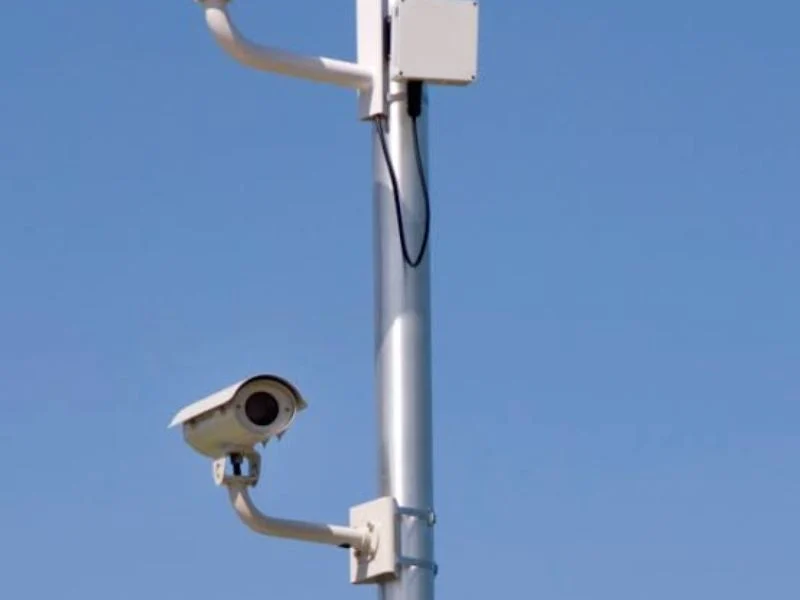
The Mast Under Your Camera, Drawn to Your Drawing
- Section geometry per order — wall, taper and overlap set against your payload and wind case, not pulled from a stock ladder.
- Lock matched to duty — twist for clean exteriors, pin for vibration, clamp for field service.
- Cable route designed in — internal runs with molded exits instead of zip ties added on site.
- Pour les distributeurs : a camera pole sells as a system SKU — pole, mount and base in one carton — which is a higher ticket and far fewer support calls than selling mounts loose.
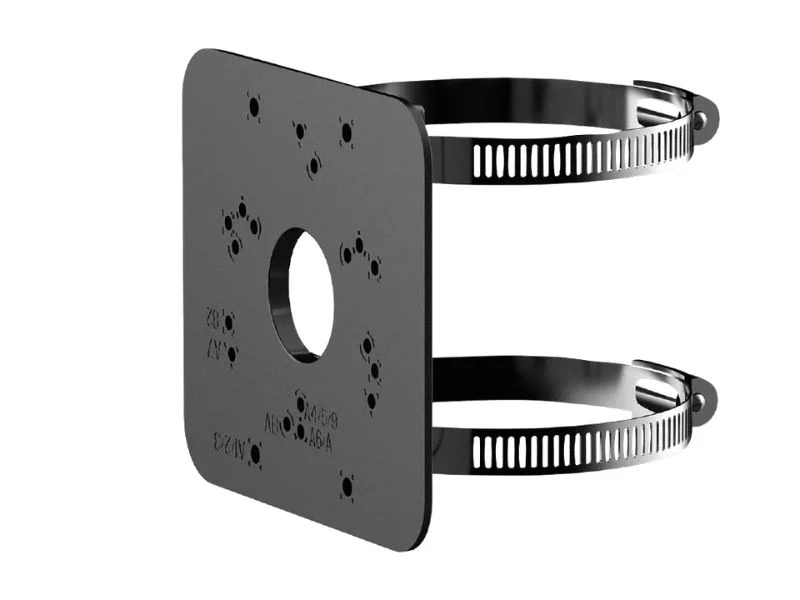
Mounts and Bases Machined to Your Camera Housing
- Interface tooling in-house — bolt patterns, threads and bosses cut here, so a housing revision is a tooling change, not a re-source.
- Molded parts from our own presses — end caps, cable exits and grips in your color, made in the same plant as the tube.
- One assembled unit ships — pole, mount and hardware packed together under one part number.
- Pour les distributeurs : private-label terms, MOQ structure and territory questions are answered on our importer and trading company page.
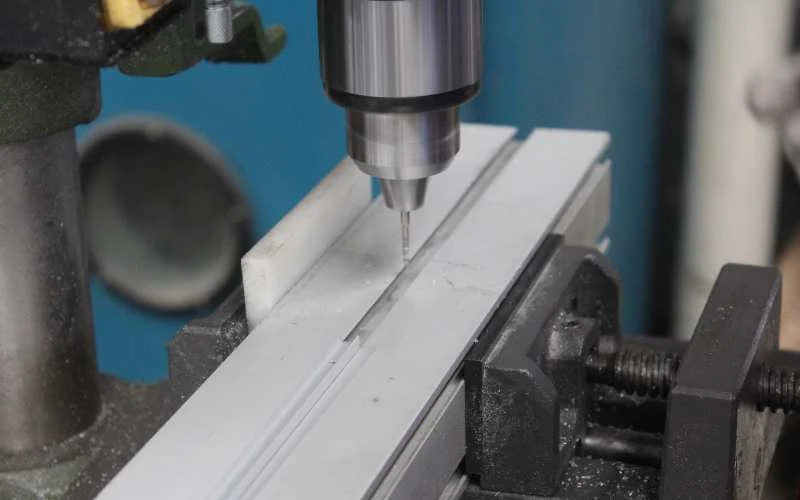
The Press and Machining Floor Behind Your Camera Mast
- 2000T extrusion press — sections drawn in-house, so wall thickness is a decision rather than whatever the market held.
- CNC machining on site — plates, bosses and base flanges cut from the same program that made the tube.
- Program volumes — single runs from 120,000 to 1,600,000 pieces, planned against your season.
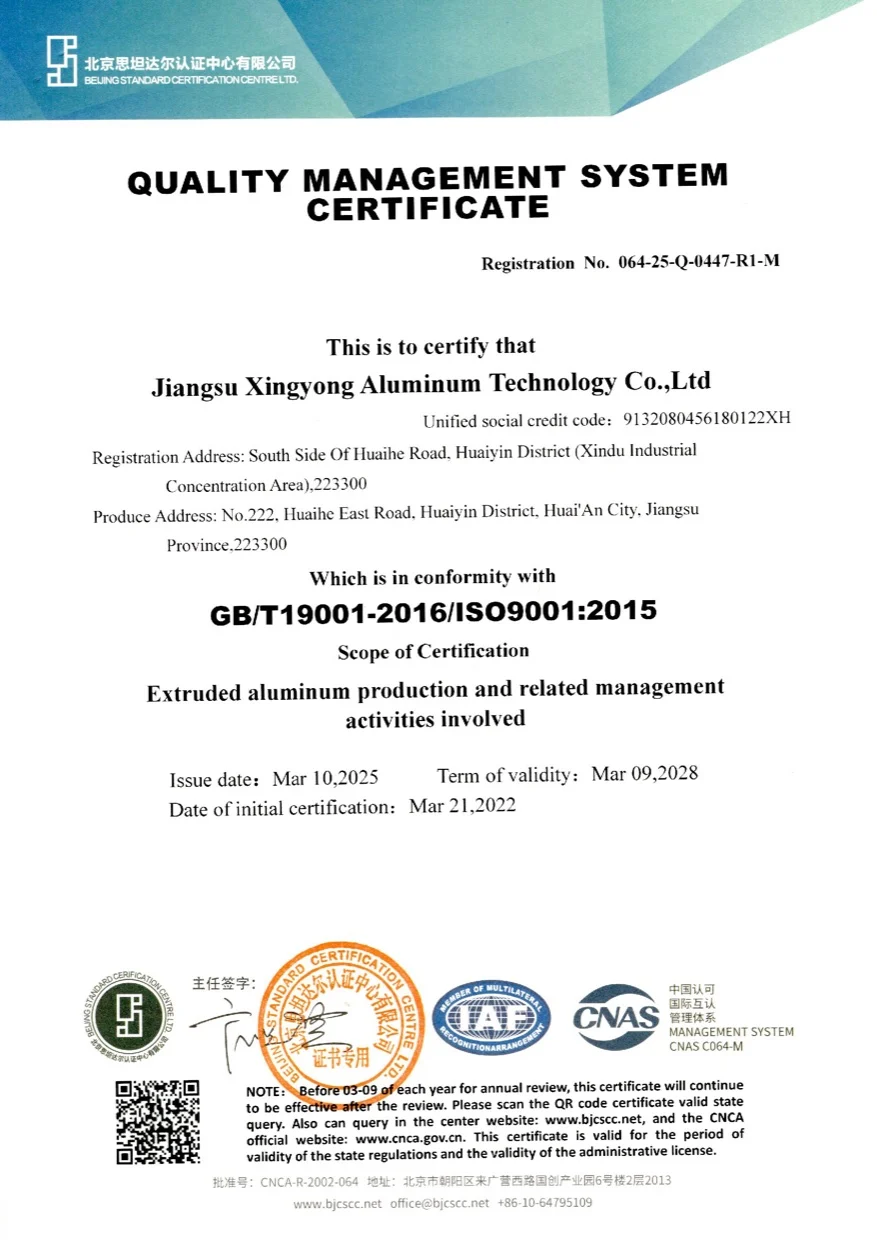
ISO and IATF Audited — Send a Drawing, Get a Sample Mast
- ISO 9001, IATF 16949 and BSCI — audited systems, with certificates available for your vendor file.
- Sample before commitment — drawings quoted within 24 hours, physical samples in 25–35 days.
- Direct from the manufacturer — Jiangsu Xingyong Aluminum Technology, Huai’an, extruding since 2010, not a trading desk.
Xingyong (Huai'an, Jiangsu, since 2010) extrudes, molds and assembles in-house; ISO 9001 + IATF 16949 + BSCI audited. Alloy per ASTM B221.
Programs Built on the Same Sections as a Camera Pole
None of these three sell cameras. Each one solved a problem a camera-pole program runs into.
- Israeli outdoor brand, four-section pole — four nesting sections engineered to stay rigid at full extension, which is the same math a deployed mast runs.
- Korean cleaning-tool brand, push-button lock — a lock specified for daily cycling, exactly the duty a mast raised every shift imposes.
- US distributor broom-pole line — shipped assembled and carton-ready, the packing model a system SKU needs.
Foire aux questions
Written for the people who sign off a mounting-hardware program: product managers, integrator purchasing and importers.
Can you build to our existing camera pole so the SKU on our site doesn't change?
Yes. Send a sample mast and your target price; we reverse the spec and return a like-for-like quote, with every difference listed line by line before you commit.
Do you supply the camera, or only the pole and mount?
Only the hardware layer: tube, lock, mount, base and molded parts. Cameras, lenses, PoE, surge protection and grounding design stay with you or your integrator, and the responsibility for the installed system stays there too.
How is an OEM camera pole priced at volume?
By section count, wall thickness, lock type, finish and order volume — the same five lines that appear on the quote sheet. Pricing comes straight from the factory with no trading layer; send volumes and a deployment height for unit numbers.
What is the MOQ for a private-label camera pole line?
MOQ is set per configuration and color, and one machined interface can serve several height SKUs, which keeps minimums workable. Send volumes and dates and the quote returns MOQ, sampling and production windows on one sheet.
Will you certify the pole for a given wind speed or mounting height?
We publish the geometry, alloy and lock data we build to, and we will not sign a structural rating for an installed system we did not engineer. For code-bearing fixed installations, an in-ground steel pole engineered locally is the honest answer.
Comment validons-nous la qualité avant de passer une commande de conteneurs ?
Three gates: an approved sample, a pilot batch with inspection data, then scaled production — nothing scales until the gate before it signs off. Your QA signs on numbers, not photographs.
Technical Guides for Camera Pole Buyers
A mast spec locks tooling and molds months before the first container. These three cover the decisions that are expensive to change later.
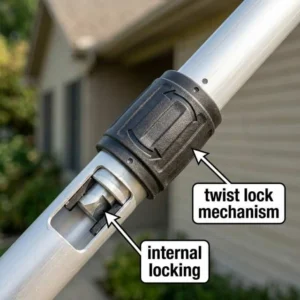
Guide de verrouillage pour poteau télescopique
Which lock survives daily deployment — and the failure modes behind a mast that creeps down overnight.
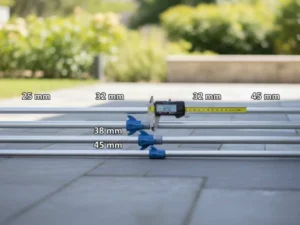
Guide de capacité de charge des perches télescopiques
How section geometry and overlap turn into real load capacity, before you promise a payload.
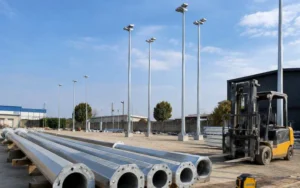
Où acheter un poteau d'éclairage en aluminium ?
Sourcing routes for aluminum poles — retailer, trader or factory — and what each costs you.
Start Your Camera Pole Program
One email starts it: deployed height, camera weight and bolt pattern, base type, finish and annual volumes. Anything missing from the spec comes back listed, not guessed.
 English
  Español
  Français
  Deutsch
  Português