
A squirrel baffle is the only feeder accessory that pays for itself in seed.
Every feeder owner runs the same experiment: new feeder, two happy weeks, then a squirrel empties it daily and bends the hooks doing it. Greased poles and hot-pepper seed are folklore with expiry dates; a properly placed baffle is physics, and physics does not get bored or clever.
This guide covers the three baffle types, the 5-7-9 placement rule that makes any of them work, and the pole details that decide whether a baffle seals or just decorates.
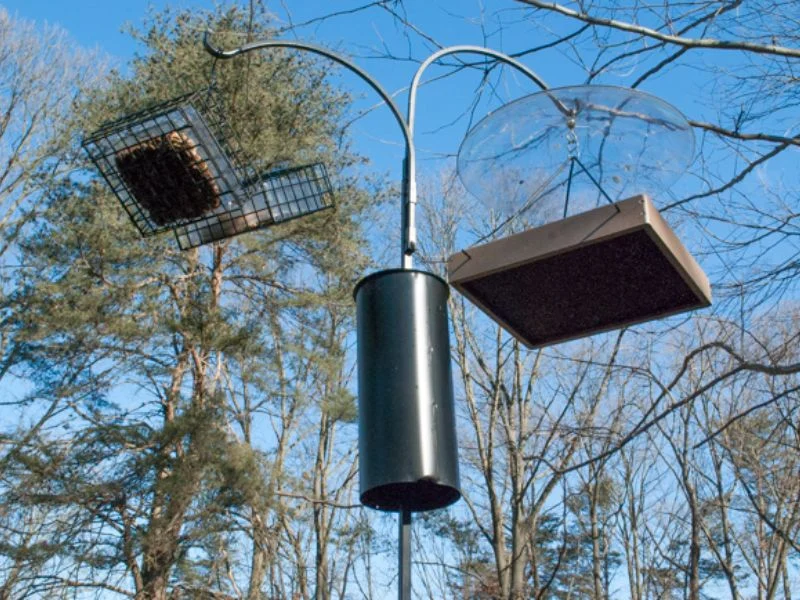
What a Squirrel Baffle Is and How It Works
A baffle is a smooth barrier a squirrel cannot grip past or leap around — cylinders and domes work by denying claws an edge, not by surprising the animal. Squirrels solve puzzles; they do not solve friction. A gray squirrel can scale bare metal poles, wooden posts and vinyl siding, because all of them offer microscopic purchase. Polished steel and slick molded plastic at the right diameter offer none.
The mechanism matters because it explains every failure. A baffle that wobbles gives a launch platform. A baffle mounted too low becomes a mid-course rest stop. A baffle on a textured or twisted pole leaves a claw-width seam at the collar — and a claw-width is all the animal needs. Conservation groups such as the Audubon Society recommend baffling as the humane control: nothing is trapped, nothing is dosed, the squirrel simply loses the geometry argument and goes back to ground feeding.
One reframe helps buyers: you are not buying a gadget, you are buying a gap. The baffle’s job is to create an unbridgeable stretch of pole between the ground and the seed. Everything in this guide — type, height, pole spec — is in service of keeping that gap sealed.
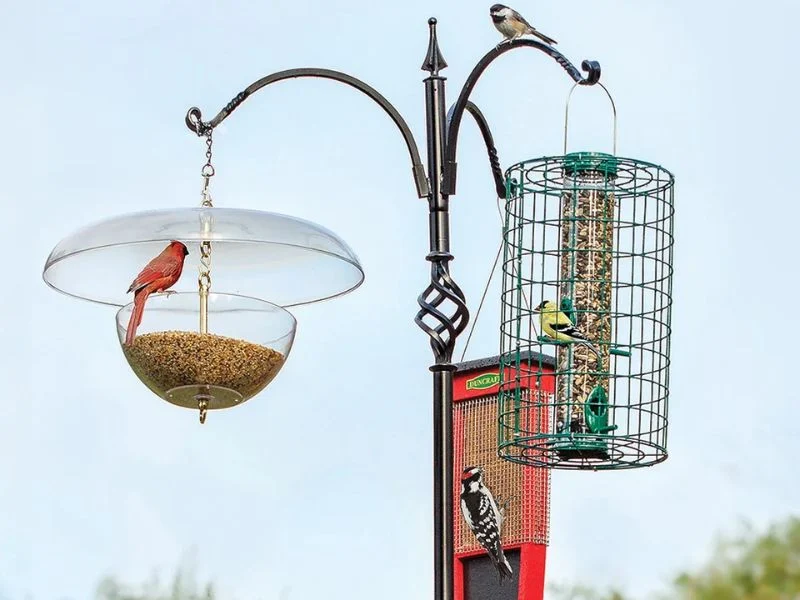
Torpedo vs Wrap vs Dome Baffles
Torpedo (cylinder) baffles are the route most feeder stations take; wrap-arounds retrofit onto standing poles; domes protect from above and double as weather roofs.
| Taper | How it mounts | Best at | Watch out |
|---|---|---|---|
| Torpedo / cylinder | Slides over the pole, collar-locked below feeders | Ground assault on pole stations | Needs a smooth, consistent pole OD |
| Wrap-around | Clamshells around an existing pole | Retrofits without unhanging feeders | Seam must close tight or claws find it |
| Dome / disk | Hangs above or below a feeder | Jumps from trees and rooflines; rain cover | Does nothing about the pole route |
Choosing is less about brand and more about attack route. Watch the yard for one morning: if the squirrel climbs, a torpedo or wrap on the pole ends it; if it launches from a fence, deck rail or branch, a dome over the feeder — or moving the pole per the rule below — is the real fix. Serious stations often run both: cylinder on the shaft, dome over the tray.
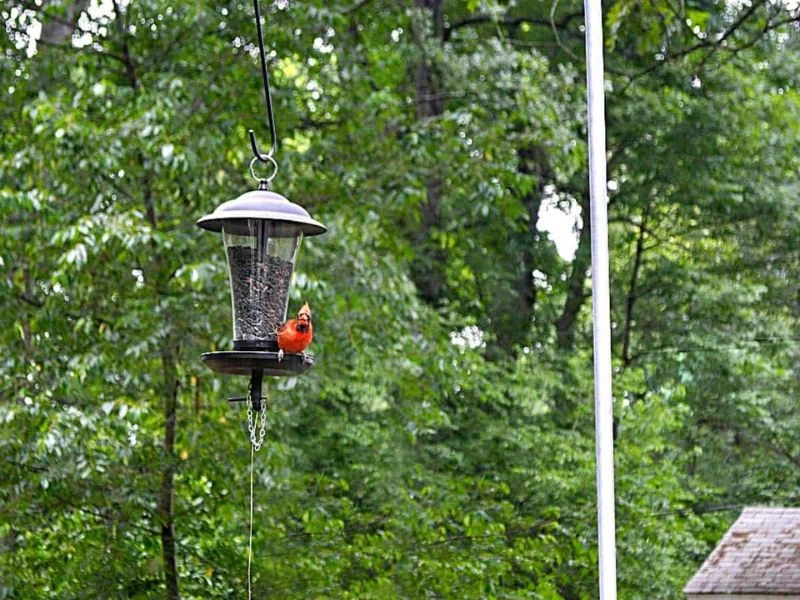
Baffle Materials and Sizing
Steel cylinders take the abuse, powder-coated aluminum splits the difference, and molded plastic wins on price — but diameter and length decide function before material does. A torpedo needs enough diameter that a squirrel cannot hug around it, and enough length that it cannot be climbed as a sleeve; the common commercial sizes exist because smaller ones kept failing field tests.
Color and gloss are not styling choices here. Glossy dark finishes shed claws better and disappear visually against the pole line, which is why the category converged on black. Texture is the silent spec: any wrap seam, rivet line or molding flash on the outer face is a ladder rung in miniature. Run a hand down a baffle before buying — if a fingertip catches anywhere, so will a claw.
Fit is the last check: the collar’s inner diameter must match the pole’s outside diameter, which is why baffle-and-pole pairs sold as one system outperform mix-and-match hardware. Mismatched pairs get shimmed with tape, tape creeps in heat, and the seal opens by August. Buying the barrier and the shaft as one engineered set is the quiet reason branded stations hold up.
The 5-7-9 Placement Rule
The 5-7-9 rule is the whole game in three numbers: squirrels can jump about 5 ft up from the ground, 7 ft across from a launch point, and will drop as far as 9 ft from above onto a feeder. Place the baffle top at least 5 ft up the pole, keep the pole 7 ft or more from fences, furniture and trunks, and keep overhanging branches 9 ft or higher above the feeder.
Run the three checks in order, because they fail independently: a perfectly baffled pole 4 ft from a fence rail is a 3-ft hop for an animal that clears 7; a sealed shaft under a low maple limb is a drop zone. The rule also explains the classic mystery — ‘the baffle worked for months, then stopped’: a shrub grew, a chair moved, a branch sagged, and one of the three numbers quietly broke.
For buyers specifying poles, 5-7-9 converts directly into hardware: the pole needs enough height above a 5-ft baffle line to hang feeders at viewing level, which is why 6–8 ft poles dominate the category and why baffle position — not total height — should drive the spec.
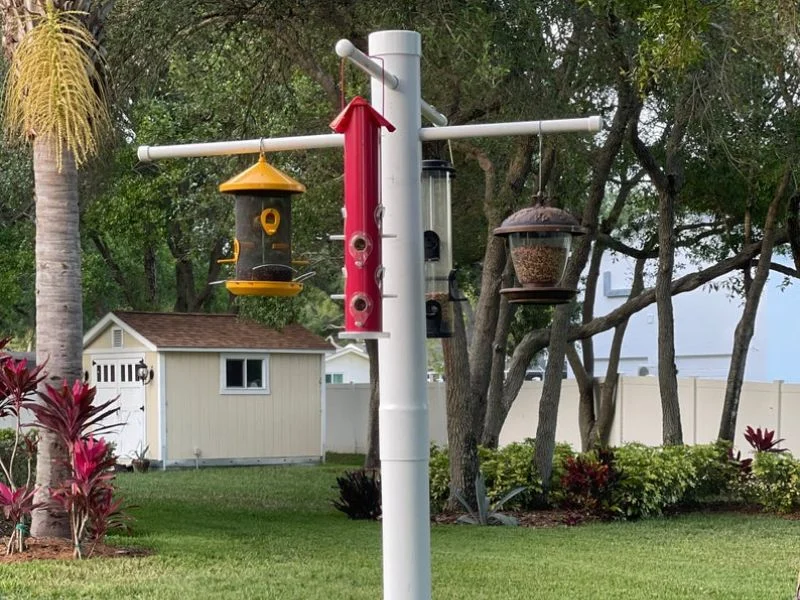
Why the Pole Decides Whether a Baffle Seals
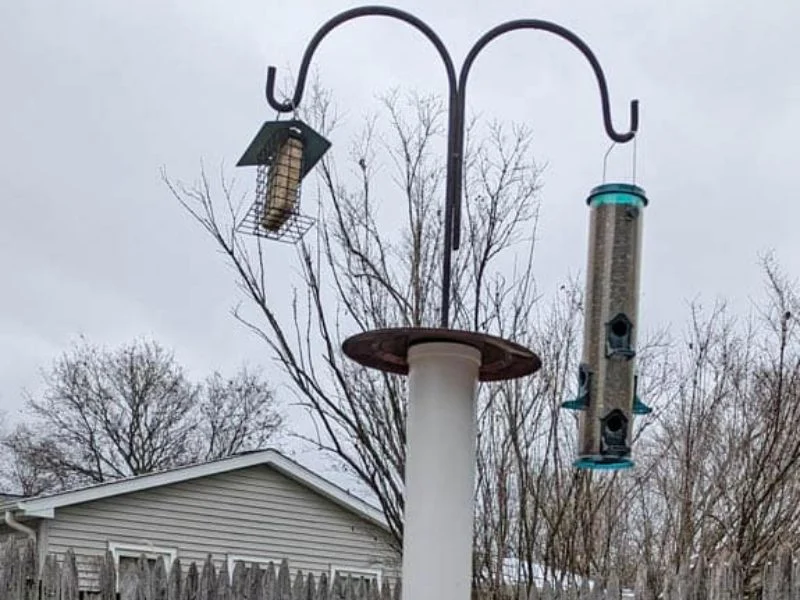
Baffles are sold as accessories but succeed or fail on the pole underneath: collar seal, shaft texture and wobble are pole properties, not baffle properties. A torpedo collar clamps a circle; welded joints, decorative twists and taper changes break that circle into gaps. Painted steel adds a second problem — chipped paint gives micro-grip exactly where the animal works hardest.
A smooth anodized shaft with a consistent outside diameter lets the collar seat flush and stay put through wind and strike loads. That is a manufacturing outcome — drawn tube, held tolerances, anodized finish — which is why baffle-true shafts are specified early on our bird feeder pole platform rather than fixed later with tape and hope.
Stability closes the loop: a pole that sways under a squirrel’s strike can bounce a marginal baffle loose over a season. Ground-socket installs hold the shaft plumb and rigid, which keeps the collar geometry sealed. If you are still choosing hardware, our feeder pole buying guide walks the full spec list.
Install Checklist and Common Mistakes
Install order: socket in plumb, shaft up, baffle collar locked with its top at 5 ft, feeders hung, then the 7-ft and 9-ft sight checks. Ten minutes of sequence beats a season of refills.
The repeat mistakes, in the order they happen: baffle mounted at hip height (a stepping stone, not a barrier); collar left finger-tight (it walks down the pole within a week); pole planted beside a fence for convenience (a 2-ft hop defeats a $40 baffle); dome hung touching the feeder (it becomes a handle); and the slow one — vegetation growing into jump range while nobody measures.
Maintenance is one habit: every seed refill, glance at three things — collar height, collar tightness, and anything new within 7 ft. Squirrels re-survey the yard daily; the owner only has to re-survey it weekly to stay ahead.
The pattern behind everything above is simple: squirrels beat gadgets, and geometry beats squirrels. Pick the baffle type for the attack route you actually observe, mount it to the 5-7-9 numbers, put it on a shaft the collar can genuinely seal against, and re-check the sight lines as the yard grows. Do those four things once, correctly, and the feeder finally belongs to the birds.
The 5-7-9 Rule: Where the Baffle Fits In
Squirrels clear about 5 ft straight up, 7 ft sideways from a launch point, and will drop around 9 ft from above — the 5-7-9 rule — and a baffle only patrols the first of those three routes.
That is the piece most baffle buyers miss. A perfectly mounted cone stops the climb, but a fence rail 6 ft away or a branch overhead turns the pole into a landing pad and the baffle into decoration. Walk the distances before you mount anything: 7 ft clear on every side, open sky above.
Use the rule in reverse when siting a new pole — it tells you where the pole can live, and the baffle handles the one approach the location cannot eliminate.
Placement Mistakes That Keep Feeding Squirrels
The four classic failures: baffle mounted too low, baffle that rocks on a bumpy shaft, feeder hung within tail-reach of the baffle top, and clearances that shrink as summer growth leans in.
Height first — the top of the baffle should sit at least 4 ft off the ground, or an athletic gray squirrel simply starts its climb above the obstacle. Fit second: a baffle that tilts on weld bumps or paint ridges leaves a paw-hold on the low side; it should sit square and spin freely. Third, hang feeders a forearm above the baffle top, not touching it — a dangling feeder is a rope ladder. And re-walk the clearances in July: the shrub that was 8 ft away in March is a launch pad by midsummer.
Five minutes with a tape measure fixes all four. Most ‘the baffle doesn’t work’ verdicts are really ‘the baffle was installed where it couldn’t.’
Season Checks and When a Baffle Isn’t Enough
Twice a season, check that the baffle still sits tight, spins free and hasn’t slid — and if raiders persist after placement is verified, the next fixes are the feeder and the seed, not more hardware on the pole.
Temperature swings work clamps loose, and a baffle that has slid a foot down the pole guards nothing. While you are there, look at the shaft finish: on anodized aluminum the clamp zone stays clean; on painted poles, check that flaking hasn’t built a grip ramp.
Persistent losses with a verified setup usually mean a drop-in from above — re-check the 9 ft overhead rule — or a raider with different physics: raccoons defeat squirrel-grade cones and want larger, sturdier baffles entirely. And weight-triggered feeders plus safflower-heavy mixes make the prize itself less worth the athletics — the pole keeps them off, the menu makes them stop trying.
Foire aux questions
Do squirrel baffles really work?
Yes — a smooth torpedo or dome baffle placed by the 5-7-9 rule stops pole climbs and most jumps; failures are almost always placement or a loose fit, not the concept.
How high should a squirrel baffle be on a pole?
Top of the baffle at least 5 ft off the ground, with the feeder 7 ft from side launch points and 9 ft below branches — the 5-7-9 rule.
What pole diameter fits standard baffles?
Most torpedo baffles clamp the common 1 in / 25 mm pole class; smooth, consistent-diameter poles hold the collar square while rusted or welded poles let it tilt.
Torpedo or dome baffle — which one?
Torpedo below the feeder for pole climbs; dome above for branch descents. Yards with trees inside nine feet often need both.
Why does my baffle tilt and stop working?
The collar is loose — usually rust pits or joint bumps on the pole. A smooth anodized pole keeps the clamp tight and the baffle level.
 English
  Español
  Français
  Deutsch
  Português