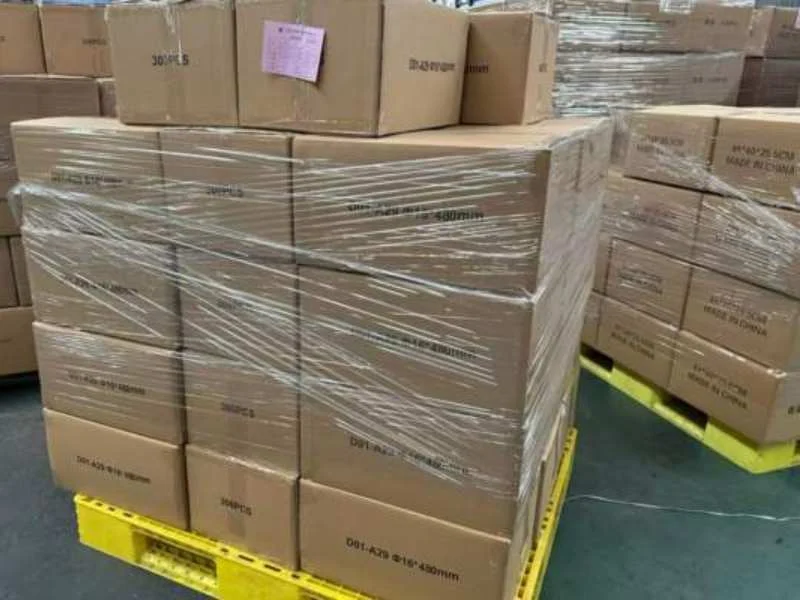
A certificate of conformance (CoC) is a supplier’s declaration that the identified goods meet the requirements of a particular order. For custom telescopic poles, it should let your receiving team connect the declaration to the correct part, drawing revision, quantity, and shipment. It is useful only when the requirements and the goods it covers are clear. Ask for the document format and supporting records before production, rather than discovering at delivery that “CoC” means something different to each party.
Define What the Pole Must Conform To
Put the acceptance basis in the purchase order. Reference the approved drawing revision, bill of materials, finish or color reference, lock configuration, attachment interface, packaging artwork, and any applicable specifications. Say which of these the CoC must cover and whether a buyer-approved deviation is permitted. A declaration against an unspecified “standard” cannot tell your team whether the delivered pole matches the version you ordered.
If your program has multiple lengths or private-label variants, give each configuration an unambiguous part number. Agree on how mixed cartons and partial shipments will be identified. The CoC should follow the actual shipment, not a prototype or a previous production run.
Check the Fields Against the Shipment
Read the CoC alongside the PO, packing list, and carton labels. Buyer-issued supplier requirements commonly call for a seller or manufacturer name, PO number, part number and revision, quantity, date, an authorized representative, and an explicit conformance statement. These are examples of what to specify, not a universal form for every order; see the PCB Piezotronics supplier guide e Boeing’s supplier clause for two buyer-specific approaches.
| Verificação | Compare with | Aguarde esclarecimentos, se necessário. |
|---|---|---|
| PO and part number | Order, carton label, packing list | They identify different goods |
| Drawing and revision | Approved production file | The revision is missing or outdated |
| Quantity and shipment ID | Packing list and delivered cartons | The declaration cannot be tied to this shipment |
| Conformance statement | PO requirements and approved deviations | The basis or exception is unclear |
| Issuer and date | Supplier record and shipment timeline | The issuer is unidentified or the date does not fit |
If the shipment includes several production lots, ask how the CoC and any attached records map each lot to its cartons. A single document can cover more than one lot if the agreed traceability makes that coverage clear. Do not invent a lot number just to make the paperwork appear complete.
Know What the CoC Does Not Prove
A signed declaration is not, by itself, a table of measured results. If the buyer needs alloy chemistry or mechanical values for an aluminum tube lot, request the specified material document and verify its lot link. Our mill test certificate guide explains how to check those values. If the buyer needs evidence that the planned process made an acceptable initial pole, use a separate inspeção do primeiro artigo report. That preproduction decision does not release every later shipment.
For finished poles, the agreed inspection record may need to show collapsed and extended length, section fit, lock operation, attachment fit, finish appearance, or packaging checks. State the test method, sample plan, acceptance limits, and report deliverables in the PO or quality agreement. A CoC may reference those records, but do not treat its signature as a substitute for evidence your program requires. Likewise, it is not automatically a regulatory approval, CE document, or proof of a third-party audit.
Resolve Mismatches Before Release
Hold the affected shipment when the paperwork and goods cannot be reconciled. Ask the supplier to identify the exact cartons and records covered, explain the discrepancy, and issue a controlled correction if the document was wrong. If the poles themselves differ from the approved specification, use your deviation or nonconformance process; a rewritten CoC cannot turn a nonconforming part into an approved one. Keep the original and corrected documents with the disposition record.
When requesting varas telescópicas de alumínio personalizadas, send the controlled drawing and your proposed CoC fields with the RFQ. Agree who will issue the declaration, what supporting reports must accompany it, and how lots and cartons will be linked. A sample document reviewed before the first shipment can prevent a receiving hold later.
Perguntas Frequentes
Is a CoC the same as a mill test certificate?
No. A CoC declares conformity to specified order requirements for identified goods. An MTC reports material test results for an identified material lot. Request both when your PO needs both kinds of evidence.
Is a CoC the same as a certificate of analysis?
No. A certificate of analysis reports specified test results for an identified material or lot; a CoC declares that identified goods meet stated requirements. The exact document names and required fields depend on your purchase order.
Can one CoC cover several pole variants?
Only if it clearly identifies each part and revision, its quantity, and the shipment or lots covered. Separate documents may be simpler when variants have different specifications.
Does a CoC mean every pole was inspected?
No. The declaration alone does not show the inspection method or sample size. Request the inspection plan and results when those are part of your acceptance requirements.
Who can issue the CoC?
The manufacturer, supplier, or another authorized party may issue it, depending on the order. Name the required issuer and authorization in the PO so the receiving team can verify the document.



 English
 Español
 Français
 Deutsch
 Português