
The best bird feeder pole is the one squirrels hate and rust never finds.
Most poles fail one of those two tests. Shoppers buy on photos and price, then spend the season watching a squirrel shimmy up a bumpy shaft or watching orange streaks spread across the lawn from a scratched steel post. The reviews say it plainly: the pole gets returned, not the feeder.
This checklist walks through the six decisions that separate a pole that lasts seasons from one that lasts weeks — height, baffle fit, arms, material, ground fixing and system packaging — in the order they actually matter.
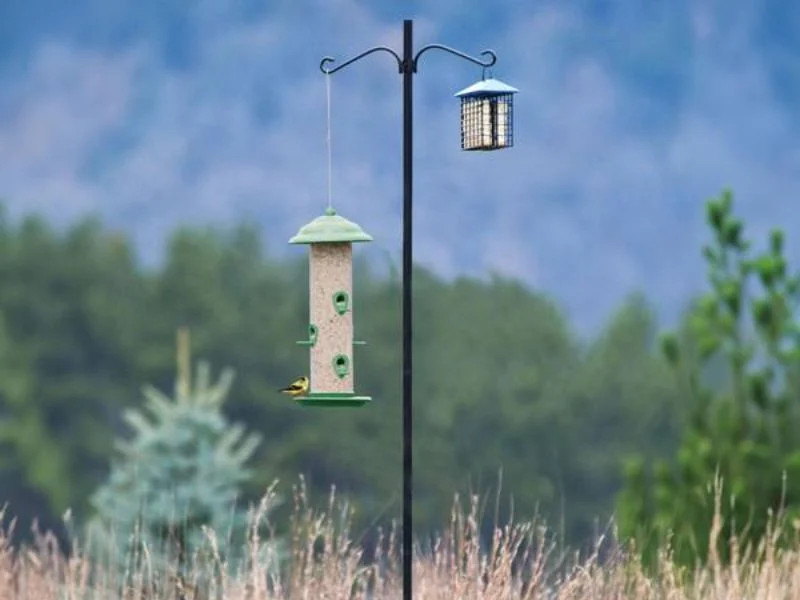
What Makes a Bird Feeder Pole the Best: Six Checks
The best bird feeder pole passes six checks: correct height, a baffle-true shaft, arms rated for loaded feeders, a rust-proof finish, a ground fix that stays vertical, and parts that work as one system. Everything else — color, decorative tops, bundled feeders — is preference.
Run the checks in that order. Height and baffle fit decide whether birds and squirrels behave; arms and finish decide whether the pole survives; ground fixing decides whether it stays straight; the system question decides whether you enjoy owning it. A pole that scores five of six still fails: a perfect pole that leans, or a rust-proof pole a baffle cannot grip, ends up in the garage either way.
The sections below take each check in turn, with the numbers where numbers exist and honest trade-offs where they do not.
Height and the 5-7-9 Rule
Hang feeders about 5 ft off the ground, at least 7 ft from the nearest launch point, and accept that squirrels can leap roughly 9 ft horizontally — that is the 5-7-9 rule, and it is the single most useful sizing guide in backyard birding.
The rule translates directly into pole shopping. Five feet of hanging height means the pole itself needs to stand taller — a 6 to 8 ft shaft above grade is the working range once you account for the arm drop and the ground fix. Seven feet of clearance from fences, railings and furniture decides where the pole can go before you buy it: measure the open spot first, then order. And the 9 ft leap is why a tall pole near a low tree branch still gets raided — the baffle stops the climb, but nothing stops a flight path.
Placement guidance from birding organizations such as the Audubon Society adds one more distance worth knowing: keep feeders either within 3 ft of a window or more than 30 ft away, so window strikes stay survivable or stop happening. A movable pole — one with a socket rather than a concrete footing — lets you correct a bad first guess.
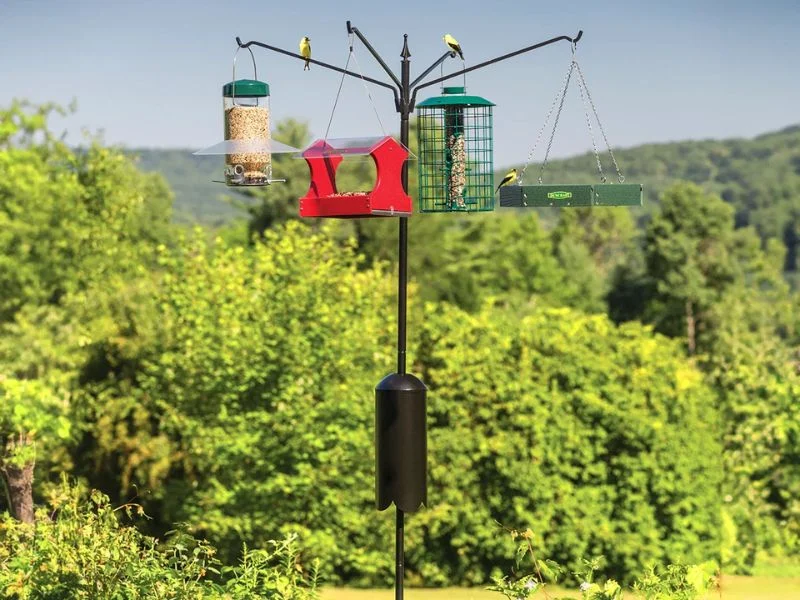
Baffle Fit: The Shaft Decides the Squirrel Fight
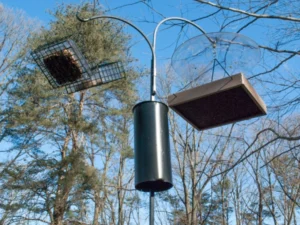
A baffle only works on a shaft it can seat on: smooth, consistent diameter, no weld bumps, no sudden taper. That is the quiet reason cheap poles get climbed — not because the squirrel is clever, but because the baffle rocks, tilts and leaves a paw-hold.
Check the spec before the checkout: baffle manufacturers list the shaft diameters they clamp to, and the common cone and torpedo designs expect a round, even section below the feeder arms. Poles welded from mixed stock, or painted so thickly the diameter varies, fight the clamp. Anodized aluminum shafts hold diameter tightly because the finish is microns thick, not a paint layer — which is also why baffles on them stay put through temperature swings.
Position the baffle so its top sits at least 4 ft off the ground; lower, and a good jumper simply starts above it. If the pole system you are considering sells its own matched baffle, that is a point in its favor — matched parts remove the guesswork this whole section exists to warn about.
Arms and Capacity: Count Loaded Feeders, Not Hooks
Rate the pole by loaded weight, not by hook count: a filled tube feeder runs 2–4 lb, a stocked suet cage more, and a wet seed load more still. Four hooks mean nothing if the arms sag under two full feeders.
Look at how the arms meet the shaft. Machined or socketed arms carry load into the pole; thin bent-wire arms carry it into their own bend, which opens over a season. If you plan a quad setup — seed, suet, nectar, water — favor systems that state a per-arm rating or show the arm cross-section, and leave headroom: birds land, wind swings, and the dynamic load is always more than the bag weight suggests.
Think about spacing too. Arms that hold feeders close to the shaft keep leverage low but let seed hulls pile in one spot; longer reaches spread the mess and the perching room at the cost of more torque on the joint. There is no free lunch — just a trade you should choose knowingly.
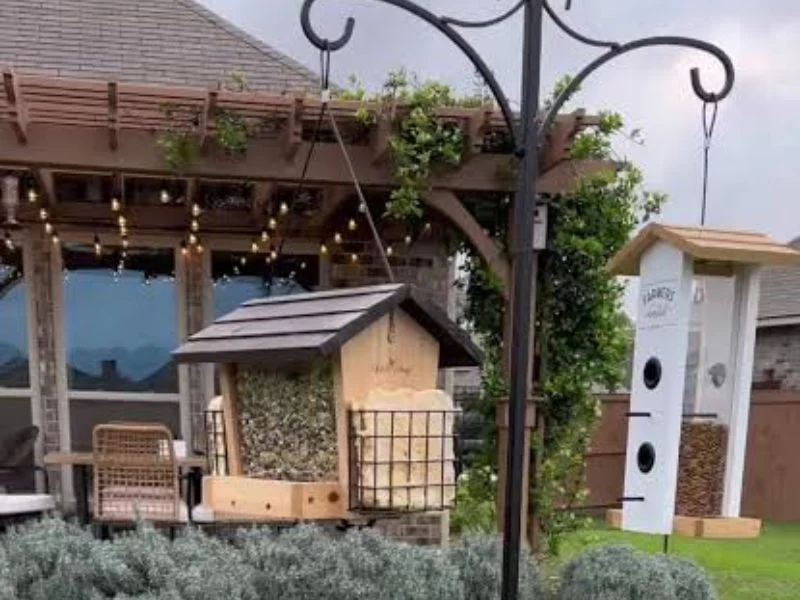
Material: Why Aluminum Wins the Long Game
Anodized aluminum is the only common pole material that ignores weather: no rust, no repainting, no streaks on the lawn. Painted steel is strong and cheap but bleeds rust at every scratch — and a pole lives its whole life being scratched by baffles, hooks and weather. Wrought iron looks beautiful, weighs the most, costs the most, and needs paint maintenance like any iron fence.
Weight cuts both ways. Steel’s heft feels reassuring in the store and punishing during installation and every reposition after. Aluminum’s lightness makes the ground fix do the stability work — which is the correct engineering answer, because stability should come from the footing, not from mass you have to wrestle.
The honest summary: iron for ornament gardens with a maintenance habit, steel where budget rules and rust is accepted, anodized aluminum for everyone who wants the pole to be a one-time decision.
Ground Fixing: Straight Today, Straight in March
A pole is only as good as what holds it vertical: a molded ground socket or auger base beats a bare spike, and anything beats stomping a pole into a wet lawn.
Sockets win for three reasons. The pole lifts out for mowing and winter storage; the socket itself goes in plumb once, with a level, and stays that way; and frost heave moves the socket-and-pole together instead of levering the pole sideways. Auger-style bases suit renters and rocky soil — they bite deep without digging — while spike bases are the compromise: quick, cheap, and the first thing to lean after a soaking rain.
Whichever fix you choose, check the interface: the pole should drop into its base with no slop. Rattle at the base multiplies at the feeder, and birds notice a swaying table more than we do.
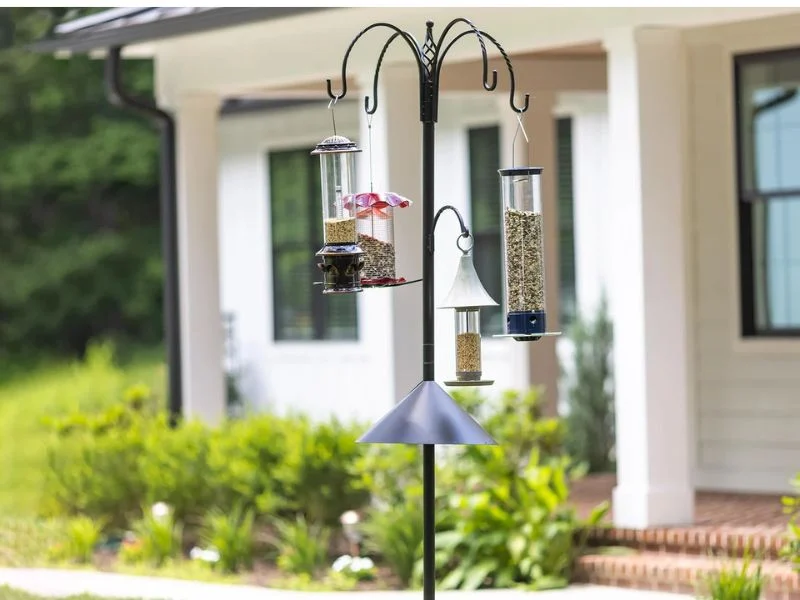
Buying as a System — and Buying for a Shelf
The best value is a matched system — pole, arms, baffle and base engineered together — because the failure points in this category are almost always at the joints between mismatched parts.
For a household, that means favoring pole systems over parts-bin assemblies. For a garden brand or retailer reading this with a different question — what should our line carry? — the same logic scales: the returns data behind feeder poles points at rust and raided feeders, which means anodized shafts and baffle-true diameters are not premium options, they are the return-rate fix. Our bird feeder pole platform page covers how the OEM version of that decision works — shaft specs, arm counts, finishes and boxed-system packaging under your brand.
Either way, buy the system once. The pole is the one part of backyard birding that should never need a second purchase.
Preguntas frecuentes
What is the 5 7 9 rule for bird feeders?
Squirrels can jump about 5 ft up, 7 ft across from a launch point, and drop about 9 ft from above — so hang feeders 5 ft high, 7 ft from structures, with clearance overhead. Size and place the pole to those distances.
How tall should a bird feeder pole be?
Tall enough to hang feeders about 5 ft off the ground — in practice a 6 to 8 ft shaft above grade once arm drop and the ground fix are counted.
What stops squirrels from climbing a feeder pole?
A properly seated baffle on a smooth, consistent-diameter shaft, mounted so its top sits at least 4 ft up — plus placement outside the 7 ft jump radius.
Are metal or wooden feeder poles better?
Metal, decisively: wood invites climbing grip and rots at the ground line. Among metals, anodized aluminum avoids the rust that ends most painted steel poles.
How many feeders can one pole hold?
Count loaded weight, not hooks: quality multi-arm systems handle a filled feeder per arm, but check the per-arm rating — a stocked suet cage or wet seed load runs well past the bag weight.
 English
  Español
  Français
  Deutsch
  Português