
Staking tomatoes decides whether August brings fruit or a collapsed tangle.
Every summer the same scene repeats: healthy June plants sprawl by July, fruit rots on the soil, and the flimsy stakes that came with the starter kit lean at forty-five degrees. The support method — and the stake material — was decided months earlier.
This guide covers which method fits which tomato type, when to install, how to tie, and why the stake itself is usually the weakest link.
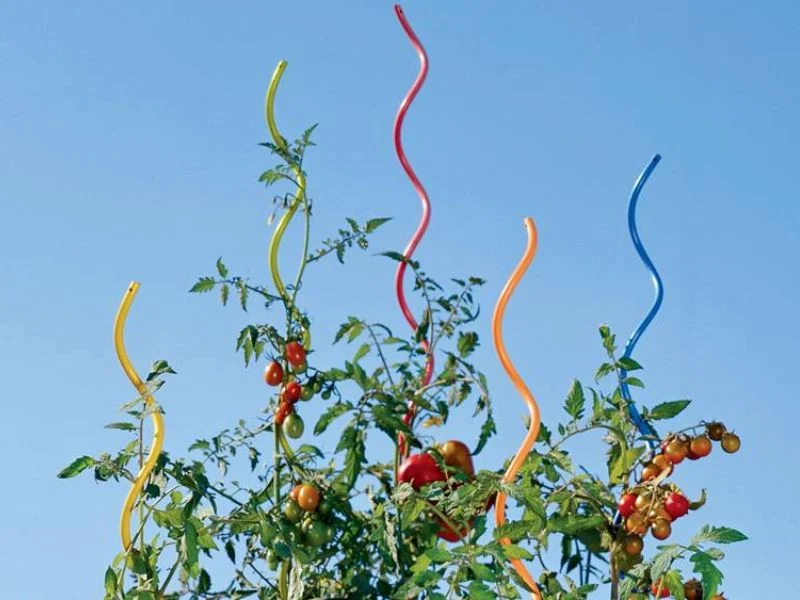
Which Staking Method Fits Which Tomato
Determinate (bush) tomatoes need one sturdy stake or a short cage; indeterminate vines need a tall stake, ladder or trellis that keeps climbing with them. Matching method to growth habit is the whole game — a 3 ft cage on an 8 ft vine fails by July.
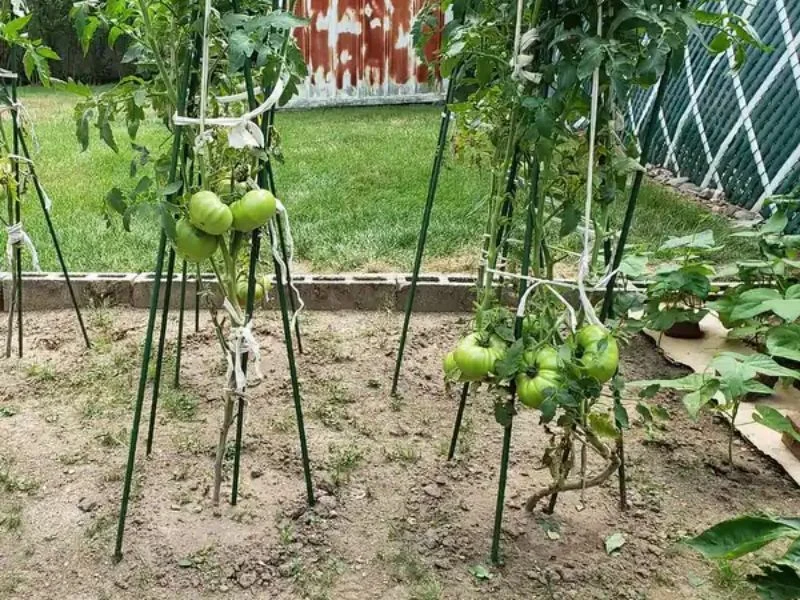
Determinates stop around 3–4 ft and set fruit in one flush: a single stake at planting plus two ties usually carries them. Indeterminates keep extending until frost and can pass 6 ft; they want a 5–6 ft stake driven deep, a stake-ladder, or a cage tall enough to hand fruit over. University trial guidance such as the University of Minnesota Extension consistently pairs habit with structure before brand or price.
| Method | Mejor para | Altura | Watch out |
|---|---|---|---|
| Single stake | Determinates, tight rows | 4–5 pies | Weekly tying |
| Cage | Determinates, low effort | 3–4 ft | Cheap cages fold |
| Stake ladder / grid | Indeterminates | 5–6 pies | Needs connectors |
| Trellis + twine | Rows, greenhouses | 6 ft+ | Setup time |
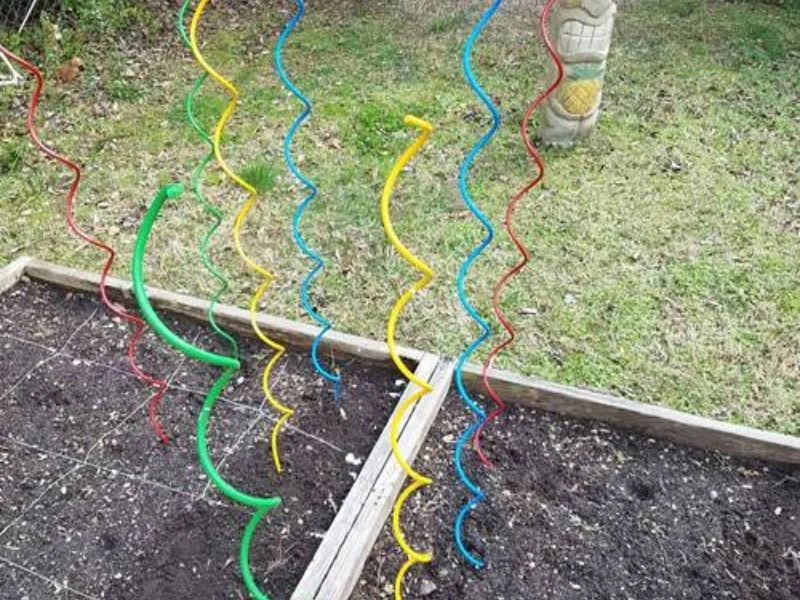
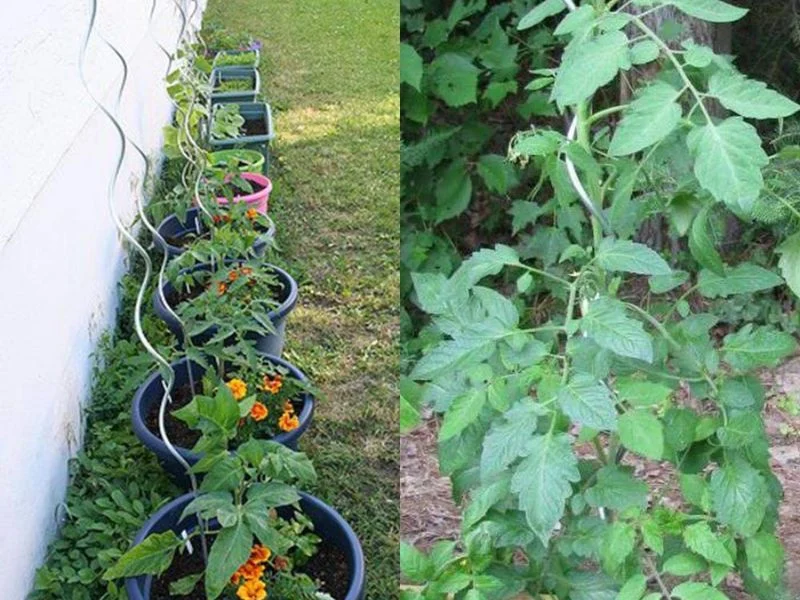
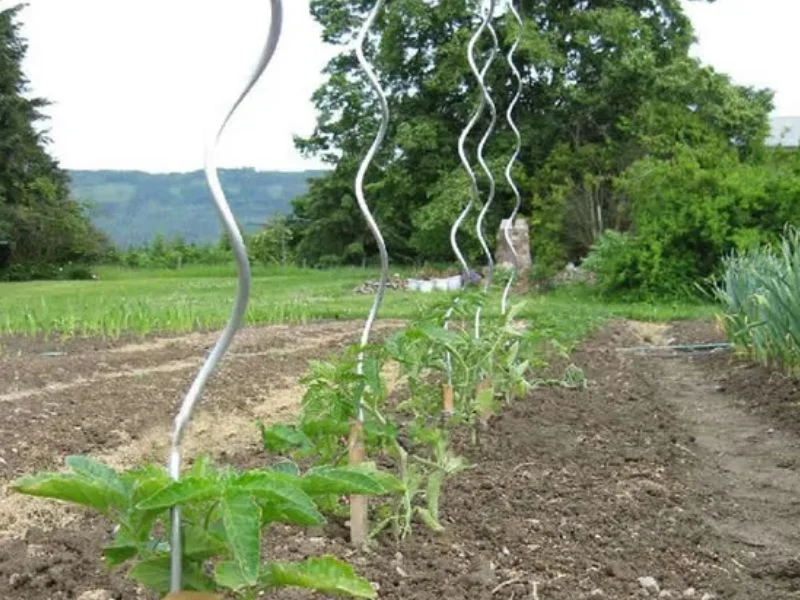
| Spiral stake | Patio pots | 4–5 pies | Heavy trusses slip |
When to Stake Tomato Plants
Stake at transplanting — driving a stake into a root ball three weeks later tears the roots you spent spring growing. Set the support first, plant beside it, and the roots grow around the obstacle instead of being cut by it.
Drive stakes 10–12 in deep in open beds, deeper in loose or sandy soil. In windy plots, set stakes on the prevailing-wind side so the plant leans onto the support rather than away from it. If you missed the window, place the stake a hand-width from the stem and angle it in slowly.
Why the Stake Material Decides August
Most staking failures are material failures: rusted steel snaps at the soil line and bamboo molds and splits — usually in the same week the fruit load peaks. The soil line is the killer: moisture cycles concentrate exactly where bending load is highest.
Painted steel rusts from the first scratch, and the streaks stain beds before the stake fails. Bamboo is compostable — which is the problem, since composting begins in the bed. Anodized aluminum stakes sit between: the color is an oxide layer rather than paint, so there is nothing to chip, they flex under gusts and return, and the same stakes go back in next spring. That reuse math is why garden brands are shifting the aisle; our aluminum plant support stakes program builds exactly this class, with moulded connectors that turn the same rods into cages and ladders.
How to Tie Tomatoes Without Cutting Stems
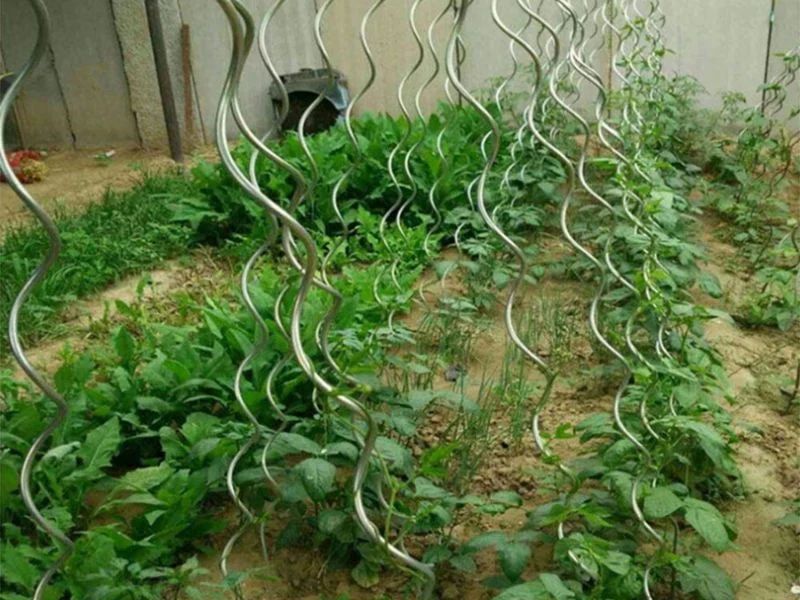
Use soft, wide ties in a figure-eight: one loop around the stake, a twist, one loose loop around the stem. The twist keeps the stem from rubbing the stake; the loose loop leaves room to thicken.
Tie every 8–12 in of new growth, always just above a leaf node so the tie cannot slide down. Skip bare wire and zip ties — they girdle a thickening stem in weeks. Strips of cloth, garden velcro or foam wire all work; check ties when you water and loosen any that press in.
A Quick Season Checklist
Set support at transplant, tie weekly, prune below the first cluster, and lift fruit-heavy trusses onto the frame before storms. Ten minutes a week beats one wrecked morning in August.
Late season, stop tying the leader on indeterminates and top the vine about a month before first frost — it pushes energy into ripening what is already set instead of new height the calendar cannot fund.
Stake at Transplant, Not at First Flop
The right time to stake a tomato is the day it goes in the ground — pushing a stake in beside a mature plant tears the root ball you spent six weeks growing. Roots on an established plant reach as far sideways as the leaves do, and a stake driven through them costs fruit you will never see.
Staking at transplant also changes how you tie. A young plant trained to its stake from the first week grows a straighter leader and needs looser ties, while a rescued sprawler has to be bent back against its own habit — stems kink, flower trusses snap, and the plant spends energy healing instead of setting fruit.
If the season got away from you and the plants are already down, stand them up in stages: one gentle lift per week, tied a little higher each time, rather than one heroic straightening.
Spacing, Depth and Soil Grip
Drive stakes 8–12 in into the soil, a hand’s width from the stem, on the downwind side of the prevailing weather. Depth is what the August test measures: a stake carrying a fruit-loaded plant in a summer storm sees far more force than the same stake in June.
The hand’s-width offset matters twice. Close enough for short, secure ties — but far enough that the stake does not sit in the densest root zone or funnel water straight down the stem, where soil-borne disease starts. In loose or raised-bed soil, go deeper rather than thicker: grip comes from depth, not diameter.
Anodized aluminum stakes hold a practical edge here — the smooth surface drives in with less soil disturbance than rough wood, and pulls out clean at season’s end instead of snapping off at the soil line the way weathered bamboo does.
Determinate vs Indeterminate: Two Different Support Jobs
Determinate (bush) tomatoes need containment; indeterminate (vining) tomatoes need a ladder — match the support to the growth habit before choosing hardware. The label on the seedling tag decides more about your stake order than anything else in this guide.
Determinate varieties stop at a set height, fruit in one main flush, and mostly need to be kept off the ground: a cage, or a short stake-and-corral arrangement, does the job. Indeterminate varieties keep climbing until frost — six feet is routine, more is common — and want a tall single stake or a stake-and-string system they can be trained up week by week.
This is where a connector-based stake system earns its place: the same rods build a cage around a bush variety and a tall tied ladder for a vining one, so a mixed garden runs on one hardware family instead of two purchases. Retail programs read the same way — one SKU family covering both habits is the difference between a tidy shelf and a confusing one.
Ties That Hold Without Strangling
Tie in a figure-eight — around the stake, cross between, loop the stem loosely — with something soft and slightly stretchy; the stake takes the load, the tie only steers.
The figure-eight is the whole trick: the crossed middle acts as a cushion so wind moves the plant against fabric, never against a hard edge. Strips of old t-shirt, soft garden tape and velcro plant ties all work; bare twine and zip ties both cut into a stem that doubles in thickness by August.
Check ties every couple of weeks in peak season. A tie that was loose in June is a tourniquet by harvest — and a girdled stem chokes exactly when the fruit load peaks. With a smooth aluminum stake, ties also slide up for repositioning instead of snagging on splinters, one more small argument for hardware that outlives the twine.
End of Season: Pull, Wipe, Store
Pull stakes at final harvest, wipe off soil, and store them dry — the whole job takes minutes with aluminum and is the reason the same stakes work next April. Leaving stakes out over winter is how wood rots at the soil line and how ties left knotted become next spring’s ten-minute puzzle. Bundle the rods, drop the connectors in a jar, and the garden’s support system winters in a corner of the shed instead of in the compost.
Preguntas frecuentes
What is the best way to stake tomato plants?
Match the method to the plant: one sturdy 4–5 ft stake for determinate bushes, a 5–6 ft stake, ladder or tall cage for indeterminate vines — installed at transplanting, tied every 8–12 inches with soft figure-eight ties.
How deep should a tomato stake go?
10–12 inches in firm beds and deeper in loose or sandy soil — depth at the soil line is what resists the sail-load of a fruiting plant in wind.
Should I stake or cage tomatoes?
Cage determinates if you want low effort; stake or ladder indeterminates because vines outgrow standard cages by midsummer.
Why do my tomato stakes keep breaking?
Almost always material: painted steel rusts through at the soil line and bamboo molds and splits. Flex-and-return aluminum survives multiple seasons at the same diameter.
When should tomatoes be staked?
At transplanting — setting the stake first protects the root ball; adding one later means angling it in a hand-width from the stem, slowly.

 English
  Español
  Français
  Deutsch
  Português