Aluminum is everywhere—but choosing the right grade is where most projects go wrong.
You may start with a simple requirement: lightweight, corrosion-resistant, easy to process. But once you look at actual options—6061, 6063, 5052, 7075—the decision quickly becomes unclear.
Pick the wrong alloy, and the consequences are immediate. Tubes may bend. Surfaces may anodize unevenly. Extrusion may become unstable or expensive. In outdoor products like perches télescopiques or pool equipment, poor alloy selection directly reduces product lifespan.
This guide gives you a practical answer. Not just what aluminum alloy grades are—but which ones you should actually use, and why.
What Are Aluminum Alloy Grades? (Quick Answer)
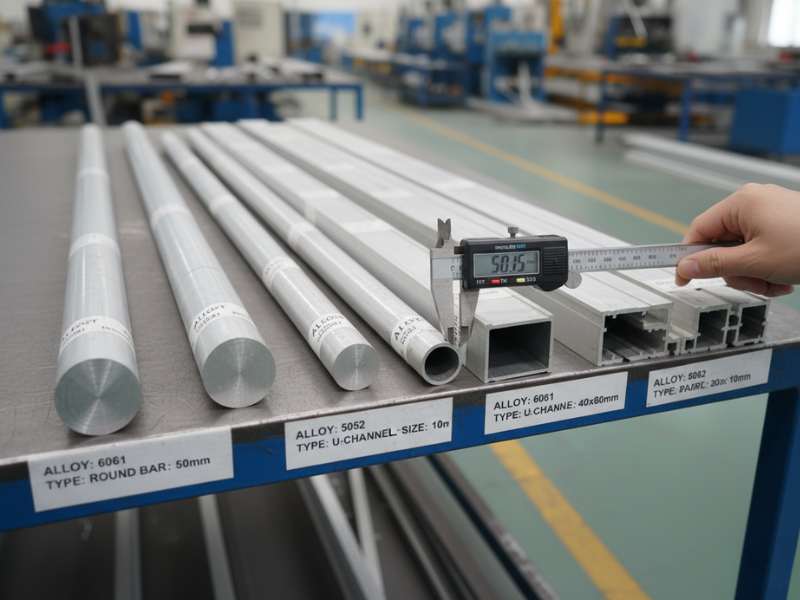
Aluminum alloy grades are standardized material codes that define composition, strength, corrosion resistance, and processing behavior.
They follow a 4-digit system established by the Association de l'aluminium:
- First digit → alloy series (1000–7000)
- Remaining digits → specific alloy variations
Exemples :
- 6063 → optimized for extrusion and surface finish
- 6061 → higher strength and machinability
- 7075 → very high strength for demanding applications
Do not confuse nuance d'alliage avec temper (T5, T6).
- Grade = chemical composition
- Temper = heat treatment
Both affect performance—but grade determines the foundation.
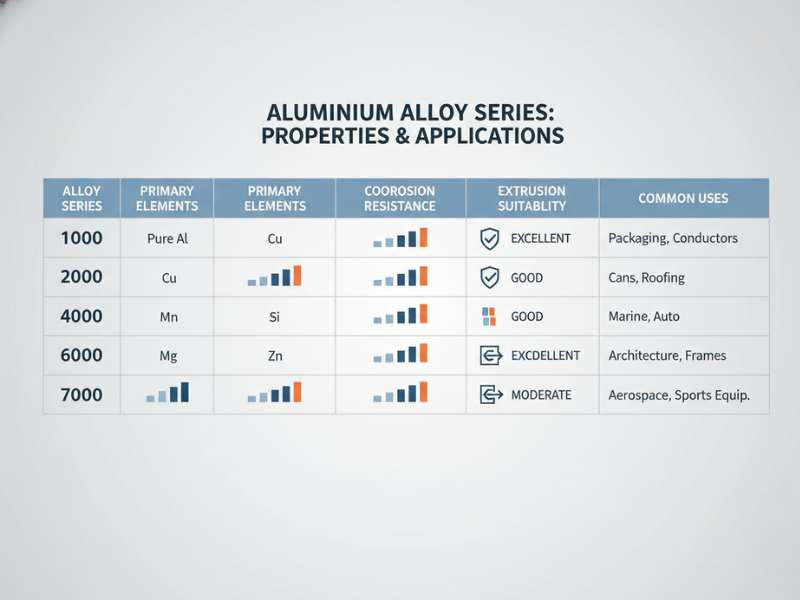
Aluminum Alloy Series Chart (1000–7000 Overview)
Table: Aluminum Alloy Series Comparison
| Series | Main Element | Force | Corrosion | soudabilité | Extrusion | Utilisation typique |
|---|---|---|---|---|---|---|
| 1000 | Pure Al | Très faible | Excellent | Excellent | Pauvre | Électrique |
| 2000 | Cuivre | Très élevé | Pauvre | Pauvre | Pauvre | Aerospace |
| 3000 | Manganese | Moyen | Bien | Bien | Équitable | Panels |
| 4000 | Silicium | Moyen | Bien | Bien | Bien | Soudage |
| 5000 | Magnésium | Moyen-élevé | Excellent | Excellent | Équitable | Marine |
| 6000 | Mg + Si | Moyen | Bien | Bien | Excellent | Extrusion |
| 7000 | Zinc | Très élevé | Équitable | Pauvre | Pauvre | Aerospace |
Direct answer:
If your product involves extrusion, anodisation, or outdoor use, you will almost always choose between:
👉 5000 series vs 6000 series → and most often, 6000 series wins
Aluminum Alloy Selection Cheat Sheet (Fast Decision Tool)
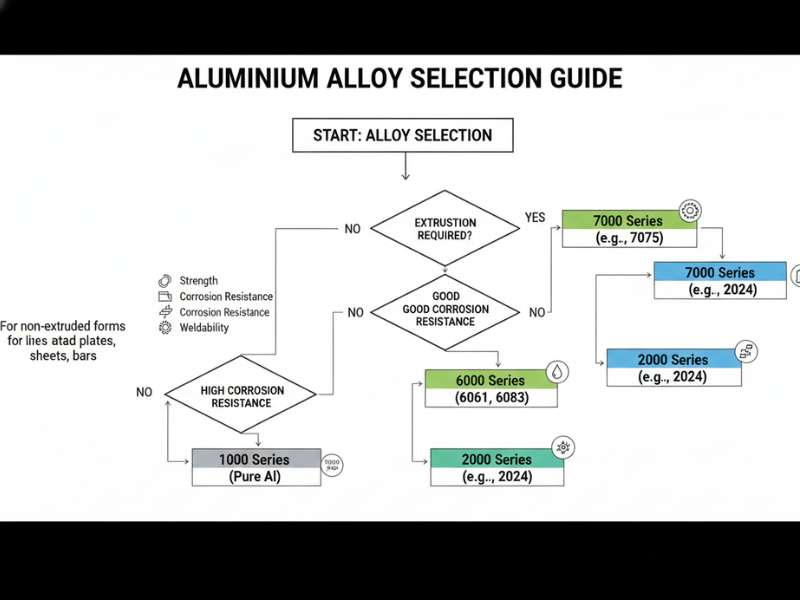
If you are making → telescopic poles → choose 6063
If you need higher strength → choose 6061
If corrosion is critical → choose 5052 or 5083
If extreme strength is required → choose 7075 (rare case)
This reflects real-world OEM decisions:
- Most extrusion products → 6063
- Structural upgrades → 6061
- Harsh outdoor environments → 5052
What Each Aluminum Series Is Really Used For
1000–4000 Series (Limited Relevance)
- Too soft or too specialized
- Rarely used in structural extrusion products
5000 Series (Corrosion Priority)
- Excellente résistance à la corrosion
- Suitable for marine and outdoor environments
- Less ideal for complex extrusion
6000 Series (Core Industrial Alloy)
- Heat-treatable
- Excellent extrusion performance
- Stable anodizing results
👉 This is the dominant alloy group for aluminum products
7000 Series (High Strength, Limited Use)
- Extremely strong
- Difficult to process
- coût plus élevé
👉 Typically unnecessary for extrusion-based products
Most Important Aluminum Grades (Real Buyer Focus)
6063 Aluminum (Extrusion Standard)
- Excellent surface finish
- Best anodizing compatibility
- Ideal for long, thin, visible profiles
Used in:
- perches télescopiques
- Aluminum tubes
- Pool equipment
6061 Aluminum (Strength Upgrade)
- Higher strength than 6063
- Good machinability
Used in:
- Connectors
- Éléments structurels
5052 Aluminum (Corrosion-Focused)
- Forte résistance à la corrosion
- Performs well in humid and chemical environments
5083 Aluminum (Heavy-Duty Marine)
- Higher strength than 5052
- Used in demanding outdoor structures
7075 Aluminum (Over-Specified Option)
- très haute force
- Poor extrusion behavior
👉 Rarely suitable for your product category
6061 vs 6063 vs 5052 vs 7075 (Key Comparison)
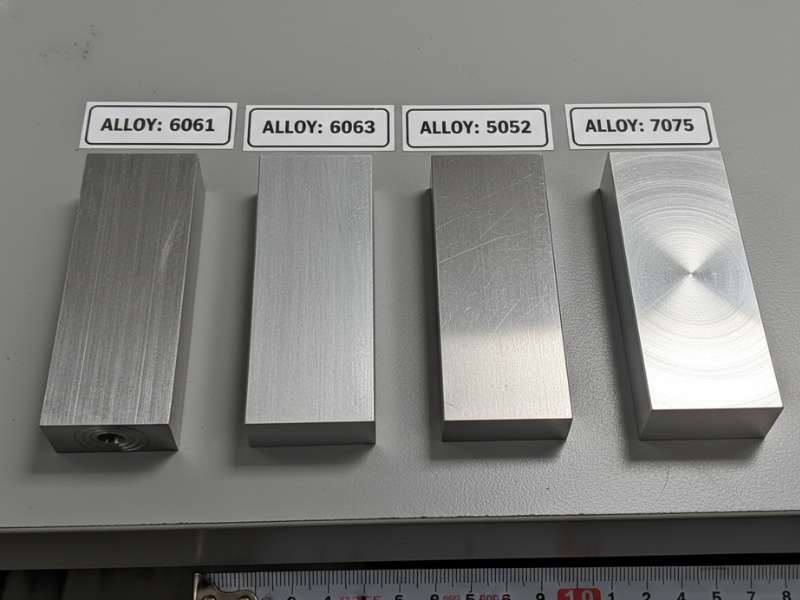
Table: Aluminum Grade Comparison
| Grade | Force | Corrosion | Extrusion | anodisation | Coût | Meilleure utilisation |
|---|---|---|---|---|---|---|
| 6063 | Moyen | Bien | Excellent | Excellent | Moyen | Poles, tubes |
| 6061 | Moyen-élevé | Bien | Bien | Bien | Moyen | Structure |
| 5052 | Moyen | Excellent | Équitable | Bien | Moyen | De plein air |
| 7075 | Très élevé | Équitable | Pauvre | Équitable | Haut | Aerospace |
Conclusion:
- 6063 → best for extrusion + appearance
- 6061 → best for strength
- 5052 → best for corrosion
- 7075 → only when absolutely necessary
Best Aluminum Alloy for Extrusion
6063 is the preferred aluminum alloy for extrusion applications.
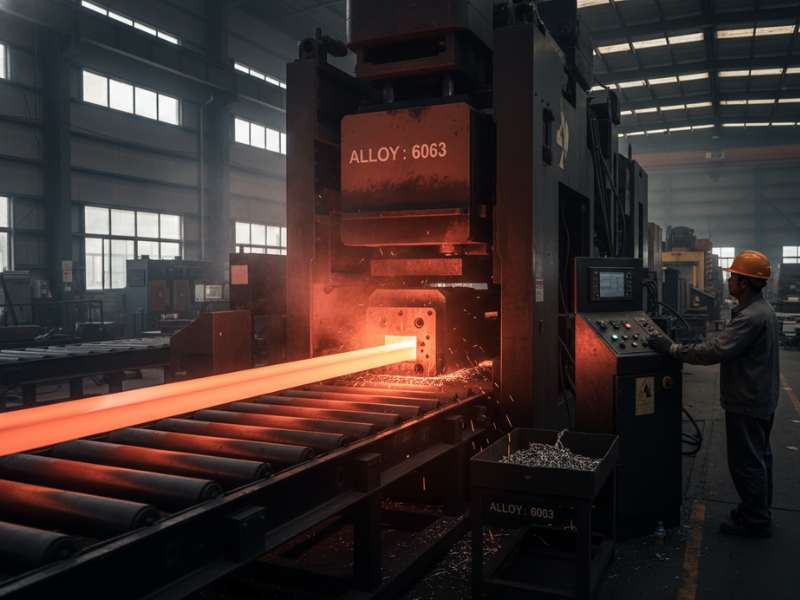
Reasons:
- Smooth material flow during extrusion
- Consistent profile accuracy
- Superior anodized surface
Selon Hydro’s alloy data, 6063 is widely used when surface finish and extrusion stability are critical.
👉 This is why most aluminum tubes and profiles use 6063
Aluminum Alloy for Telescopic Poles
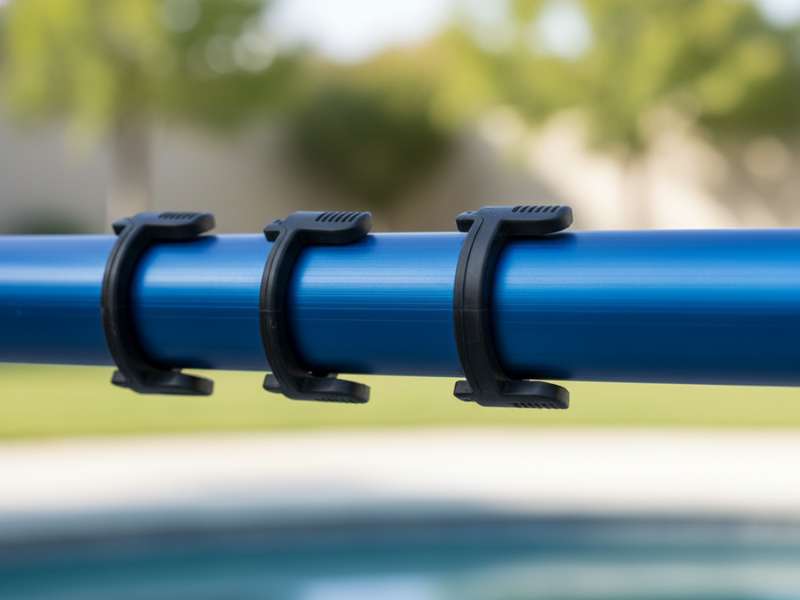
Telescopic poles require a specific combination:
- Léger
- Rectitude
- Smooth sliding between sections
- Durable surface finish
Recommended solution:
- 6063 → main tubes
- 6061 → locking components
Why 6063 dominates:
- Better anodizing consistency
- Lower extrusion stress → straighter tubes
- Smoother surface for sliding
Why not 7075:
- Poor extrusion performance
- coût élevé
- No practical advantage
!alt aluminum telescopic pole extrusion anodized smooth sliding tube industrial product
Aluminum Alloy for Pool Cleaning Equipment
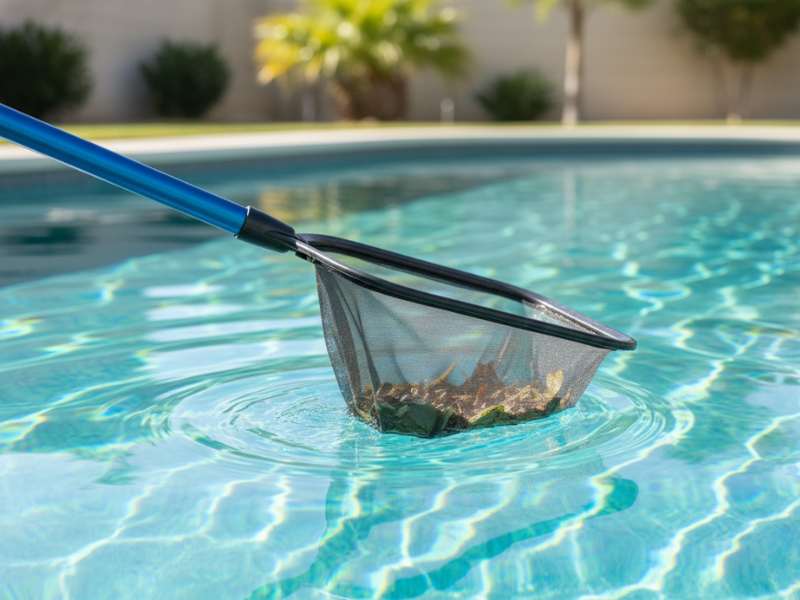
These products operate in:
- Water
- Chlore
- UV exposure
Recommended alloys:
- 6063 → main structure
- 5052 → corrosion-critical parts
Point clé :
6000 series provides the best balance between corrosion resistance and manufacturability.
!alt aluminum pool cleaning pole anodized corrosion resistant outdoor telescopic handle
Aluminum Alloy for Bobine de couverture de piscine Tubes
Requirements:
- Long, straight extrusion
- Stable wall thickness
- Consistent surface finish
👉 6063 is the industry standard
Aluminum Alloy for Connectors and Joints
These parts require:
- force supérieure
- Thread durability
👉 6061 is preferred
How to Choose the Right Aluminum Alloy (Practical Model)
Step 1: Define Application
- Telescopic pole → 6063
- Structural part → 6061
- Outdoor corrosion → 5052
Step 2: Match Manufacturing Process
- Extrusion → 6063
- CNC machining → 6061
- Welding → 5000 series
Step 3: Evaluate Surface Requirements
- Decorative anodizing → 6063
- Functional finish → flexible
Step 4: Check Supply Chain Factors
- Extrusion die cost and lead time
- exigences de quantité minimale de commande
- Surface treatment consistency
Common Mistakes When Selecting Aluminum Grades
- Choosing higher strength than required
- Ignoring extrusion behavior
- Overlooking corrosion conditions
👉 These increase cost without improving performance.
Aluminum Alloy Grades FAQ
What aluminum alloy is best for telescopic poles?
6063 is the standard choice, often combined with 6061.
What is the best aluminum for extrusion?
6063 offers the best balance of performance and surface finish.
Is 6061 stronger than 6063?
Yes, but 6063 performs better in extrusion and anodizing.
Which aluminum is best for outdoor use?
5000 and 6000 series are commonly used.
Why is 6063 widely used for aluminum tubes?
Because it provides consistent extrusion and high-quality surface finish.
The Real Logic Behind Aluminum Selection
Most buyers focus on strength or price. But real decisions are based on:
- Processing stability
- Qualité de surface
- Cost efficiency
- Product lifespan
For extrusion-based products, the industry has already converged:
👉 6063 for form and finish
👉 6061 for strength where needed
Work With a Manufacturer That Understands Aluminum
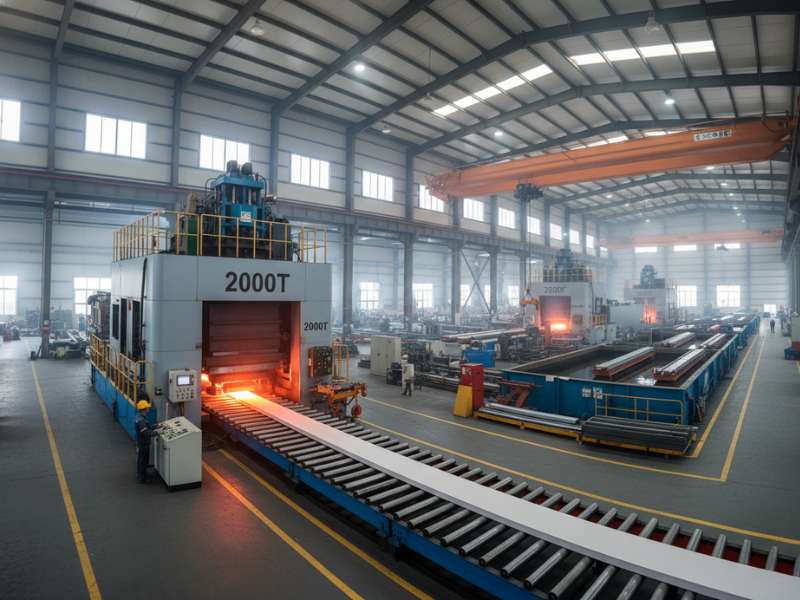
Material choice is only part of the equation. Production capability matters just as much.
A reliable supplier should offer:
- Alloy selection guidance
- Stable extrusion processes
- Consistent anodizing quality
- Predictable lead times
For example, Xingyong operates 14 extrusion presses (350T–2000T) and automated anodizing lines, supporting OEM production of aluminum telescopic poles and équipement de piscine with strict quality systems.
Build Better Products Starting with the Right Alloy
Choosing the correct aluminum alloy is not a small decision. It defines how your product performs, how it looks, and how long it lasts.
Start with the right material—and everything downstream becomes easier.