
Capabilities
Anodizing & Surface Finishes for Aluminum Telescopic Poles
Poolpole runs two automatic anodizing lines in our Jiangsu factory — black, matte, satin, blue, gold, champagne, silver, and bronze finishes with controlled film thickness for chlorine, salt-water, and UV resistance at the pool deck. Color-matched across batches, sandblast-prepped for consistent friction between telescopic sections.

2Automatic Anodizing Lines
8Standard Finish Colors
10–15μm Film Thickness Range
5Sandblast Stations Feeding the Lines
Process
Anodizing on Two Automatic Production Lines
Extruded aluminum tubes move from extrusion to two large automatic anodizado lines without leaving the building. Three long-bar sandblasters and two short-bar units feed the lines for surface prep — controlling the micro-roughness that the locks need to bite properly between telescopic sections.
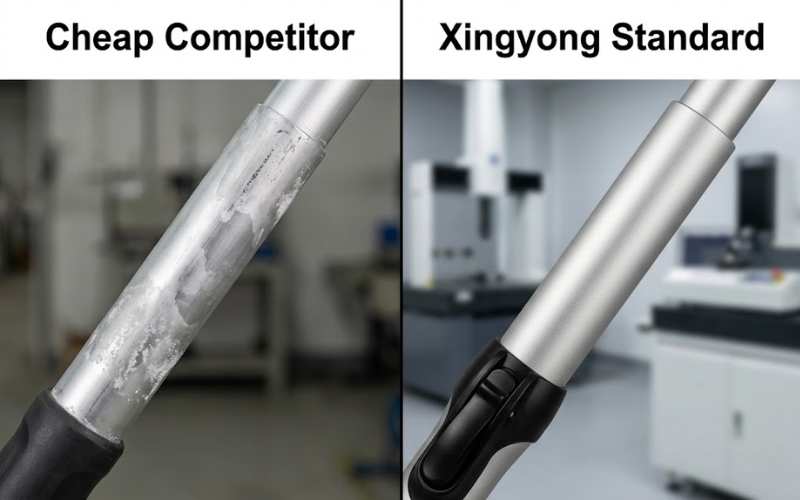
Standard film thickness is 10–15 μm, tunable to spec. Color is verified under a calibrated light box on every batch; film thickness is gauged before parts leave the line. An on-site wastewater treatment station handles all anodizing effluent — see ISO 14001 certification for environmental management scope.
Finishes
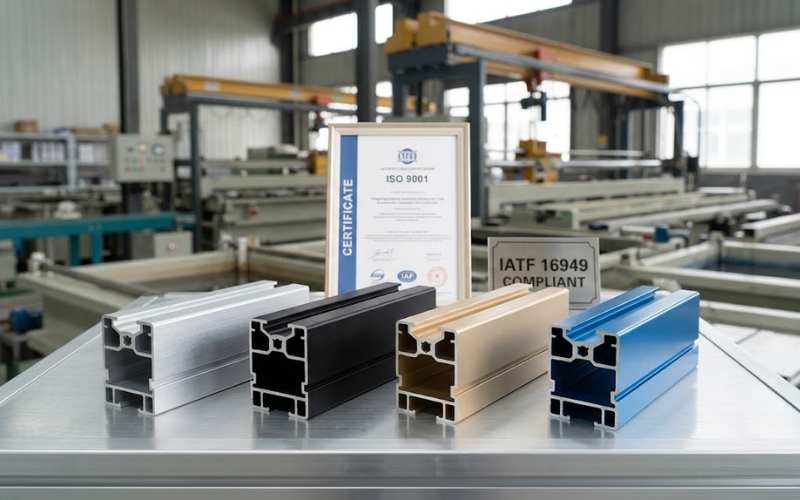
8 Standard Anodized Colors for Pool Pole Brands
Poolpole holds eight stock-ready anodized finishes — the colors pool brands order most often. Custom colors are available on request with a small color-match setup fee.
- Negro — premium pool-cleaning pole standard, hides handling marks
- Matte silver — neutral, photographs well in retail packaging
- Satin — softer than matte, brushed-metal aesthetic
- Blue — classic pool-product color, multiple shades stocked
- Gold — premium-tier brands, warm accent
- Champagne — neutral warm, popular for cover-reel tubes
- Plata — natural anodize finish, lowest cost
- Bronze — outdoor furniture and reel-tube applications
Por qué es importante
Anodizing for Pool-Side Chlorine, Salt & UV
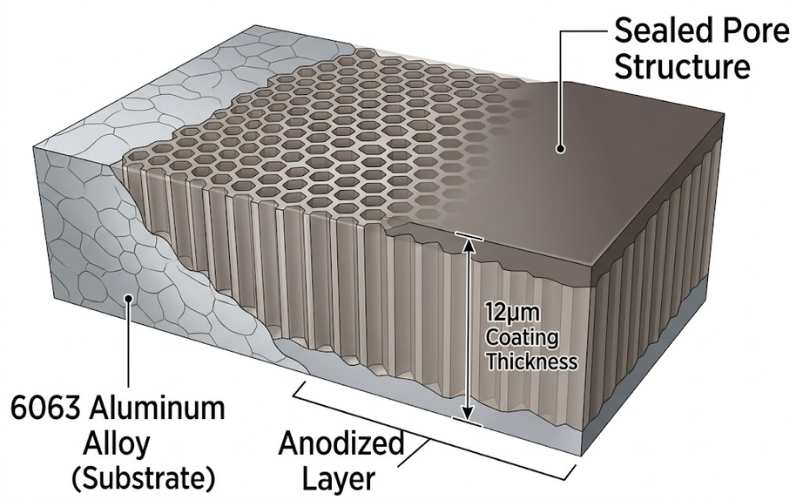
Anodizing on a pool pole is more than color. The oxide layer is integral to the aluminum — not a coating that can chip. Film thickness controls long-term resistance to chlorine, salt-water, and UV; sealing closes the pores so pool chemicals don't penetrate.
Pre-anodizing sandblast tunes the friction coefficient between telescopic sections. Too smooth and the locks slip; too rough and the slide binds. We hold this in a tested band so every pool pole extends and locks with the same feel — the detail that pool retailers' QA teams pick up on the first incoming-container inspection.
Full chemical-resistance data and salt-spray test results live on the quality assurance page.
QC
Film Thickness, Color Match & Salt Spray
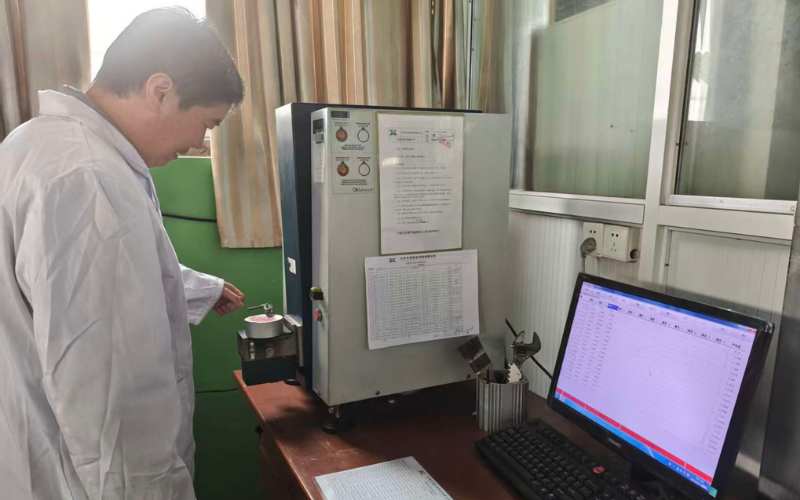
Every batch is gauged before it leaves the anodizing line. Film thickness is measured with a coating-thickness gauge to the spec window. Color match is checked under a calibrated D65 light box against the customer's approved master swatch — no eyeballing.
For chlorine and salt-spray verification, finished poles are tested per ASTM B117 — 1000-hour salt-spray exposure as the standard pool-environment benchmark. Lot-level results are filed and available on request.
Anodizing & Surface Finishes — FAQ
What film thickness do you anodize aluminum pool poles to?
Standard is 10–15 μm for pool telescopic poles. Heavier-duty applications (cover-reel tubes exposed to constant pool-side use) can be specified up to 20–25 μm. Film thickness is gauged on every batch before parts leave the line.Can you match a custom Pantone or RAL color?
Yes. Custom colors require a small one-time setup fee for the dye bath calibration plus a color-match sample sign-off before production. Lead time adds 5–7 days for the first batch.How do you ensure color consistency batch-to-batch?
Every batch is checked under a calibrated D65 light box against the customer's approved master swatch. Anodizing chemistry, dye-bath temperature, and immersion time are logged per batch. Color drift outside the agreed tolerance is rejected at the line.Will anodizing resist pool chemicals long-term?
Properly sealed anodized aluminum at 10+ μm film thickness resists chlorine, bromine, and salt-water for years of pool-side service. We salt-spray test per ASTM B117; 1000-hour exposure is the standard pool-environment benchmark.Do you anodize before or after CNC machining?
Most pool pole tubes are anodized first, then CNC-machined — so lock-button hole edges expose bare aluminum, visible but matched to spec. For parts that need every surface anodized, machining happens first and the finished geometry runs through the anodizing line.Is there a wastewater / environmental concern with anodizing?
No. Our on-site wastewater treatment station handles all anodizing effluent before discharge. Environmental management is certified to ISO 14001.Need Anodized Aluminum Pool Poles?
Send your color spec or RAL — sample anodized swatch ships in 5–7 days, production quote in 24 hours.