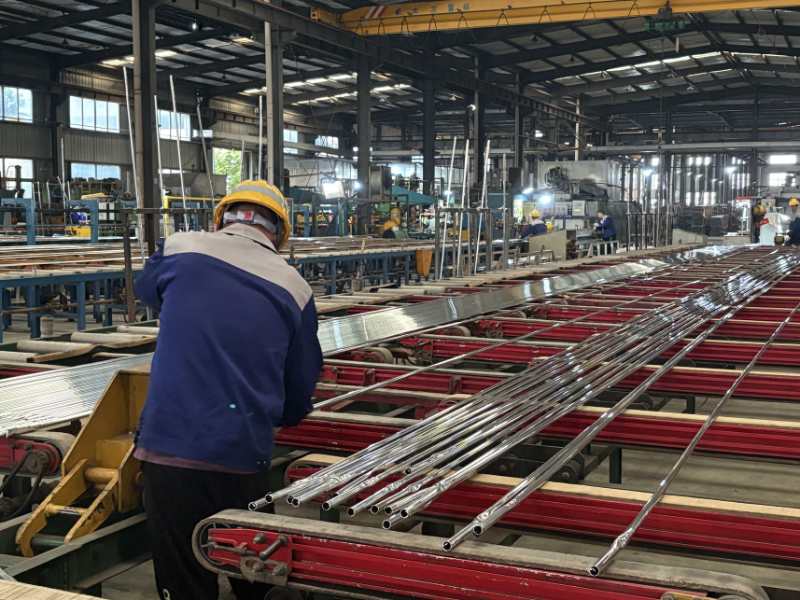
Many buyers start sourcing Teleskopstangen from China through online platforms, only to face inconsistent quality, unstable pricing, and delayed shipments. The root problem is not China—it is choosing suppliers without understanding manufacturing capability.
This becomes critical when you scale to OEM or supply retail channels. A single defective batch can lead to returns, contract penalties, and lost shelf space. This guide gives you a factory-level sourcing framework so you can control quality, reduce risk, and build a stable long-term supply chain.
What Is the Best Way to Source Telescopic Poles from China?
Follow this 3-step sourcing framework used by experienced B2B buyers:
- Identify specialized aluminum telescopic pole manufacturers (not general suppliers)
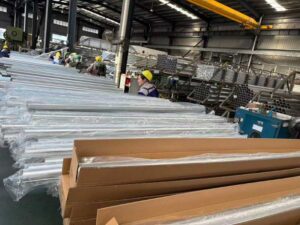
- Verify in-house Extrusion, anodizing, and machining capability
- Test samples and confirm MOQ, lead time, and quality standards
👉 Buyers who follow this process typically reduce defect rates and avoid supplier switching costs.
Types of Telescopic Poles You Can Source from China
Nach Material
- Teleskopstangen aus Aluminium
- Strong, lightweight, corrosion-resistant
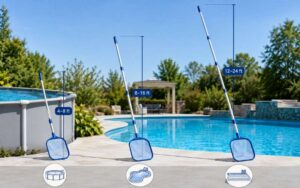
- Ideal for pool, cleaning, and industrial applications
- Fiberglass poles
- Electrically insulated for utility work
- Carbon fiber poles
- Lightweight but high-cost, niche use
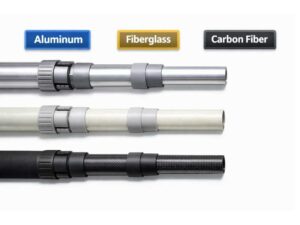
Material Comparison for Procurement Decisions
| Material | Gewicht | Stärke | Kosten | Typical Lifecycle |
|---|---|---|---|---|
| Aluminium | Medium | Hoch | Medium | 2–5 years |
| Fiberglas | Schwer | Medium | Niedrig | 1–3 years |
| Kohlenstofffaser | Very Light | Hoch | Hoch | 3–5 years |
👉 In most commercial applications, Aluminium delivers the lowest cost per use cycle, not just the lowest purchase price.
Key Technical Specifications That Impact Quality
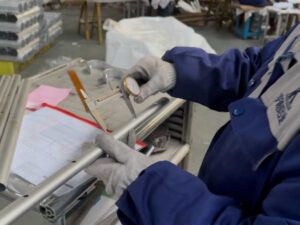
Core Specification Table
| Spezifikation | Typischer Bereich | Buyer Impact |
|---|---|---|
| Durchmesser | 19–45mm | Load capacity |
| Wandstärke | 0.8–1.5mm | Strength & durability |
| Legierung | 6063 / 6061 / 7075 | Cost vs strength |
| Anodisieren | 10–20 μm | Korrosionsbeständigkeit |
| Länge | 2–12m | Application fit |
Real-World Performance Insight (Critical)
- In pool environments with chlorine exposure, anodizing below 10μm often leads to visible oxidation within 3–6 months
- Anodisieren at 15–20μm typically maintains surface stability for 2+ years under the same conditions
- Thin wall tubes (<1.0mm) reduce cost but increase bending risk in poles longer than 6m
👉 These factors directly impact return rate and warranty cost.
OEM Factory vs Trading Company: Cost, Risk, and Control
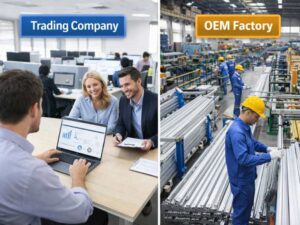
Supplier Comparison Table
| Faktor | Handelsunternehmen | OEM Factory |
|---|---|---|
| Price | Höher | Untere |
| Anpassung | Beschränkt | Voll |
| Production Control | Keiner | Voll |
| Quality Stability | Inconsistent | Stabil |
| Risiko | Mittel bis hoch | Niedrig |
Procurement Decision Rule
- Test market → trading company
- Scale production → OEM factory
- Build brand → integrated manufacturer
👉 Most buyers shift to factories after 1–2 unstable orders.
Where to Find Reliable Telescopic Pole Manufacturers
| Kanal | Vorteil | Risiko |
|---|---|---|
| Alibaba | Easy sourcing | High intermediary ratio |
| Made-in-China | Industrial focus | Limited filtering |
| Google Search | Direct factory access | Requires evaluation |
| Trade Shows | Direct validation | Höhere Kosten |
👉 Best-performing sourcing strategy:
Google + factory audit + sample validation
How to Verify a Real Telescopic Pole Manufacturer
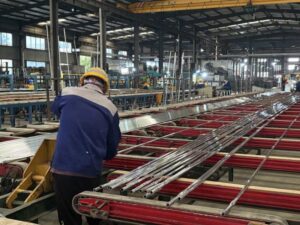
What Buyers Should Look For
- Aluminium-Extrusionsfähigkeit
- In-house anodizing line
- CNC machining and assembly
Warum das wichtig ist
- Outsourced extrusion → inconsistent tube tolerance
- Outsourced anodizing → color variation and corrosion risk
- Outsourced machining → assembly defects
Example of a Qualified Manufacturer
A vertically integrated factory like Xingyong provides:
- 14 extrusion presses → supports multi-diameter and bulk production
- Automated anodizing lines → ensures consistent coating thickness
- Full machining workshop → reduces production errors
:contentReference[oaicite:0]{index=0}
👉 For buyers, this means:
- More stable delivery
- Lower defect rate
- Better consistency across batches
Cost Structure Breakdown (What Drives Price)
| Kostenkomponente | % | Buyer Impact |
|---|---|---|
| Aluminum Material | 40–55% | Major cost driver |
| Extrusion | 15–20% | Affects precision |
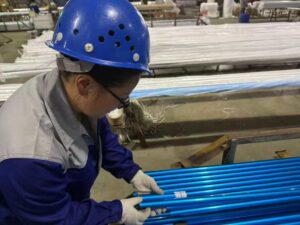
| Anodisieren | 10–15% | Impacts lifespan |
| Schließsystem | 10–20% | Function + durability |
| Montage | 5–10% | Labor efficiency |
Key Procurement Insight
- Increasing wall thickness from 1.0mm to 1.2mm can raise cost by 8–12%, but reduce breakage complaints significantly
- Upgrading anodizing from 10μm to 15μm typically increases cost by 5–8%, but reduces corrosion-related returns
👉 Smart buyers optimize total lifecycle cost, not unit price.
MOQ, Pricing, and Lead Time Explained
| Bühne | Time |
|---|---|
| Sample | 7–15 days |
| Production | 20–35 Tage |
| Versand | 15–40 days |
Mindestbestellmenge
- Standard: 300–1000 pcs
- OEM: 1000–3000 pcs
👉 MOQ can often be negotiated for first cooperation.
Buyer Decision Framework (Reduce Trial and Error)
Use this to choose your supplier:
- Need low MOQ → trading company
- Need OEM → factory
- Need consistent quality → integrated manufacturer
- Need stable supply → extrusion-based factory
👉 This reduces supplier switching and hidden costs.
Before You Place an Order (Critical Checklist)
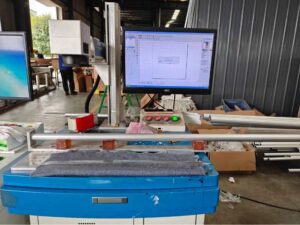
- Confirm anodizing ≥ 15μm
- Verify alloy grade (6063 / 6061)
- Request load test data
- Check locking mechanism durability
- Confirm in-house production capability
👉 This checklist eliminates most sourcing risks.
Common Mistakes That Increase Cost
- Choosing lowest price supplier
- Ignoring surface treatment
- Skipping supplier verification
- No inspection before shipment
Real Case
A pool equipment importer reduced defect rate by over 30% after switching to a factory with in-house extrusion and anodizing.
Shipping and Import Considerations
- EXW → maximum control
- FOB → balanced option
- CIF → convenience
👉 Sea freight remains the most cost-efficient for bulk orders.
Referenz:
https://iccwbo.org/resources-for-business/incoterms-rules/
Why Global Buyers Choose China for Telescopic Poles
- Complete aluminum supply chain
- Competitive cost structure
- Strong OEM capability
- High production scalability
👉 The advantage lies in manufacturing depth, not just pricing.
Making the Right Sourcing Decision
Sourcing success depends on selecting a supplier that delivers consistent quality, scalable production, and stable lead time.
Buyers who understand production processes and technical specifications gain full control over cost and quality.
Work with a Verified Aluminum Telescopic Pole Manufacturer
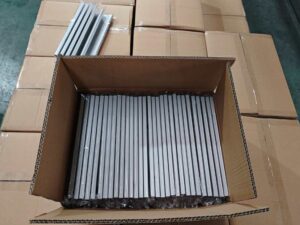
Choosing a vertically integrated supplier ensures better results across production and delivery.
Xingyong offers:
- 20+ years manufacturing experience
- 14 extrusion lines for multi-size production
- In-house anodizing and machining
- Monatliche Kapazität bis zu 3000 Tonnen
- OEM customization support
What You Can Expect (Reduced Risk)
- Free sample for testing before bulk order
- OEM drawing review within 24 hours
- MOQ optimization for first cooperation
- Factory audit or production video available
👉 Contact us to evaluate samples and discuss your project.
Häufig gestellte Fragen
How to find reliable telescopic pole suppliers in China?
Search via Google, verify production capability, and test samples before bulk orders.
What is MOQ for telescopic poles?
Typically 300–1000 pcs for standard products and higher for OEM.
How to ensure quality?
Check anodizing thickness, material grade, and inspection process.
Why choose aluminum telescopic poles?
They offer the best balance of durability, weight, and cost.